Most businesses, advertisers, and marketers haven’t imagined a cookieless marketing world.
It’s time they should.
Cookies are a decent way to improve targeting and personalization, but online marketing doesn’t solely revolve around cookies.
If you are unaware of the role a cookie plays in marketing and how they are being phased out slowly (but surely), you should read this article.
If you don’t.
You might soon open eyes in a cookieless marketing world where third-party cookies might not be available at all. And this has a massive impact on online ads and ad networks.
Continue reading to find out how to safeguard and prepare your business for a world without cookies.
What is a Cookie in Marketing?
A cookie (or a marketing cookie) is a tiny text file that’s stored on a user’s device (computer or mobile). The file, known as a cookie, is pushed to the device by the website when a user visits it. The cookie collects data about the user’s online behavior and activity such as interaction with the website.
The data collected by a cookie is used by the website to improve personalization and offer a better user experience.
For instance, you visit an ecommerce store, add a product to the cart, and leave the website. You visit the same store after a few hours and you’ll see the same item added to the cart even if you haven’t created an account on the store.
This is done by a cookie.
When you first visited the store, the ecommerce store tagged your device via a cookie. On the next visit, the store knew you.
Here’s an explanation of how a cookie works:
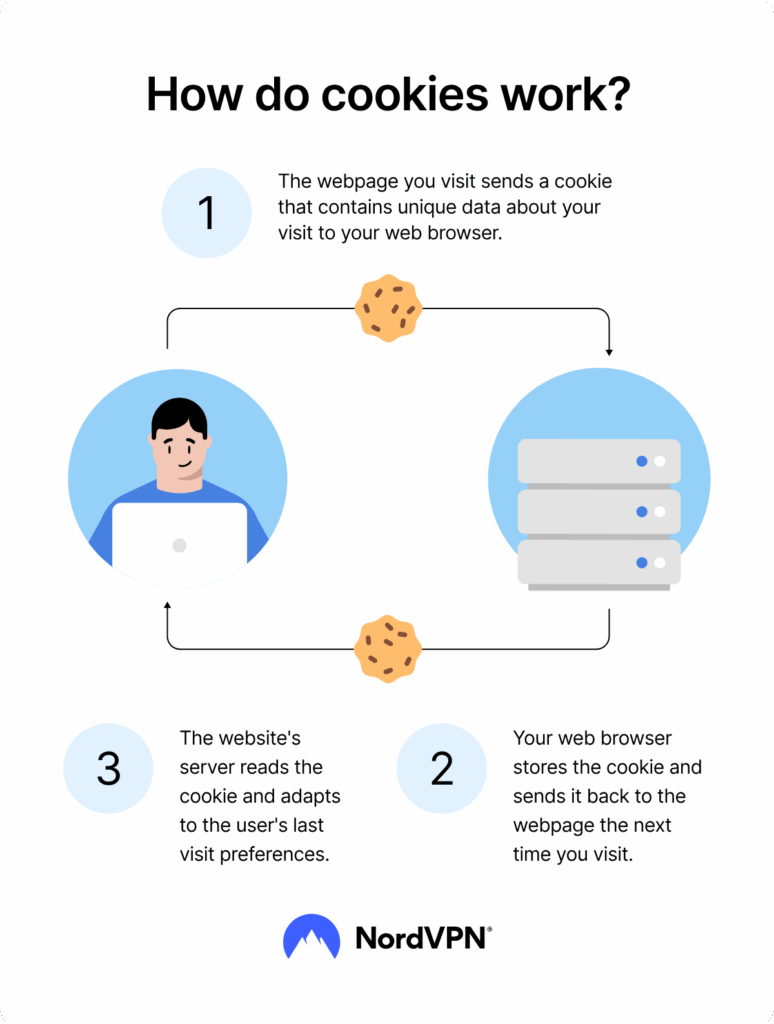
A marketing cookie is helpful for the end-user in multiple ways:
- It improves user experience
- It helps offer better personalization
- Improved targeting.
Not all cookies are good, however…
Types of Marketing Cookies
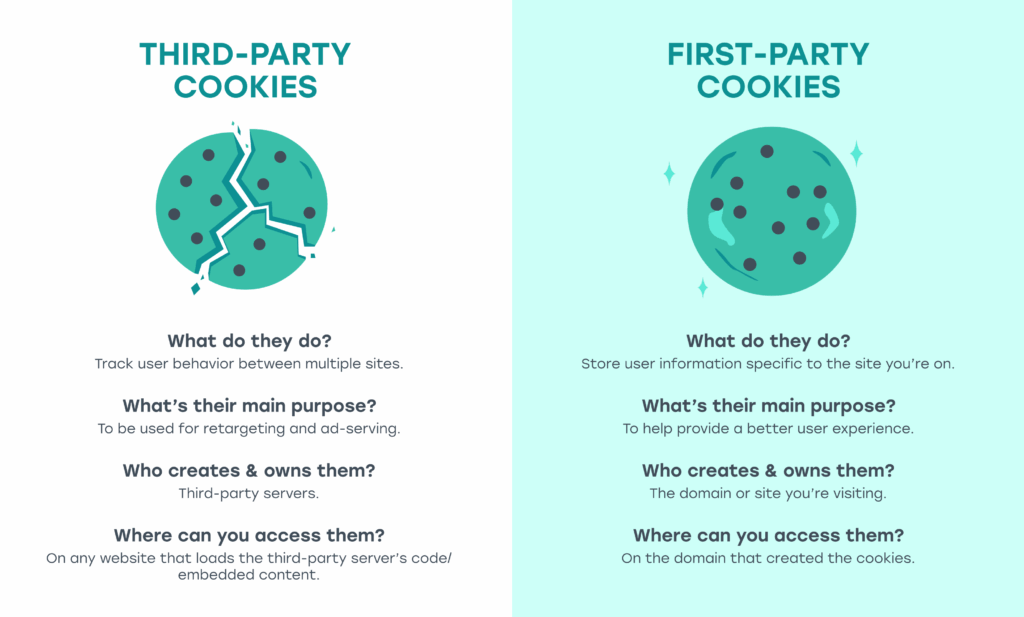
There are two major types of cookies used in marketing based on their origin:
- First-party cookies
- Third-party cookies.
1. First-Party Cookies
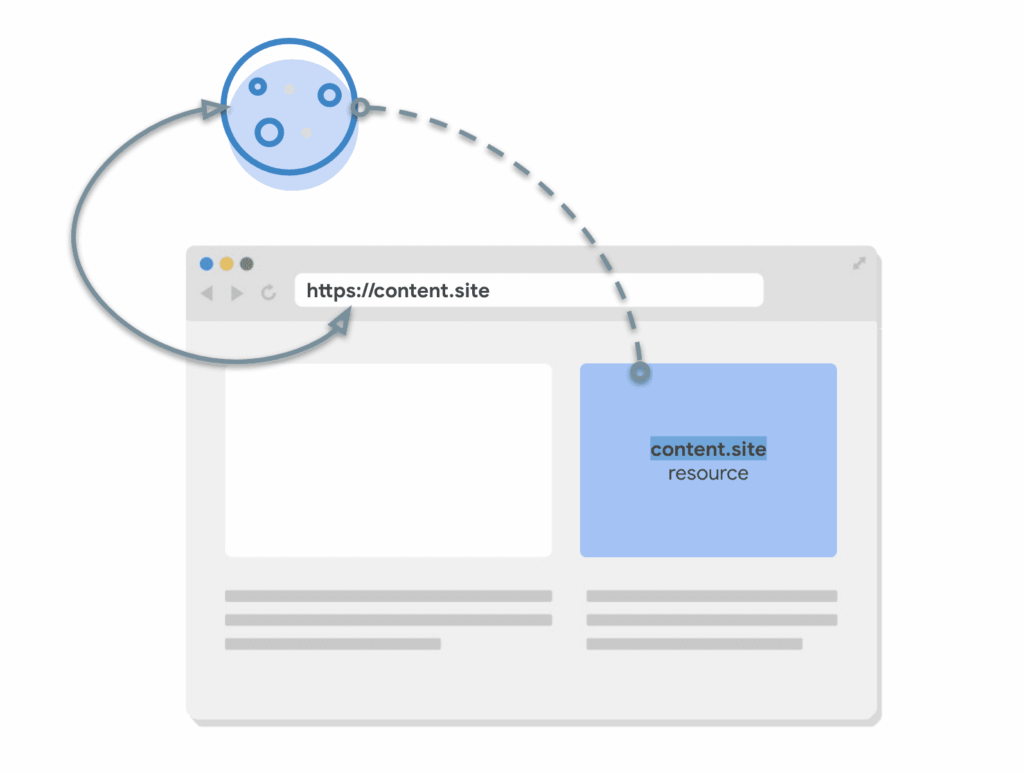
A first-party cookie is set by the website a user is visiting. The data collected by such cookies is used by the website to improve UX and personalization.
The primary purpose of these cookies is to offer a better experience to the users. This is what makes first-party cookies necessary.
In the absence of first-party cookies, end-users might face a lot of issues when visiting sites such as adding or setting common details on each visit (login info or language selection).
2. Third-Party Cookies

A third-party cookie is placed on a website by another site to track the data of the users. These cookies collect data related to user activity across different sites (not just a single site). Third-party cookies are often used by advertising and analytics platforms.
A common use of third-party cookies is in retargeting.
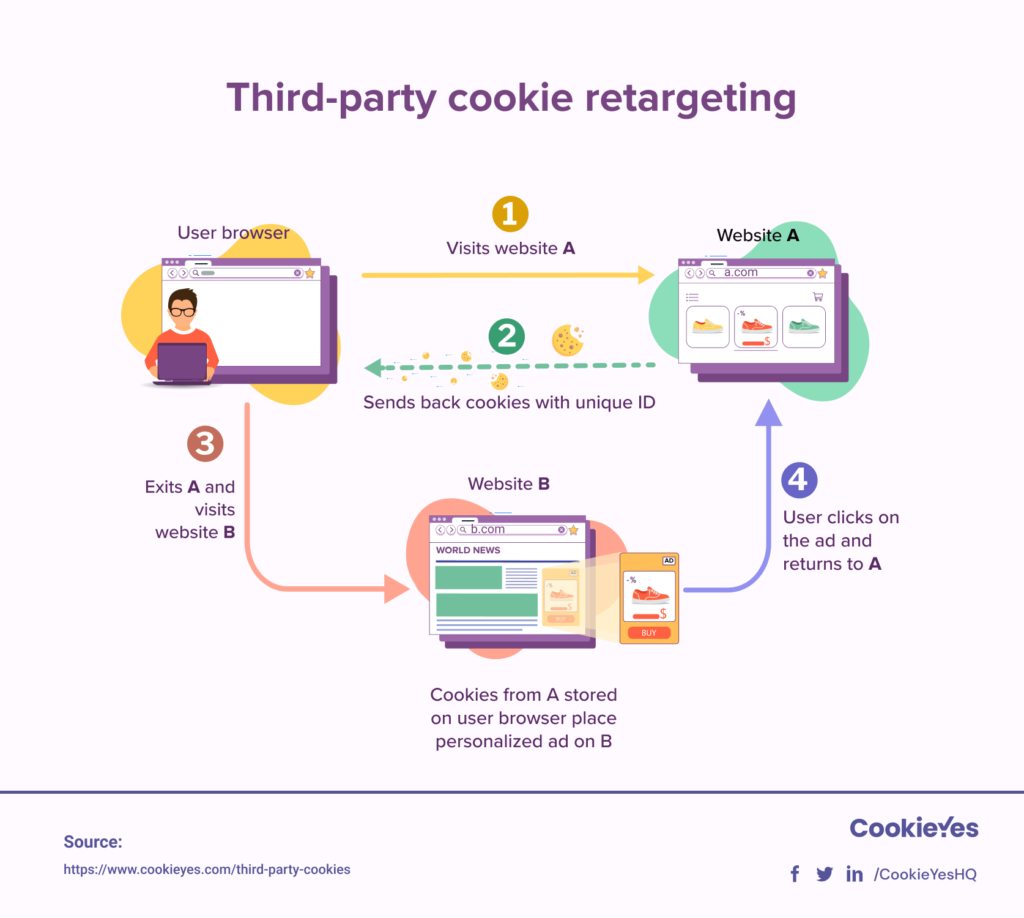
Since these cookies are placed by sites you never visit and they track data even after leaving the website, this makes third-party cookies non-user-friendly.
A lot of browsers block third-party cookies due to privacy concerns and businesses are required to get user consent prior to placing such a cookie:
What is Cookieless Marketing?
Third-party cookies are being blocked and phased out to protect user privacy. A lot of web browsers have already phased out (or are in the process of phasing out) third-party cookies, which mainly include Firefox, Brave, and Safari.
These browsers block third-party cookies by default.
Since Google runs the biggest ad network in the world with a market share of well over 80%, it all comes down to when Google phases out third-party cookies – which it hasn’t yet.
Google initially said that it would phase out third-party cookies back in 2022. It then delayed the phase-out process and as of 2025, Google is replacing third-party cookies with Privacy Sandbox APIs.
Third-party cookies are replaced by Privacy Sandbox in Google Chrome, which provides users privacy and advertisers can still use advanced targeting without relying on cookies:
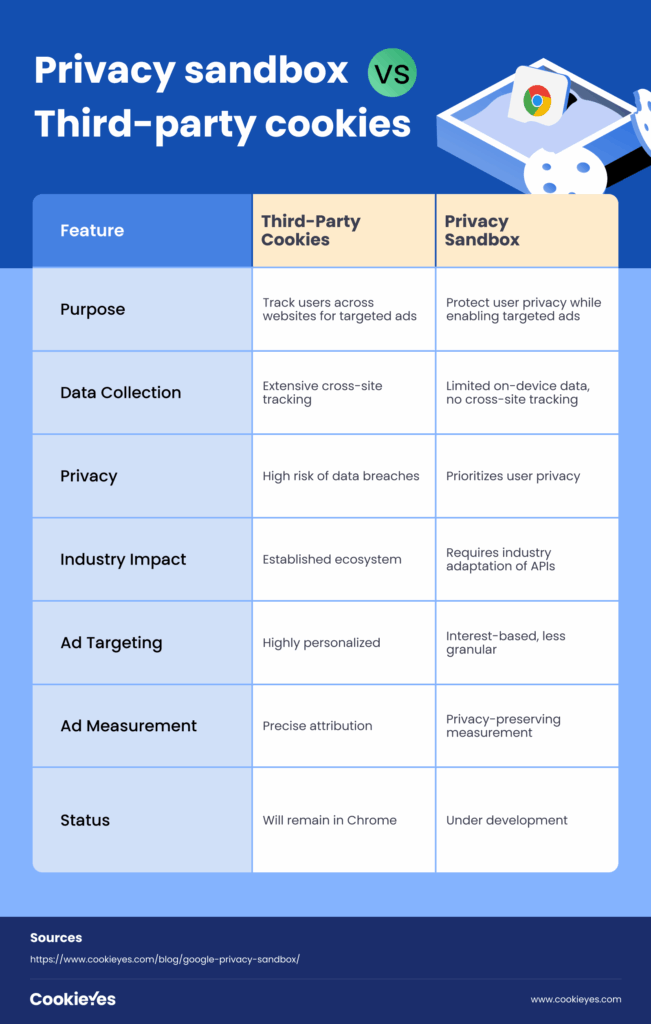
The process isn’t completed yet, as it’s too complex and Google is working on it.
As of September 2025, Google Chrome still has third-party cookies enabled by default. Users are allowed to turn them off in the settings.
But eventually, Google, like other browsers, will replace third-party cookies with its Privacy Sandbox for Chrome.
We are moving towards a cookieless marketing era where third-party cookies won’t be available at all.
Even if browsers don’t phase them out or replace them with something else to let you run targeting campaigns, it’ll get tough to track users in the coming years for two major reasons:
- Increased awareness among users about their privacy
- Sophisticated apps and tech to tackle third-party cookies and block them outright.
Cookieless marketing is unavoidable.
Cookieless Marketing Techniques
Advertisers, marketers, and business owners are heading towards a future without cookies (third-party cookies precisely). Whether you like it or not, you have to learn and adapt to survive in a cookieless marketing environment.
The earlier you do it, the better.
Below is a list of the core techniques and best practices to transform and shift to cookieless marketing:
Switch to Zero Party Data
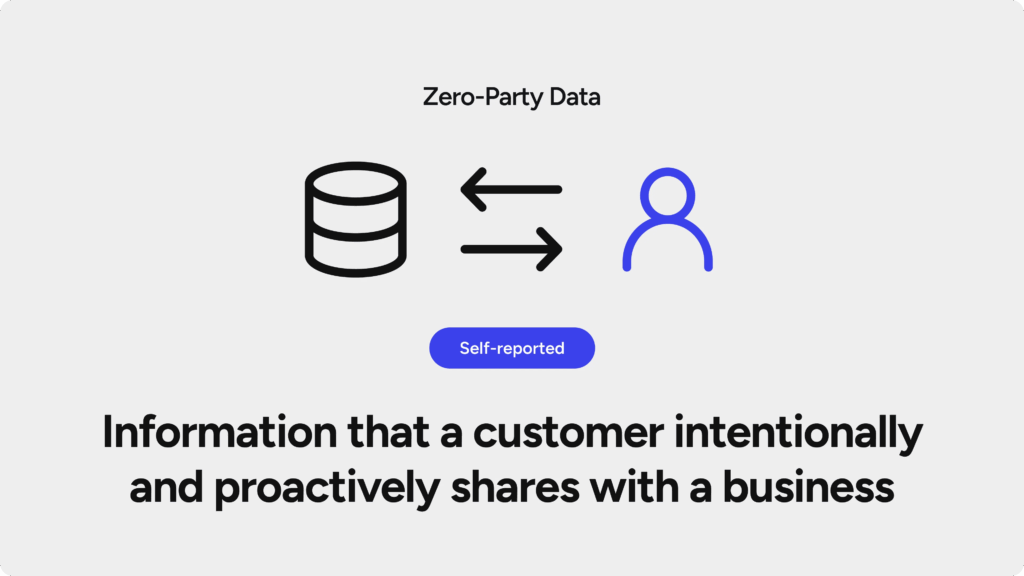
Zero-party data is any form of data shared intentionally by your audience. It is also known as solicited data.
For instance, when a visitor fills and submits a lead form on your squeeze page, the information added in the form, such as email address and name, is shared intentionally by the user. That’s solicited data.
The issue with zero-party data is that it’s hard to collect.
You need to offer something of high value to your ideal customers to persuade them to share data. Think of a lead magnet – that’s how you collect zero-party data.
Lead magnets are one way to collect zero party data. Here’s a list of the primary sources of solicited data:
- Forms
- Surveys and quizzes
- Chatbot conversions
- Customer feedback
- Customer reviews
- User-generated content.
None of these methods require cookies, so they are quite transparent ways to collect data. It’s more meaningful than other forms of data.
Tips and Tricks
Follow these best practices to collect and use zero-party data so you can continue to grow your business in the cookieless marketing era:
- Be transparent. Tell your audience how you intend to use their data and then use it only for the agreed projects. For instance, if you collected email addresses for weekly newsletters, you should send newsletters to your list and nothing else – because that’s what they subscribed to. If you want to send something else, seek permission via email.
- Offer something of value in exchange for your audience. Whether it’s their personal data (like email address) or a survey, you need to offer a reward or incentive to your audience. It has two benefits. First, you value their time and it increases the response rate significantly. Second, you get more accurate, unbiased data.
- Use multiple data collection methods instead of relying on a single one. This gives you more variety due to a better spread. It also helps you reach different buyer personas as you can’t reach your entire audience via a single touchpoint.
- Filter and clean data. Maintaining data hygiene is essential as it helps you keep costs and reports low. This is especially helpful for email lists, where you should clean your lists regularly.
- Don’t spam. Most businesses end up spamming their audience unintentionally. For instance, email list swapping is a common practice that’s a decent form of spamming. Whenever you send a marketing message to your audience directly to their email or phone, make sure you have consent to do so. Else, it’s spam.
Use First-Party Data
First-party data turns out to be the marketer’s best friend.
It is the data that you collect about your primary target audience. It is a permission-based data collection method that you can use to improve targeting, personalization, and UX.
For instance, analytics data of your website collected via Google Analytics or any other analytics tool is first-party data. The users don’t share it explicitly with you (as with zero party data), but they allow you to collect it by giving you consent via GDPR.
It doesn’t involve personal data but behavioral data that’s used for marketing and advertising (often indirectly).
According to a study, 43% of US marketers use first-party data and 25% use third party data when working with media sellers:
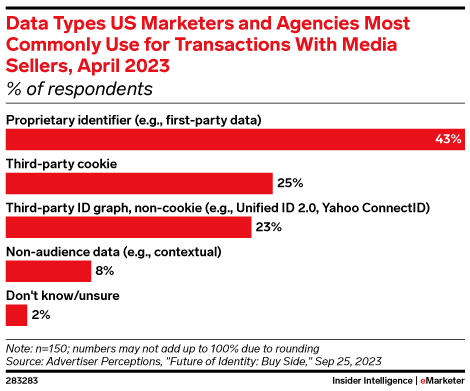
First-party data offers you a lot more than third-party data such as:
- It’s more accurate and reliable as you collect it directly from your target audience.
- First-party data is more cost-effective than third party data as it eliminates intermediaries that add to the cost.
- You own this data legally, which allows you to use it in any way you like for decision-making and marketing.
- It gives you a competitive advantage because you get to know your target audience better and you can make data-driven marketing decisions.
How to Collect First-Party Data
There are quite a few different ways to collect first party data. The major ones are listed below:
- Analytics data from your website or app (Google Analytics)
- Social media analytics
- Data from your apps and tools you use, such as a customer support platform
- Behavioral data such as session recordings, purchase history, purchase frequency, location, etc.
This data is fed into the CRM or CDP platform via a pixel. You need to use pixel tracking on your site to collect first-party data. It’s an invisible pixel that’s embedded in your website or any asset you want to track.
Here’s how pixel tracking works:
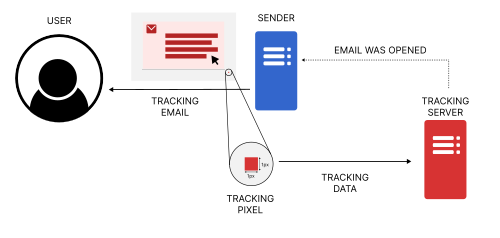
Your CDM or CRM tool integrates data from different sources. You can analyze first-party data and use it for different marketing purposes and decision-making.
For instance, you can use analytics to find out what content your audience likes the most by analyzing engagement and session duration. Similarly, you can use heatmaps to find out how visitors interact with different elements on your website or app.
Tips and Tricks
Below are the major tips and tricks on how to collect and use first-party data and move towards cookieless marketing:
- Seek permission and consent via a compliant form. Communicate clearly in your privacy policy as to how you collect data, how you intend to use it, and other privacy-related details.
- Collect data that’s essential and that you want to use. You don’t need to collect irrelevant data or any relevant data that you don’t plan to use in marketing or decision-making. This means you should have a clearly defined plan and a strategy for first party data collection. Define your goals and set limits.
- Identify the primary touchpoints where you want to collect data. Ideally, your website or app is the best touchpoint to start with.
- Use the right set of tools and apps to collect data. It calls for developing the right tech stack.
- Set data governance rules. It’s essential for data storage, organization, access, and maintenance.
Explore Second-Party Data
As we are advancing towards cookieless marketing, the demand and use of second-party data have increased significantly.
It is the first-party data of another business that you use in your marketing campaigns. This type of data is used with a proper agreement and governance framework.
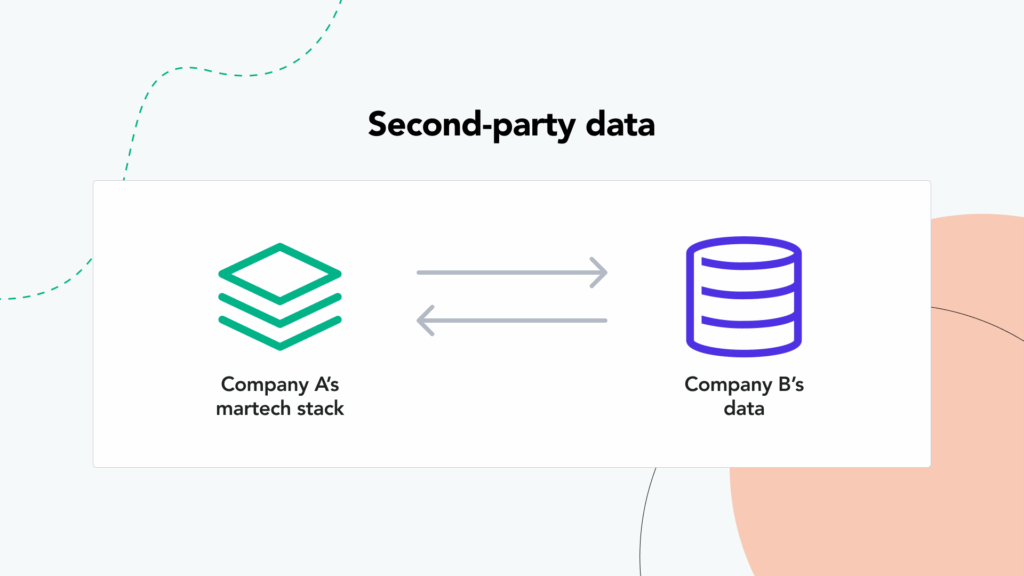
Businesses can use each other’s first party data, or one business can allow another to use its first-party data, or they can mutually create a co-marketing campaign. There are a lot of different ways to leverage second-party data in marketing.
A common example of how brands use second-party data is online marketplaces like Amazon and Walmart. Brands use the first-party data of these marketplaces to reach and connect with their customers and generate sales.
On top of that, retail media that includes advertising networks is a pure form of second-party data. When a seller runs a sponsored ad campaign on Amazon, the seller is using Amazon’s first-party data to precisely reach its primary target audience.
Data partnerships are another way businesses use second-party data. Kraft Heinz used Circana’s (then IRI) to access transaction-level data. It used LiveRamp, which is a data collaboration platform that offers a data marketplace.
There’s a wide range of ways you can use second-party data to reach your ideal customers, but primarily, you can follow one of the three routes below:
- Use another business’s first-party data (e.g., retail media)
- Both businesses exchange their first-party data (collaboration or a joint marketing campaign)
- Use a data marketplace or a research company.
Is Second-Party Data Really Worth It?
Yes, it is.
It’s first-party data that you get access to – and what’s better?
Besides, second-party data offer several benefits over other data types:
- Better insights: The best thing about second-party data (and the reason why most mid to large-scale businesses use it) is that it enriches your first-party data. It provides you with meaningful insights into your existing audience that you might not have previously had access to. You can use this data to improve buyer personas and understand your audience better.
- Instant access to a new audience: You get access to a new audience instantly. This is helpful for businesses that are in the expansion phase and entering a new market.
- Cost-effective: It’s cheaper than other forms of data including first-party data and zero-party data. Depending on your agreement and terms of use, you can use second-party data absolutely free.
- Access to quality, first-party data: When compared to third-party data, second-party data is way more reliable, authentic, and high quality. This is because the first-party data of another business and its quality can’t be questioned (theoretically). In any case, it’s more reliable.
- Transparency: Second-party data is much more transparent than third-party data. You work directly with the business that owns the data. Both parties can set governance rules to ensure data safety and transparency.
Leverage Omnichannel Marketing
One of the major uses of third-party cookies is in remarketing campaigns. You can switch to omnichannel marketing and offer a unified, personalized experience to your customers across all channels.
When implemented correctly, it outperforms remarketing and you can bypass third-party cookies completely.
An omnichannel marketing strategy relies on zero-party and first-party data. All the data from your tech stack is sent to CDM, where customer profiles are created. All the apps and platforms you use are connected and well-integrated. This lets you track visitors and customers across all touchpoints. They can resume their journey with your brand where they left off, despite changing the touchpoint.
Here’s an example of how omnichannel marketing works at Amazon:
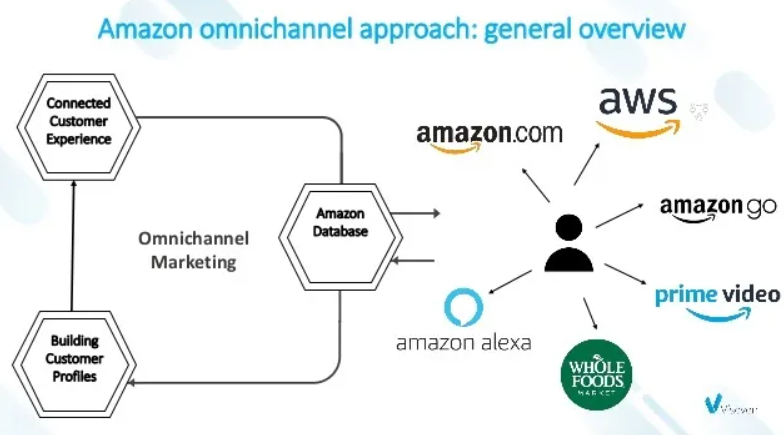
Omnichannel marketing is the best alternative to cookieless marketing as it combines all types of data effectively and makes it practically usable. Here’s how to get started:
- Develop an omnichannel marketing strategy for your business with well-defined goals and long-term objectives
- Map the customer journey and identify channels you want to work on
- Integrate data and platforms to ensure all the data is collected and stored in either your CRM or CDM tool, or both
- Profile customers and leads based on their interaction with your brand and as they move along the customer journey stages
- Track, tweak, and improve your strategy based on its performance.
Switch to Contextual Advertising
Contextual ads are an alternative to traditional digital ads. Normally, ads use third-party data for targeting and showing relevant ads to the users. Contextual ads use content to show relevant ads to the people and therefore, they don’t rely on third-party data.
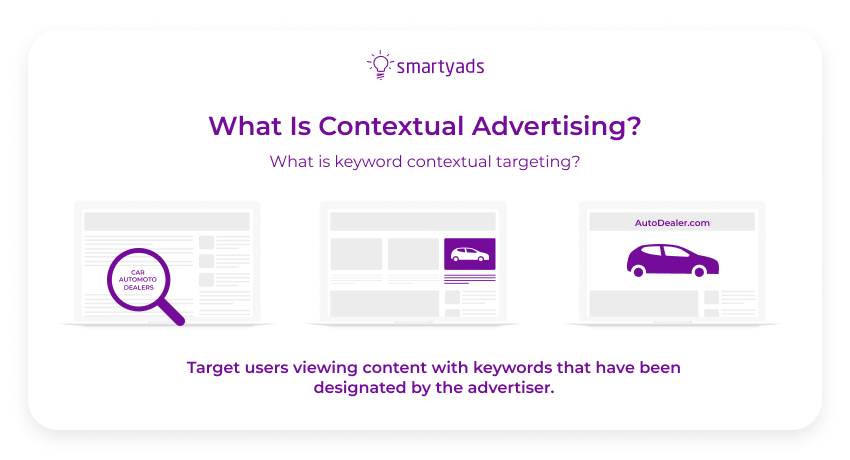
If your business relies heavily on paid traffic and it’s not possible for you to avoid using third-party data-based advertising networks, you can switch to contextual advertising. It’s suitable for cookieless marketing and is the future of online advertising.
Here’s how contextual advertising works:
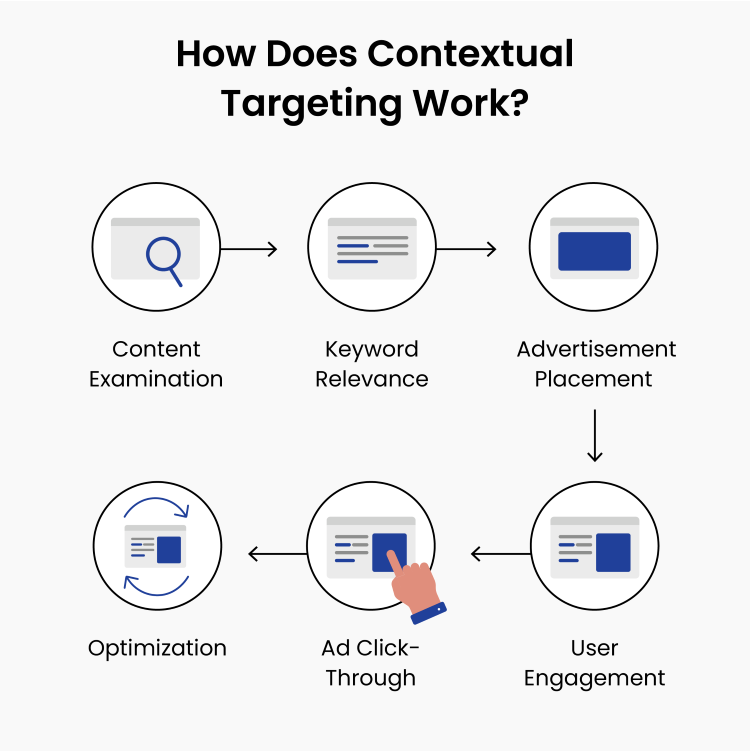
It is essentially a targeting approach where ads are shown to users based on the content they are currently viewing. Relevant ads appear on the webpage based on keywords, images, title, and other variables.
You don’t need cookies to do this.
It offers additional benefits that you don’t get with other forms of ad targeting:
- Contextual ads are very relevant and therefore, have high engagement as compared to intrusive ads that aren’t relevant to the content
- You maintain user privacy by not using their data to show ads
- Contextual ads are cheaper than other forms of online ads. This is because they don’t need third-party data and tracking
- High accuracy and reliability, as there’s no data-based targeting involved.
Below is a list of the major contextual advertising networks you should consider as you move towards cookieless marketing and advertising:
- Taboola
- GumGum
- Media.net
- Outbrain
- Google AdSense
- Seedtag
- Playwire.
Diversify Marketing
This is obvious but rarely taken seriously by marketers and businesses.
It’s time you stopped relying too much on one type of marketing channel. There are tons of emerging ways to generate traffic, leads, and sales that you can exploit. There’s no need to stick with the same old cookie-based ads.
Diversification will prepare your brand for the future.
Third-party cookies aren’t phased out completely yet, but what if they are phased out by next year? Is your business ready for the change?
Have you prepared your business for cookieless marketing?
It’s not all about third-party cookies. Diversification in marketing is mandatory.
You need to look for different marketing channels and touchpoints that you haven’t explored yet. Instead of relying on PPC or organic traffic, you should distribute your marketing budget strategically across different channels.

The core marketing channels include:
- Online ads
- Search engines
- Social media
- Email marketing
- Print ads
- TV and radio ads
- Affiliate marketing
- Referral marketing
- Influencer marketing
- UGC
- Co-marketing
- Community building.
How many of these channels is your business actively investing in?
If you aren’t using a couple of these channels (at minimum), your business is in deep trouble for two main reasons:
- You are relying too much on one or a few touchpoints to generate traffic and leads. When you put all your eggs in one basket, it has consequences
- You are missing out on the other channels that might perform better than the ones you are using. You never know.
What you should do is diversify your marketing channels to prepare your business for a cookieless marketing future.
Digital Marketing Doesn’t Depend on Cookies
Digital marketing or online advertising does not depend on cookies. Yes, it requires data for targeting, but the source of the data is irrelevant.
Cookies are one way to collect required data to use in marketing and advertising.
It doesn’t mean there’ll be no ads or marketing in the absence of cookies.
Marketing survived before cookies and it will continue to thrive after cookies.
You need to decide for yourself. You can choose to stick with the same old third-party cookies to power online ads, or you can switch to other marketing channels.
This transformation is evident.
The earlier you decide, the better.
Cookieless marketing is already here. It’s time to accept the change.
Featured Image: Pexels