Digital marketing is tough. You can’t simply go out, create a website, and expect to get traffic and sales. This doesn’t work. You need a certain set of skills to master online marketing and these digital marketing skills include both soft and hard skills.
Since the online world changes so quickly (due to advances in technology), you can’t expect skills you have today to be relevant tomorrow.
You need to find the right digital marketing skills, enhance them, and tweak them with macro and micro developments.
Digital marketing success calls for learning, unlearning, and relearning – continuously.
With this in mind, let’s jump into the top digital marketing skills for 2026 and beyond (based on how the market is expected to reshape in the coming years).
What is a Skill?
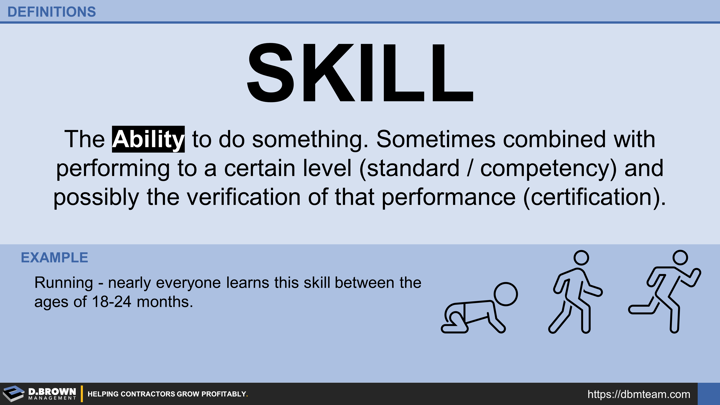
A skill is one’s ability to perform an activity. It is a polished ability to perform a task proficiently. It’s something you learn and become extremely good at.
For instance, communication skill is a core soft skill that a lot of people aren’t good at. You can improve your communication skills by following certain practices.
You can learn a skill, improve at it, and become an expert in performing a task.
The two major types of skills include:
- Domain-general skills refer to general skills like communication and collaboration.
- Domain-specific skills are specific skills that you need to perform a task, such as SEO skills.
As a digital marketer, you need a certain set of domain-general and domain-specific skills. Possessing these skills makes you a better and competent digital marketer.
Top Digital Marketing Skills
The list below covers the most needed digital marketing skills for 2026 and beyond. The list contains both domain-specific and domain-general skills for digital marketing.
Before we jump to the skills, digital marketing is a broad term that includes all the different forms and types of online marketing channels and platforms ranging from SEO to email marketing to content marketing to social media to PPC and more. I tried to add as many skills as possible that’ll prepare you for all digital platforms and channels.
Let’s dig in…
1. Research
One of the core digital marketing skills is research. It might sound too boring or orthodox, but it’s something you should be an expert in.
Research skill is the ability to find a solution to a problem, collect data, and then represent it in the form of readable information.
Keyword research, for instance, is required for SEO, PPC, content marketing, and even social media marketing. The process to find relevant keywords requires intensive research skills that include data collection, data analysis, reporting, and prioritizing.
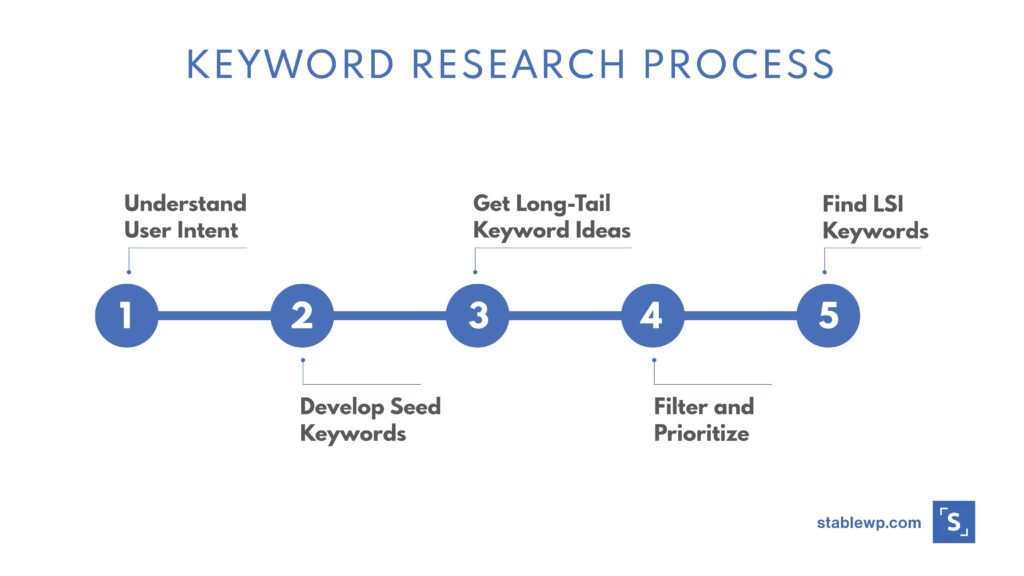
Research in digital marketing isn’t just limited to keyword research.
You have to wear multiple hats as a researcher. It includes customer research, customer surveys and feedback, market research, competitor research and spying, data presentation, predictive data analysis, product data management, CDM and CRM, segmentation, and more.
The 3 major types of research you need to engage in as an online marketer are:
- Customer research (e.g., keyword research)
- Market research (e.g., surveys and interviews)
- Competitor research (e.g., competitor spying and auditing).
Ideally, you should be an expert at all 3 types of research. If you can’t just pick one and excel at it.
2. Creativity
It refers to the ability to think differently. Creativity focuses on finding a different, more meaningful solution to a problem using imagination and innovation.
Here’s one of the simplest definitions of creativity:
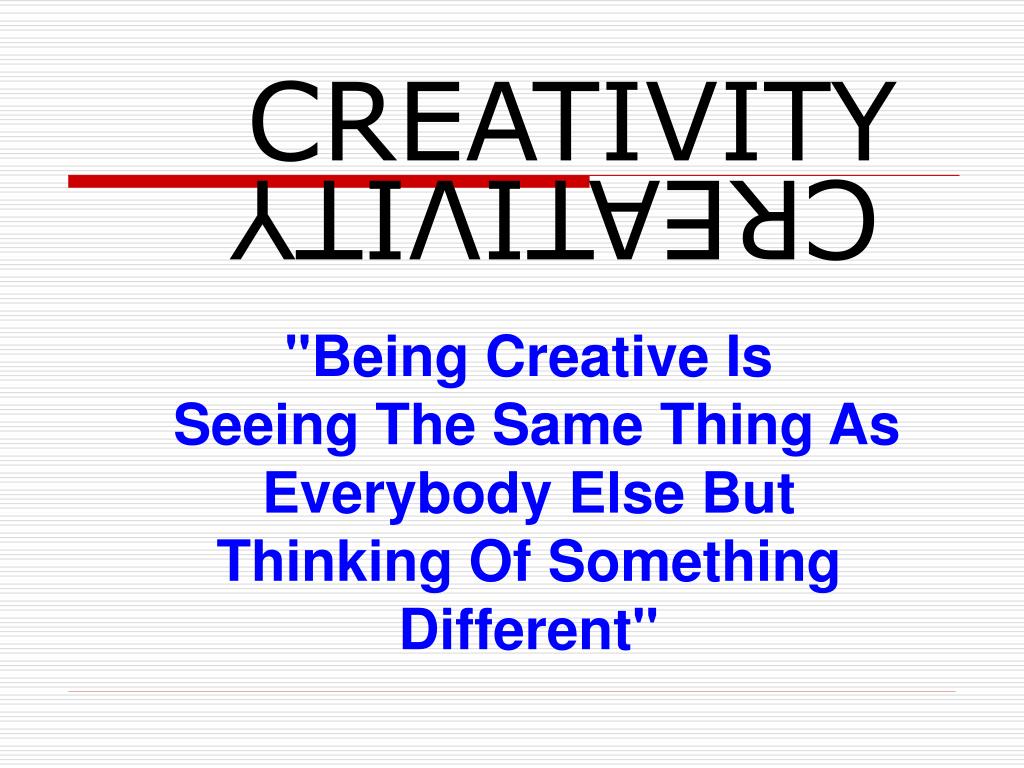
Digital marketing doesn’t depend on concrete facts like natural sciences. It belongs to social science, and that’s a reason why you have to be creative to stand out as a digital marketer.
A single marketing problem can be solved in different ways. But that’s not all.
Certain types of digital marketing solely depend on your creative skills. For instance, UX, design, social media content creation, video marketing, and storytelling all require advanced creativity skills.
If you aren’t creative, it’ll get really hard for you to design visual social media content. Or, you won’t be able to address and solve user issues as a software designer.
It’s a complicated skill that’s hard to polish. You need practice to develop creative skills. Below are some tips to improve your creativity skills as a digital marketer:
- Get new experiences. If you are following a set routine and your environment doesn’t change often, you’ll find it hard to get new, unique ideas.
- Collaborate, read, and listen. The more time you spend with people and read people’s perspectives, the better it is for your creativity. The people around you should also change. Avoid sticking with the same people.
- Ask questions. You need to ask yourself questions about the ways you perceive problems and how you generate their solutions. You also need to ask questions to others, including experts and your peers.
- Change your thinking angle. Refer to the Six Thinking Hats tool and use it to change your view about a problem. It improves your creativity significantly.
3. Communication and Collaboration
These two skills are coupled together because they are closely tied.
Communication skill refers to the ability to share and understand information, while collaboration refers to working with others effectively to achieve a common goal.
What makes communication and collaboration a must-have digital marketing skill is that you have to communicate on a regular basis with clients, peers, and businesses. Communication isn’t limited to verbal, rather, it includes all forms, such as visual, non-verbal, and virtual.
The same goes for collaboration.
As a marketer, you have to work within a team, and that’s where you have to exchange information with others. You should be extremely good at it to be successful.
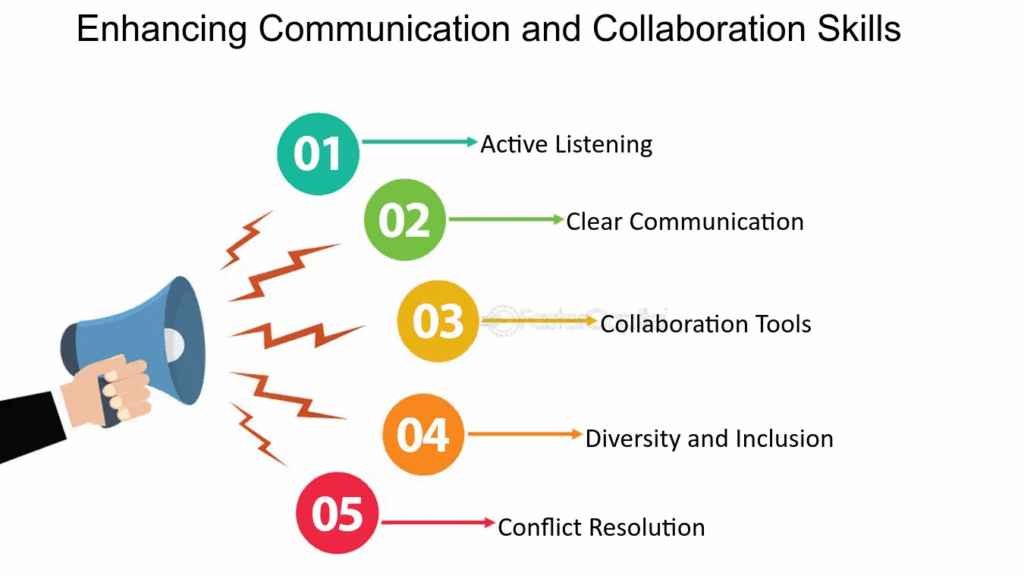
Here’s how you can improve your communication and collaboration skills and get better at digital marketing:
- Active listening is the best way to improve your communication and collaboration skills. Listening helps you understand your audience, you can focus on non-verbal cues, and better understand the message being delivered.
- Know your audience and try to communicate with them in a tone and language they can understand. If you are trying to share a CRO experiment report with a potential client, instead of using jargon and technological terms, make it simple and understandable.
- Use clear tone, words, and expressions as it makes it easy for others to understand. Your verbal and non-verbal communication, tone, word selection, and body gestures must all align together for effective communication and collab.
- Be emotionally intelligent when interacting with people. You need to understand and decode other people’s emotions accurately and handle your emotions smartly for effective communication.
4. Analytical Thinking
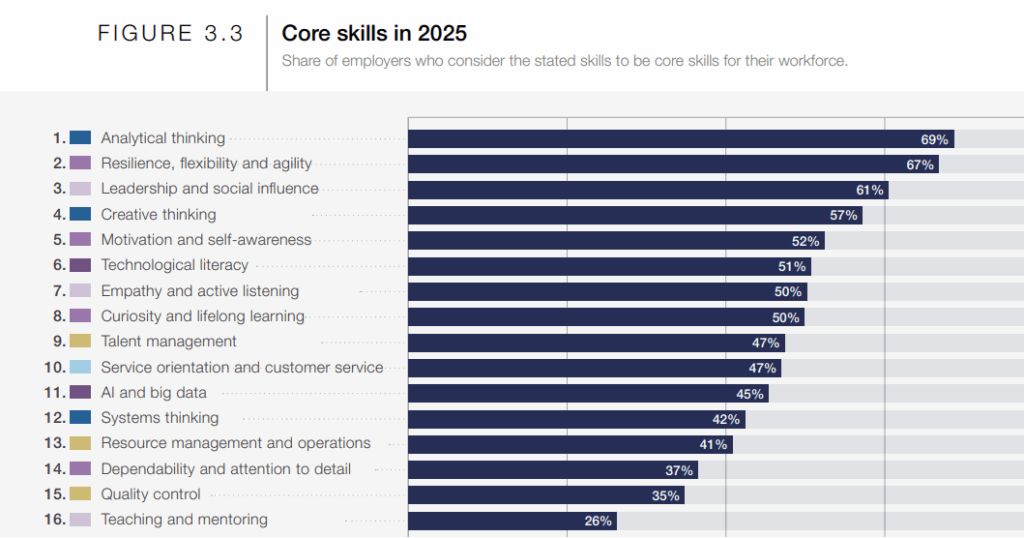
This is another crucial soft skill that WEF identified as one of the core skills in 2030.
According to WEF, 7 out of 10 companies consider it an important skill for 2025 and it’s the most important skill for the workplace:
Analytical thinking is the ability to gather information, break information into smaller, meaningful chunks, identify and understand patterns, and derive meaningful, logical conclusions to solve a problem.
In simple words, it’s your ability to think analytically rather than emotionally. Analytical thinking involves logic, reasoning, data, and creativity.
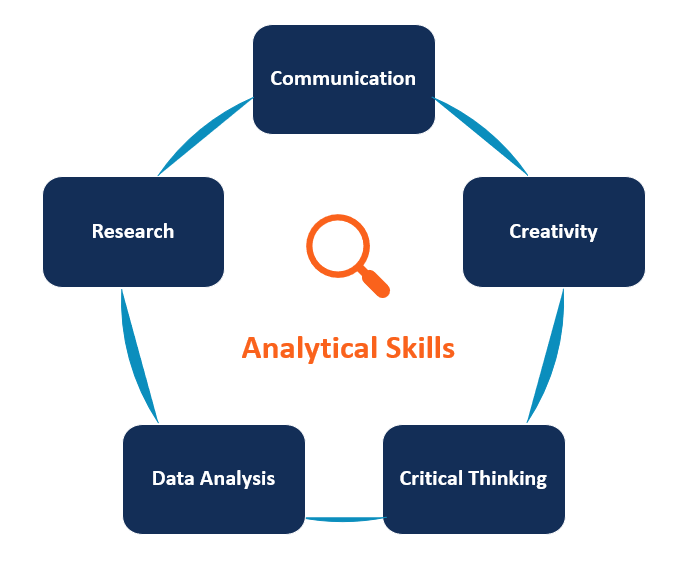
Essentially, that’s what you do as a digital marketer.
You identify a problem, collect relevant data, identify patterns by analyzing data, and then come up with a solution.
This is the single most important digital marketing skill for the future. You need to enhance and improve your analytical thinking to get better than everyone else.
Because that’s how you’ll be able to make sense of the data and come up with logical, data-driven solutions to marketing problems.
Whether you are developing a marketing strategy for your business, allocating a budget, or deciding what marketing channels to target, you’ll need analytical thinking.
Here’s how you can improve your analytical thinking skills:
- Ask questions as much as you can with the intention of understanding the problem and how others solve it.
- Play puzzle games to improve your analytical and critical thinking.
- Challenge yourself. If there’s a challenging task that no one else is ready to take, go for it.
- Keenly observe what’s happening around you within your organization and outside. The idea is to have a sound understanding of how things work, as it opens up your mind.
5. Writing
This is a core domain-specific digital marketing skill. Research shows that up to 80% of marketers write content themselves.
You have to be a good writer if you want to grow and excel as a digital marketer. Whether you are an SEO specialist, content marketer, email marketer, PPC expert, social media marketer, or any other type of marketer – you need to write at some level.
You have to write emails to clients and peers, you have to write blog posts, social media content, craft an outline for an employee, manage sheets, use collaboration tools, and whatnot.
Even if you aren’t directly involved in writing marketing content, you still need to communicate and collaborate with a lot of people as a marketer. And this requires writing skills.
Here’s a quick list of best practices to improve your writing skills as an online marketer:
- Learn web writing as it’s different from traditional writing.
- Use appropriate words and language that your audience can understand easily.
- Marketing writing should be relevant and consistent with the platform. For instance, if you are writing a blog post, follow the content guidelines of the site.
- Be concise in whatever you write.
6. Data Analysis
It’s another must-have digital marketing skill that focuses on collecting, interpreting, and using data for decision-making. It’s the ability to analyze data of all kinds.
Data collection, data analysis, and marketing attribution are among the top challenges that marketers face when proving marketing ROI.
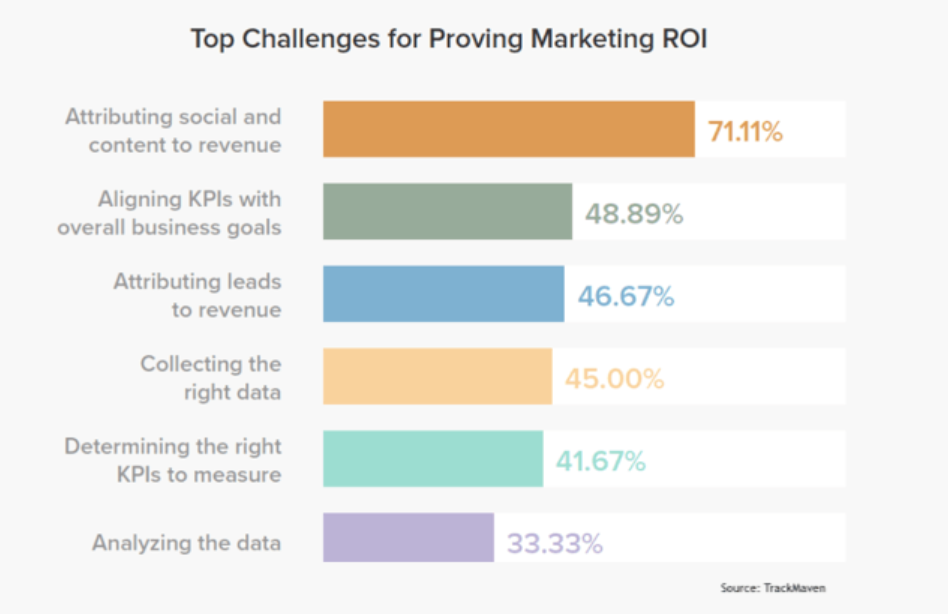
The issue of data analysis isn’t just limited to ROI.
You have to deal with data all the time on a daily basis. Think of all the data your business generates via your martech stack. Tools like Google Analytics, CRM, email marketing software, and tons of other marketing platforms you use, they all generate data – which needs to be organized and analyzed.
Here are the types of data analysis you should master as a digital marketer to stand out from the crowd:
- Behavioral data analysis that includes analyzing the behavior of your target audience and customers, such as purchase history and engagement rate
- Descriptive analysis is used to understand the causes by looking at historical data, such as Google Analytics
- Predictive data analysis is used to predict the future based on past dat,a such as forecasting the number of leads in a quarter
- Prescriptive analytics is where you suggest what actions are to be taken to tackle a certain situation based on data. Conversion rate optimization is one example of where you use prescriptive analysis.
You don’t have to necessarily master all of these data analysis types, as they rely on different tools, techniques, and methods. You must know Excel, Python, and SQL at a minimum.
Yes, you read it right.
Not too many digital marketers know how to use Python and SQL. But these are essential for data analysis.
7. CSS and HTML
Both CSS and HTML are among the core digital marketing skills.
Why?
Because you can’t understand online content and design without HTML and CSS. You’ll see them everywhere, from technical SEO to content optimization to website design to email templates to landing pages and more.
HyperText Markup Language (HTML) is used to structure a webpage, while Cascading Style Sheets (CSS) is used for presentation and styling of a webpage.
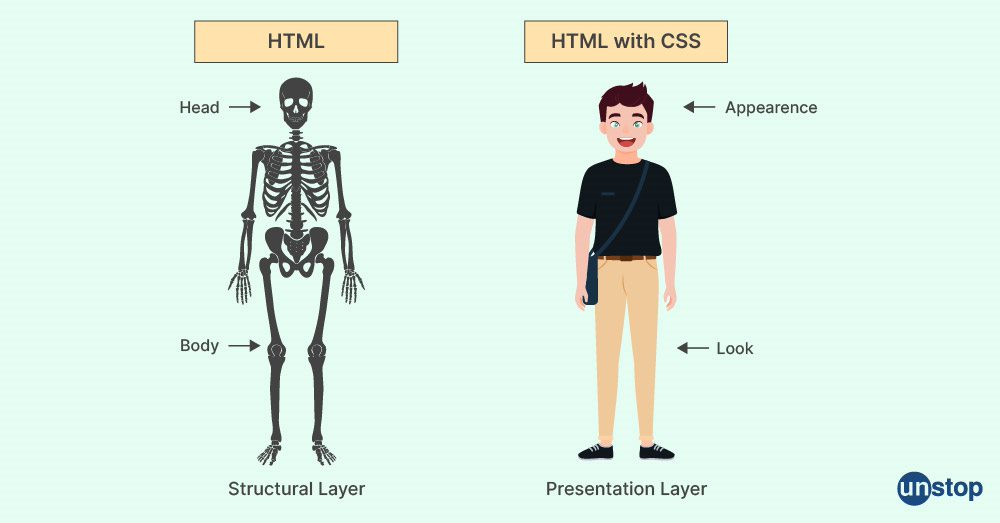
Mastering HTML and CSS is essential, and you must develop your skills to understand the backend of a webpage. You normally deal with the front-end, which is a user-friendly interface in your CMS. You take content from the word processor and paste it into your CMS, and that’s all.
As an online marketer, you have to deal with technical stuff more often – especially in case of an issue. Missing alt texts, on-page optimization, and editing a theme or template get a lot easier when you know the basics of HTML and CSS.
Both HTML and CSS are technical skills, so it’s recommended to take certification or courses to get a hold of both. You can take a free HTML and CSS course on Code Academy, W3Schools, or any other platform (there are many out there).
8. SEO
Search engine optimization (SEO) is a mandatory digital marketing skill. Even if you don’t plan to do SEO and drive organic traffic, you should still master SEO skills.
Here’s why:
SEO is related to branding, credibility, and trust. It helps you improve the search appearance of your site. You can control how your website appears in search engines.
If you drive 100% of your website traffic via paid ads or any other way (other than SEO), a lot of people will end up searching your business or brand in their favorite search engine. And that’s where your site needs to be.
Search engine optimization isn’t all about organic traffic. It’s much more than that:
- SEO improves user experience
- It has a direct impact on site navigation, structure, and usability
- Low-cost leads and improvement in customer acquisition cost.
If you don’t want to ruin your business reputation, improve your SEO skills across all its types.
SEO Types to Learn
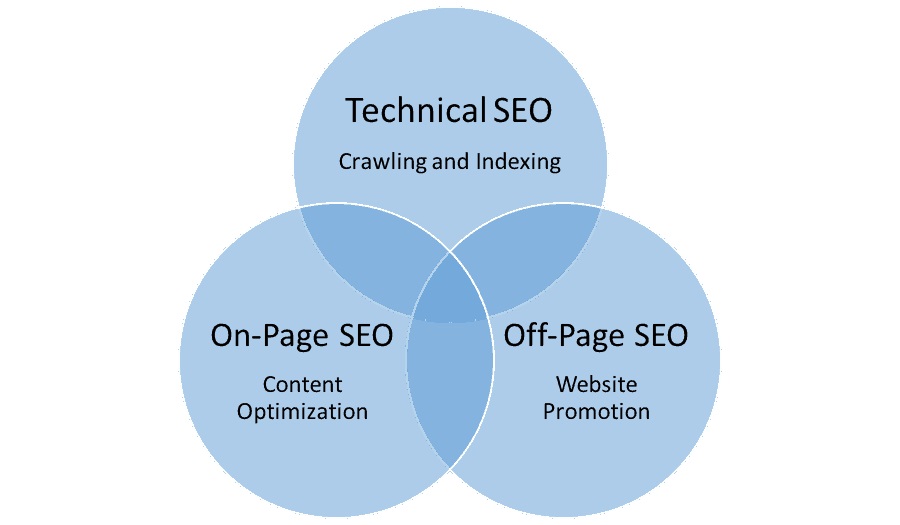
There are three major types of SEO you need to learn and master:
- On-page SEO
- Technical SEO
- Off-page SEO.
On-page SEO refers to SEO practices carried out on a website to improve search visibility, such as content optimization and implementation of HTML tags. It is a core digital marketing skill that you must have full expertise in – even if you aren’t an SEO expert.
Major on-page SEO practices include:
- Content creation and optimization
- User experience improvement
- Core Web Vitals
- HTML tags
- Internal and external links
- Graphics and visuals.
Technical SEO is a specialized form of SEO that focuses on dealing with backend elements of a website, which are involved in crawling, indexing, and ranking.
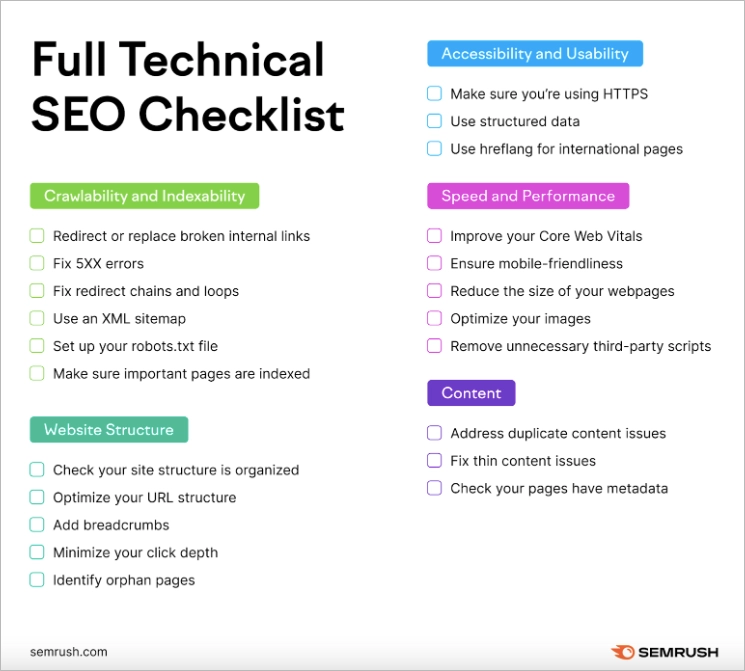
It’s a technical skill that is more suitable for SEO experts. For instance, if you have to improve a site’s Core Web Vitals based on a report, you’ll have to have in-depth knowledge of HTML, CSS, JavaScript, and other technical aspects of the backend of a website.
Being a digital marketer, you must know the basics of technical SEO.
Off-page SEO includes practices that you take outside your website to improve its search visibility. Backlinks are the most important off-page ranking factor, which means you must have the ability to acquire backlinks as a digital marketer.
The major off-page SEO practices include:
- Backlinks
- Local SEO
- Brand mentions
- Branding
- PR and outreach.
9. PPC
Pay per click is an online advertising model used by businesses to drive traffic. It’s one of the most demanded digital marketing skills as brands need experts who can create, manage, and run ad campaigns for them.
PPC is the second most effective marketing channel after content marketing, as reported by 93% of digital marketers:

This won’t change for years to come.
Why?
Paid ads are the best way to generate highly targeted traffic. This is one skill that will continue to thrive in 2026 and beyond.
PPC itself is a huge skill set that consists of subskills that are tailored to specific ad networks. For instance, you might be good with Google Ads and might not do well with Meta ads.
You need to pick and choose an ad network and improve your skills in it with experience and certification. Here’s a list of the lead ad networks for PPC:
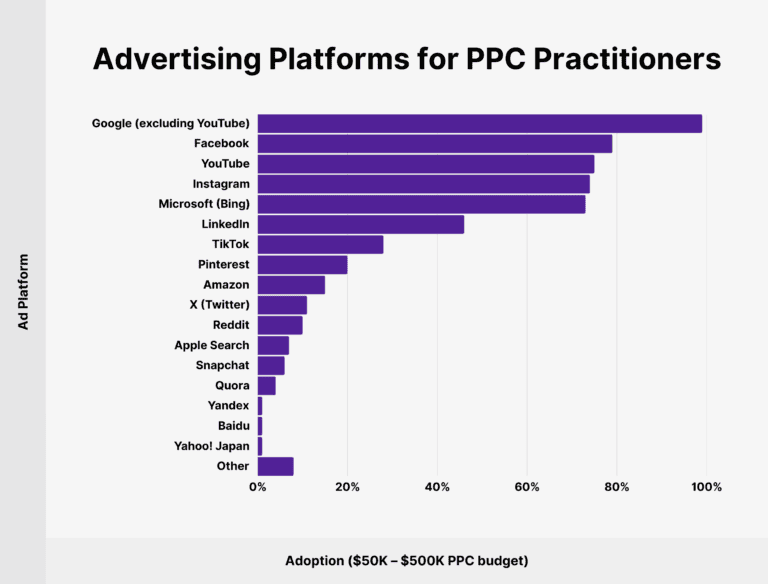
- Google Ads
- YouTube
- Bing
- TikTok.
Each of these ad platforms works slightly differently, but the underlying framework is the same. You can master the top ad networks or just stick with one – it’s your choice.
Follow these guidelines to improve your PPC digital marketing skills:
- Get a relevant certification from the ad network
- Gain hands-on experience
- Learn optimization techniques
- Get used to using tools and apps such as tracking tools, click fraud prevention apps, etc.
- Learn attribution modeling and sales funnels.
10. Social Media Marketing
We are living in an age of social media. It’s impossible to ignore social media marketing skills.
Social media platforms are becoming the new search engines as a lot of people now start their search from their favorite social platform instead of a traditional search engine (like Google).

This means businesses don’t get all the organic traffic from search engines. A major chunk of organic traffic is derived from social media (known as social organic). This means a higher demand for social media marketing experts.
Increasing organic social reach and traffic of a brand is an altogether different and unique skillset from traditional organic search and social ads. You need to know social media algorithms, content creation, behavioral analytics, storytelling, and much more to become an expert social media marketer.
It’s a highly specialized digital marketing skill that is exclusively based on the platform. It’s quite challenging to become an expert at TikTok, LinkedIn, and X as all of these networks have different algorithms and frameworks.
You need to pick and choose a social network and master it to stand out. Focus on organic reach, engagement, and growth for your selected social network.
Follow these guidelines to improve your social media marketing skills:
- Focus on organic growth and reach
- Understand how the algorithm of the social platform works
- Master different types of content creation, including graphics, video, audio, and design
- Data analytics and performance dashboard
- Attribution and tracking
- Use of AI for social media content creation.
Bonus Digital Marketing Skills
Here’s a list of additional digital marketing skills to master in 2026:
- Video marketing
- Podcast and audio content creation
- Webinars
- Live video
- AI and Python
- Email marketing
- Community building
- Influencer marketing
- Marketing collaborations, partnerships, and JVs
- Outreach
- Networking.
Digital Marketing Has a Bright Future
With an increasing number of new online ventures and advances in technology, there’s a massive scope for online marketing and advertising.
The form and channels of digital marketing might change, but it won’t go anywhere.
For instance, social media is gradually replacing conventional search engines. Video is replacing text and images. And mobile devices are replacing computers.
The way you reach and connect with a group of people might change – and it has changed significantly in the past few years. But it won’t go anywhere.
You need to be flexible and adaptive. Keep on learning new skills and continue growing yourself as a digital marketer. The digital marketing skills that are in high demand today might not be so relevant after a few years.
The most important skill for an online marketer is flexibility.
You don’t have to stick with what you learned or with what once used to work. You must accept the change and continue learning.
Digital marketing skills will remain in high demand for several years to come. Those who adapt will grow.
Featured Image: Pexels