A digital-first business is the key to success.
Fast-paced technological changes and advances in AI and machine learning have opened new doors for businesses of all sizes. It’s now a lot easier to start and manage a small business virtually.
While physical presence does help, it’s not mandatory.
Businesses that prioritize digital expansion tend to grow at a significantly higher rate than their counterparts.
This detailed, actionable guide will set you on the right track towards a digital-first business so you can experience exponential growth at negligible cost.
What is Digital-First Business?
A digital-first business uses technology as its main driver and source to perform all business activities. The entire business is built around digital to support instant growth and scalability.
For example, a digital-first business will use remote teams connected virtually working on assigned tasks. The data is stored in the cloud and the business uses a wide range of apps and tools to run day-to-day activities.
Think of an ecommerce store with no physical outlet selling globally. Or, a SaaS company selling a project management app that’s all stored and managed from the cloud with no physical presence.
Digital-first companies rely heavily on their tech stack that keeps their business going. You need to use at least one app or tool per department or team and make sure all the apps in the tech stack are connected and integrated:
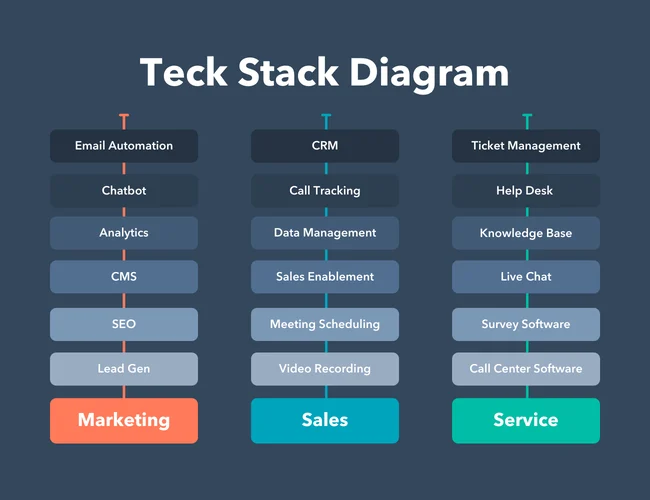
Digital-first businesses are essentially running on apps having their own ecosystem.
How Digital-First Small Businesses Grow 3x Faster?
Switching to a digital-first strategy helps you grow your brand 3x faster than traditional businesses that don’t prioritize digital presence.
What makes digital-first businesses able to grow at a fast pace?
This is due to the following reasons:
Flexibility
The best thing about being a digital-first company is that it makes your business highly flexible and adaptable. Flexibility helps your business in numerous ways, such as:
- You can quickly adapt to external environment changes
- It helps you tweak and adjust your business model as needed
- You can enter new markets and expand with ease
- It gets easier to change business strategy with changes in customer demands and expectations
- You can easily take your business anywhere you want as it runs virtually.
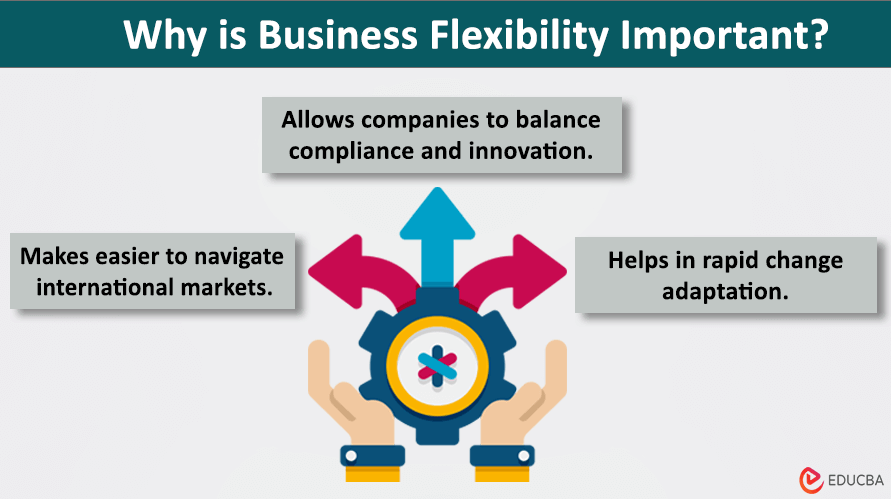
Digital-first businesses have the potential to tackle all types of changes quickly and this gives them a competitive edge.
Scalable
Scaling a business is challenging. It becomes even tougher if your company grows rapidly.
The common challenges businesses face during scalability include improper organizational structure, poor operational processes, cash flow challenges, and revamping business culture.
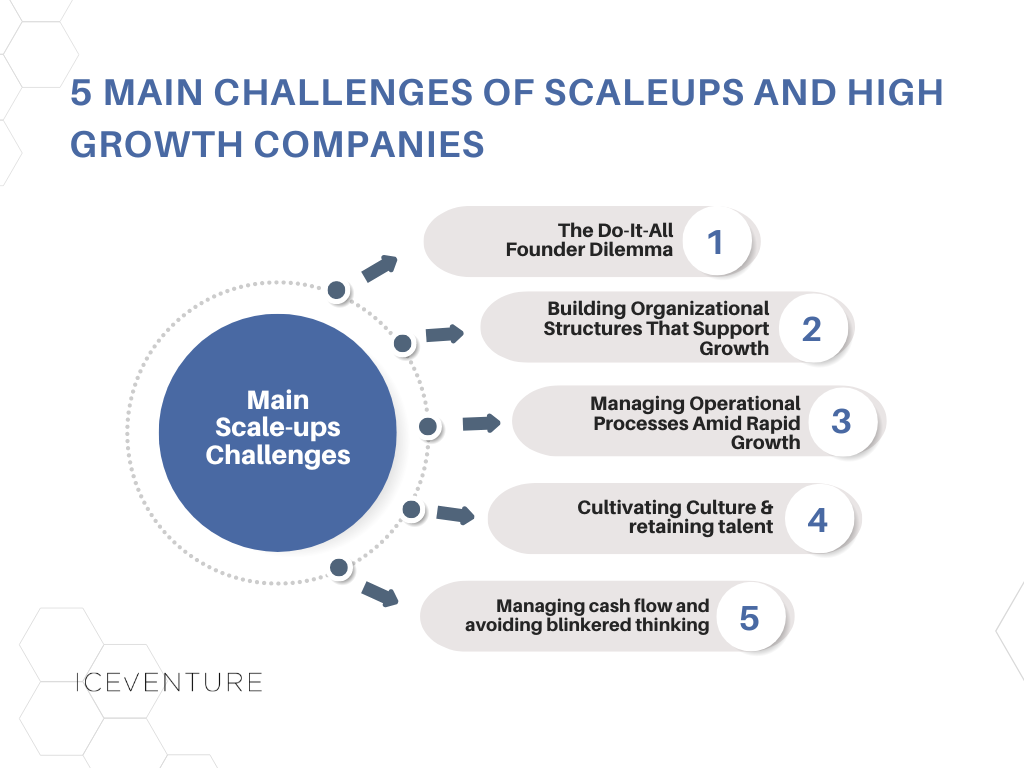
While a digital-first strategy doesn’t address all of these challenges but it does tackle most of them. In reality, it’s much easier to scale a digital business as compared to a physical one.
When you use tools and apps to run and manage your business, all you have to do is upgrade your tech stack and move to better platforms (or high-tier plans). It doesn’t require massive infrastructure updates which you normally need with a physical business (think of a retail store where you need a lot of changes to scale it).
Cost Reduction
According to a recent survey of small businesses by Xero, 60% said that it costs less to start an online business, 70% said it’s cheaper to run an online business, and 57% reported that online businesses have higher margins.
Not only is it cheaper to start a digital-first business, but it costs way less to run it.
The initial startup cost for digital businesses is quite low. You need a domain name, hosting, and a website to get started. The operating cost is quite low and controllable. This is where you use tools to run your business.
For instance, you can choose WordPress and WooCommerce to set up an ecommerce store, both of which are free. Or, you can use Shopify, which costs under $50 per month.
Similarly, most business apps cost you $100 per month.
It’s quite cost-effective both in the short and long run.
Customer Experience
Digital businesses serve their customers better by offering them an ideal experience across channels and touchpoints.
Your target audience expects a lot from you when they visit your website or interact with your business. Most of these expectations are related to their ‘experience’.
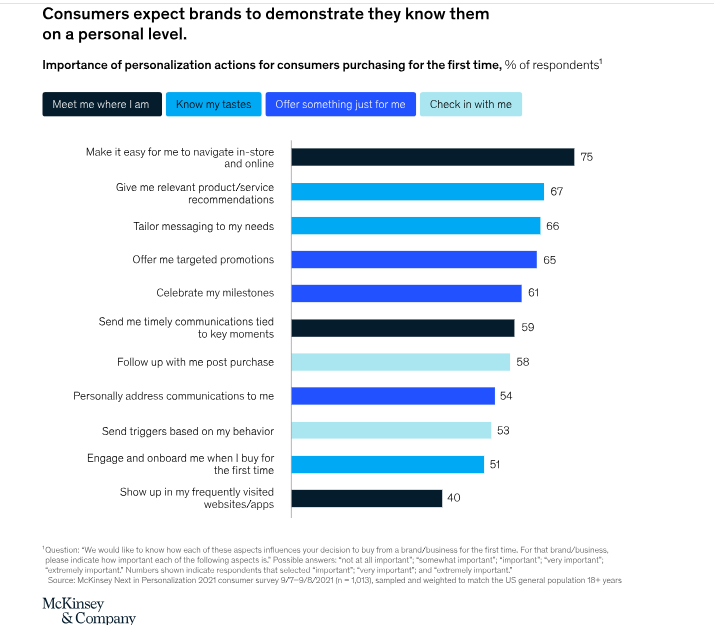
You can meet customer expectations and offer an exceptional experience if your business is digitally equipped. Having a reliable and integrated tech stack ensures that you exceed customer expectations.
For instance, customers expect personalized recommendations and targeted promotions. You need dedicated tools for customer segmentation and targeting.
Importantly, you can offer a fully online omnichannel experience to your customers with extreme ease. Here’s what an omnichannel experience looks like:
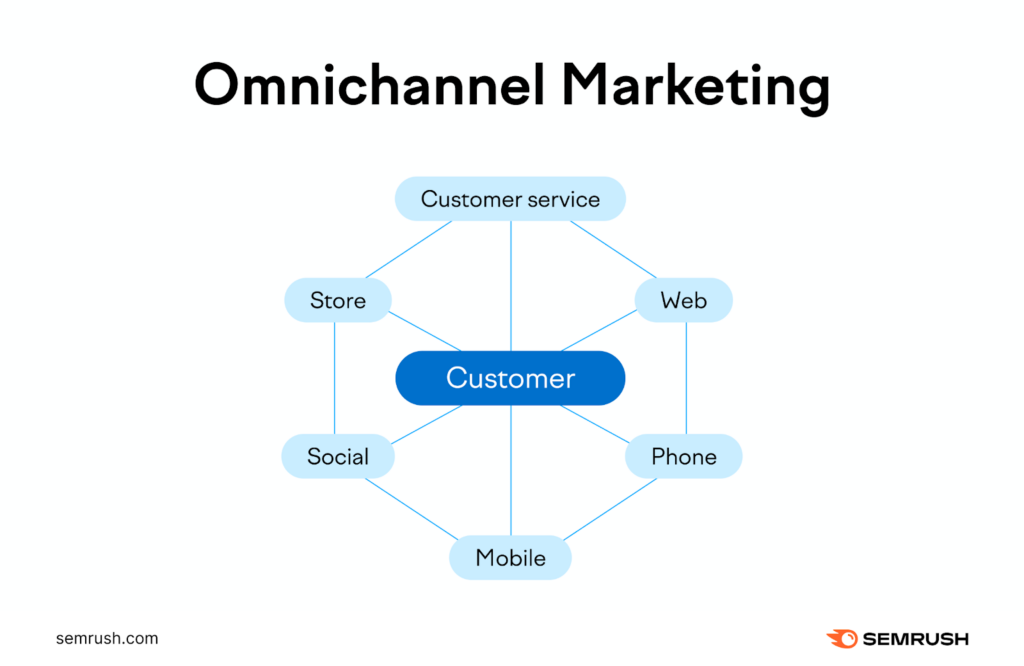
This is easy to manage with digital-first businesses as compared to physical businesses. This lets you connect with your customers online across channels and offer them an integrated and continuous, uninterrupted experience.
Automation
Digital-first businesses aren’t automated by default. But it is much easier to implement automation across different business processes.
Adding AI tools and workflow automation apps to your tech stack can fully or partially automate your business.
For example, you can automate workflows, tasks, and processes using a tool like Zapier that connects different apps and performs tasks based on triggers. It can, for instance, convert incoming emails to leads and send them to your CRM tool and assign them to a sales rep automatically.
You can run your digital business on full autopilot if you have access to the right tools and the right people.
Better Control
Apps, tools, and platforms give you full control over your business and its processes.
It includes two types of control:
- You manage your business end-to-end and you can tweak anything as needed
- Tools and apps generate data that helps you in decision-making. This gives you more control over your business.
You can switch apps, you can change rights, you can remove people, and use platforms the way you like. There are no restrictions. And you get access to all the data via the platforms you use.
Think of Google Analytics. It provides you with tons of visitor data about your website for free. You don’t find this type of accurate and reliable data with any physical business.
That’s the beauty of a digital-first business.
Digital-First Techniques and Best Practices for Small Businesses
The big question is: How to convert your new or existing small business into digital-first?
Let’s explore some of the proven digital-first techniques that you should try:
Set a Clear Goal
Switching to a digital-first business strategy requires a well-thought-out plan. You need to set objectives that clearly define where you want to see your business in the long run.
The question you need to ask yourself is, what do you want to achieve with digital-first small business strategy?
The answer is your primary goal.
For instance, you might want to implement a digital-first strategy to improve business efficiency, reduce cost, reach a wider audience, improve customer experience, or get a competitive advantage.
It all comes down to business strategy and long-term goals.
The best way to create a digital-first goal for your small business is via the SMART goal framework. It helps you create specific, measurable, achievable, relevant, and time-based goals:
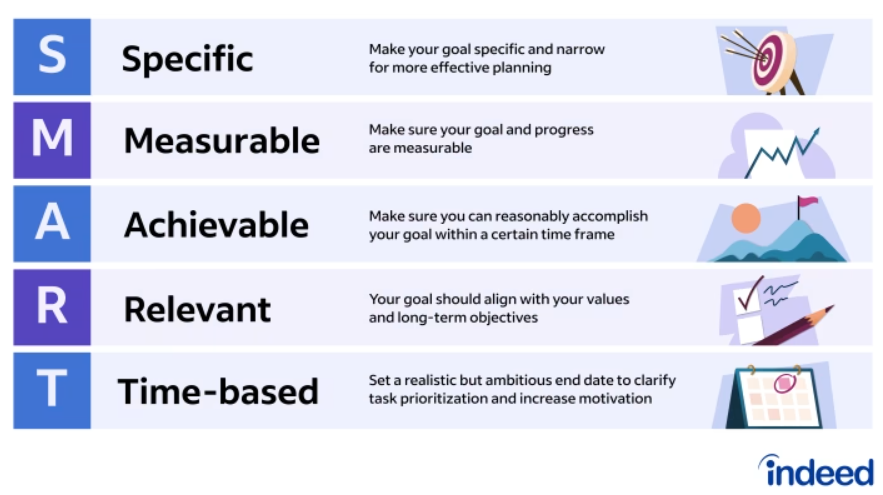
Your goal needs to be highly specific. It’s often challenging for new businesses as they try to achieve pretty much everything with their digital strategy which usually backfires.
If you try to get too much, you’ll end up nowhere.
The best way is to identify one goal (e.g., cost reduction) and then stick with it. This helps you stay focused. You’ll eventually get all the benefits of being a digital-first small business anyway.
Build a Strong Digital Foundation
Digital-first business is all about your online presence.
You have to build a strong, meaningful online presence for your business. This is a crucial step because that’s how you’ll run and manage your business.
Digital presence includes:
- Website
- Social media accounts
- Business listing.
Let’s cover these in detail:
1. Website
You need to start with a business website. If you have it already, you need to optimize it.
Your website needs to be professionally built, well-designed, fast, and optimized for both search engines and users.
If you have a basic, symbolic website, you need to revamp it. As much as 38% of people don’t interact with a poorly designed website, 39% of website visitors focus on its colors, and 38.5% of visitors judge a business by looking at its website:
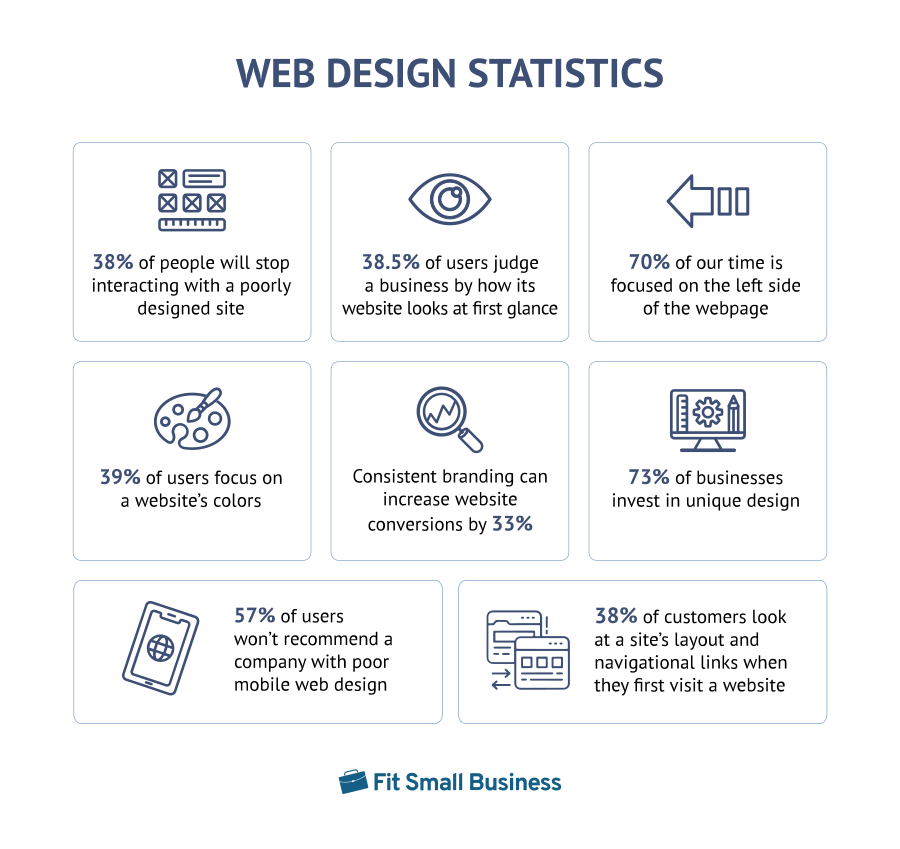
Here’s how you should optimize your website so it acts as the primary digital-first touchpoint for your business:
- Improve website design and look. If you use a CMS, it’s best to buy a premium theme
- Make your website responsive and cross-device compatible
- Ensure that it has all the mandatory pages like about, contact, and others
- Focus on ease of use and UX
- Improve its speed and functionality by following Core Web Vitals guidelines and optimizing your site based on recommendations. Check out more details here
- Publish high quality content
- Create a blog and publish new content regularly
- Submit your website for indexing to Google via Google Search Console. Enable Google Analytics 4 to monitor its performance
- Implement SEO best practices as mentioned in this article
- Submit your website to business directories based on your business and its location
- Promote your website by sharing it with your friends, family, and business partners
- Improve your site’s organic traffic by acquiring backlinks.
2. Social Media
People use social media actively to engage with brands, find new products, and even to make purchases. Around 34% of social media users discover new products on social media:
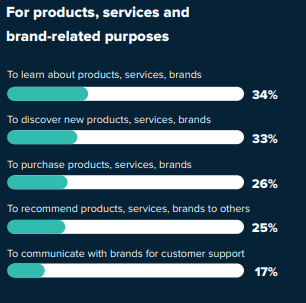
This trend is more common in Gen Z and Gen Alpha as they are more inclined towards using social media as a search engine. Instagram is the most popular social platform for product discovery, followed by Facebook and TikTok:

This is what makes social media presence an essential part of digital-first small businesses. Your website isn’t enough. You need to create social media accounts for your business on the most relevant social media sites to interact with your ideal customers.
Identify the social sites that your target audience uses. You don’t have to stick with the popular social media platforms. Understand the demographics of social sites and match those with your target audience.
For instance, if Gen Z is your primary target audience, you need to be on TikTok, Instagram, and YouTube. They also actively use Snapchat, Pinterest, and Discord.
Once you have selected the right social platforms, here’s what you need to do next to improve your presence:
- Create accounts on all the preferred social media sites for your business
- Complete your profile and optimize it completely with all the relevant details
- Publish new, fresh content regularly on all the platforms. Use a social media editorial calendar for it
- Create multiple types of content (e.g., video, images, GIFs, quizzes, etc.)
- Engage with the community and actively participate in relevant discussions
- Respond to comments and feedback
- Use social platforms to sell your products and/or services (if allowed)
- Run social ads to generate followers and boost engagement.
3. Business Listing
You need to list your business (including your website) across different platforms that people use to find businesses.
Research shows that 77% of people use Google Maps to find local businesses and 35% use Yelp. If you aren’t on these platforms, you are losing customers.

Listing your business on these sites and marketplaces boosts credibility and helps you increase brand awareness. Your target audience doesn’t just look for your business across a number of platforms, but it also looks for reviews.
Up to 93% of customers read online reviews before buying a product and 59% of them check more than 2 reviews before making a purchase decision:
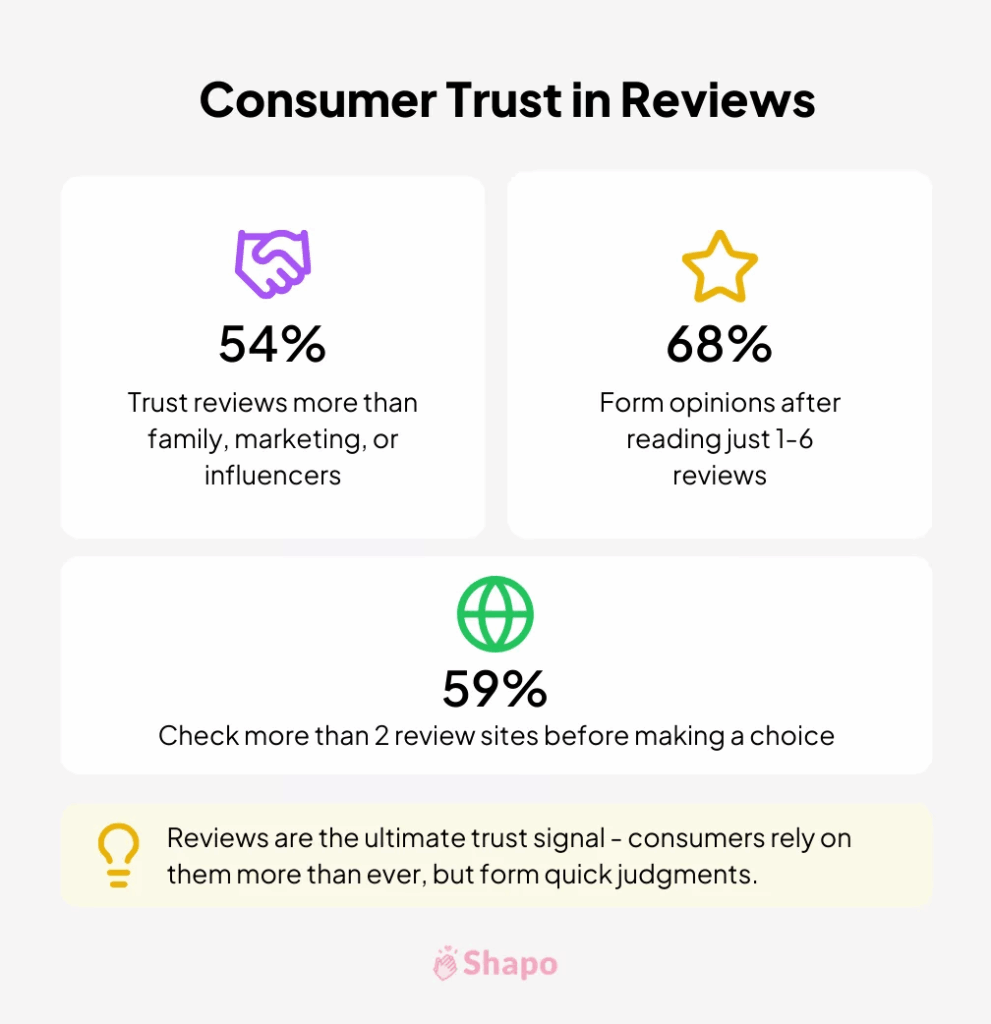
So, you need to list your company in business directories and third-party review sites. Here’s a list of the most popular ones to go with:
- Google Business Profile (this includes Google Maps, local listing, and other Google products)
- Yelp
- Bing Places
- Apple Maps
- Facebook business
- Yellow Pages
- Trustpilot
- LinkedIn.
Besides, you’ll find niche and regional business directories and online marketplaces. You can find the popular ones with a search query.
List your business across all these platforms with all the mandatory information. Each one of these listings acts as a lead generation source for your digital-first company. You never know where a potential customer might look for your business.
Be present everywhere as this is what digital-first means.
Build Tech Stack
Digital-first strategy can’t be implemented without relevant technology which includes software, apps, platforms, and tools.
Tech stack (or tool stack or technology stack) refers to the set of all the tools and apps your business uses to function. It’s a collection of tools that together create and run your business.
An average company uses up to 172 different applications, with an addition of 4 new tools to the tech stack each month:
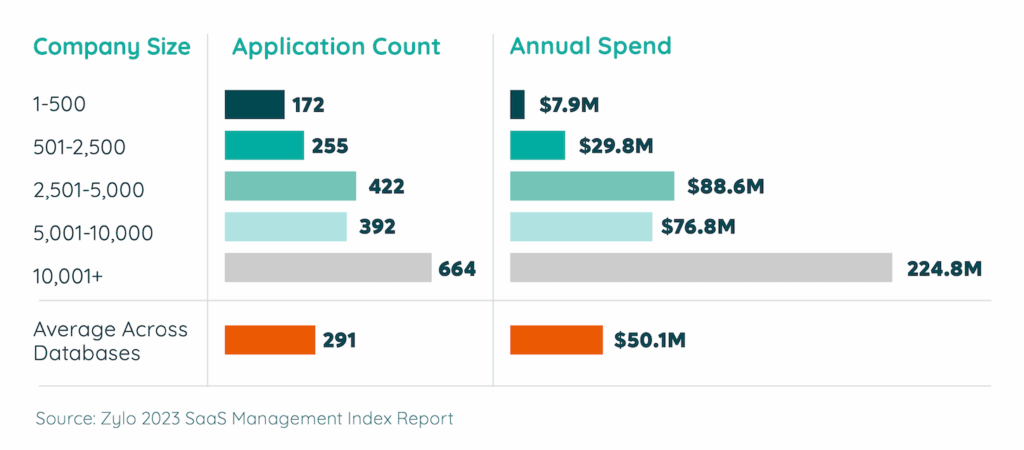
Small businesses with under 10 employees usually have around 20 apps in their tech stack. These tools are used to achieve a wide range of tasks and processes on a daily basis, such as:
- Communication
- Productivity
- Marketing
- Sales
- Finance
- Customer support
- Data analytics and reporting.
You can pick and choose any number of software for your business as these apps help you in managing your business promptly.
The number of apps you use isn’t important. The success of a tech stack depends on how it functions. All the tools and apps in your tech stack must work collectively as a cohesive, connected system.
All the platforms must be interconnected and be able to communicate with each other. It must be a centralized system.
One way of ensuring all the tools in your tech stack are integrated is by using an app like Zapier. It connects different tools and lets you create automated workflows.
You don’t have to create silos and standalone software. That’ll create endless issues for your digital-first business.
Transform Culture
Digital-first business strategy requires a company-wide culture transformation.
If you are starting a new business, you need to develop and nurture an appropriate culture.
Organizational culture is the set of values, beliefs, behaviors, and norms that define how people in a business act and interact. It defines the workplace environment.
Some businesses have a formal culture, while others have a friendly and funky culture. It is not developed by chance, rather, these changes you see across businesses are intentionally developed via culture.
Digital-first businesses should develop an appropriate culture where everyone thinks and acts digitally. This is achieved by defining clear goals, setting new norms and values, and intensive training and tweaking.
The first step, however, is to set a clear goal of redefining organizational culture in a way that supports digital business strategy – and doesn’t oppose it. Here’s how to tweak your business culture:
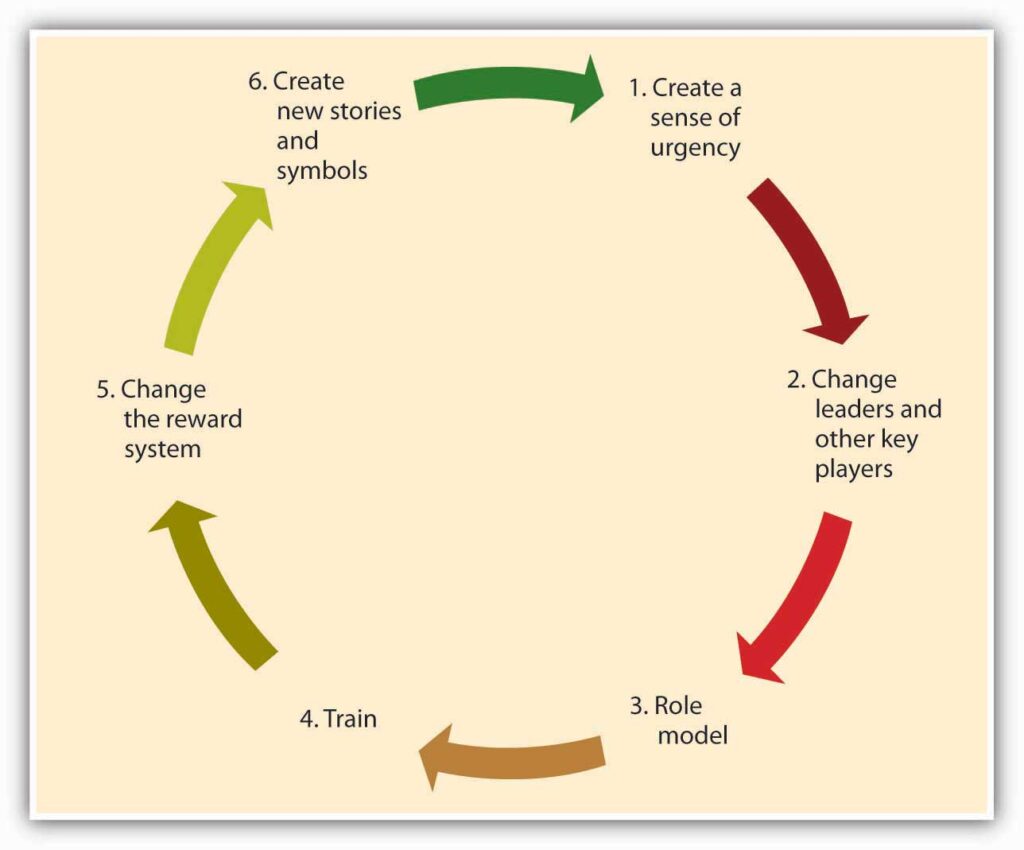
In case of moving towards a digital-first business, here is a list of the key steps you should ideally take:
- Roll out new SOPs, rules, and guidelines
- Hire and/or promote tech-savvy leaders who are digitally well-versed
- Get new tools and train your workforce on how to use these new apps
- Appreciate and reward those who learn and adapt quickly
- Set up new stories, norms, and values that focus on digital-first settings.
Implement Omnichannel Experience
This is what enforces business growth.
A digital-first business shouldn’t exist without an omnichannel strategy. It’s not that it can’t, but it shouldn’t. Because the impact of online business passes onto your audience and customers through an omnichannel experience.
In its absence, they won’t get anything from your digital-first presence.
Omnichannel experience offers your ideal customers an integrated, continuous, and seamless experience across touchpoints.
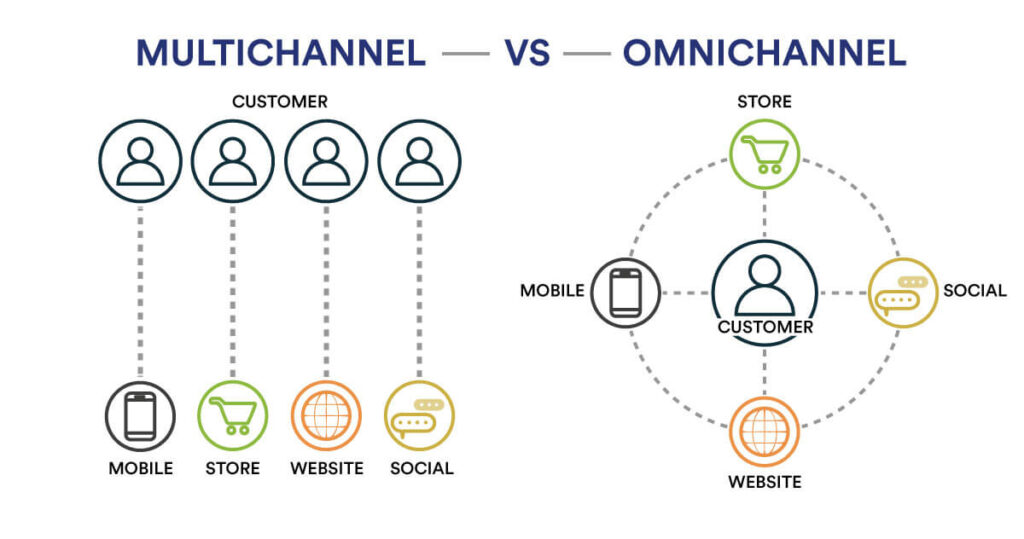
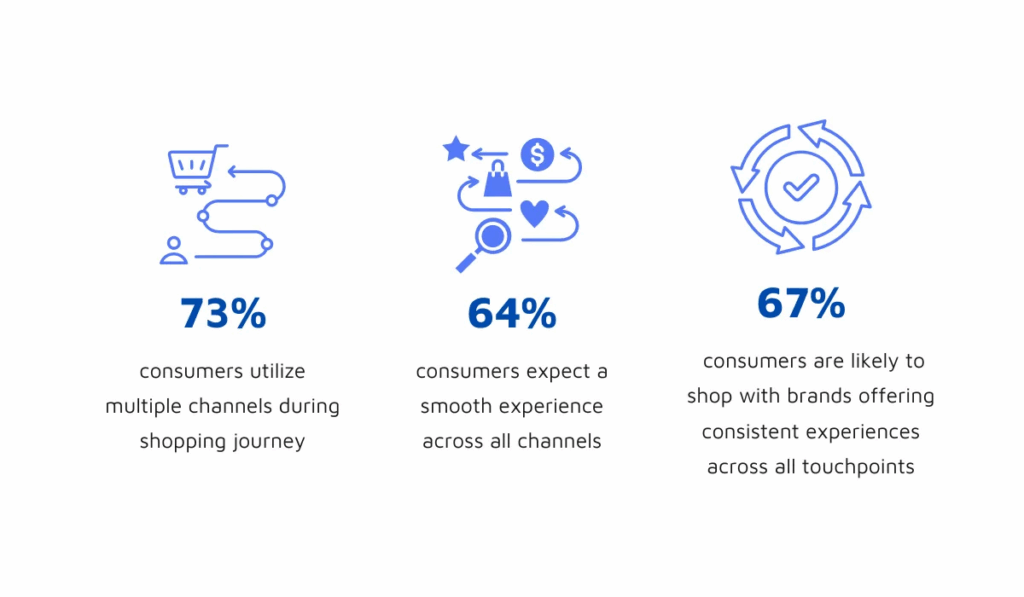
Research shows that as much as 73% of customers use multiple channels to interact with a brand during their journey and 64% of people expect a smooth experience across all these touchpoints:
For instance, a potential customer interacts with your brand through Google Maps, then later likes your social media page, a few weeks later reads a blog post on your website, and finally converts via your website.
This whole journey needs to be consistent for your audience. The potential customers should be able to start the journey from the exact spot where they left and the experience needs to be consistent.
Here’s how to create and implement an omnichannel strategy for your digital-first small business:
- Start by integrating all the apps (as discussed above)
- Use CRM and CDM tools to manage customer data
- Map the customer journey using a relevant platform
- Create consistent messaging for all customer touchpoints.
Here’s an overview of what an omnichannel experience should look like:
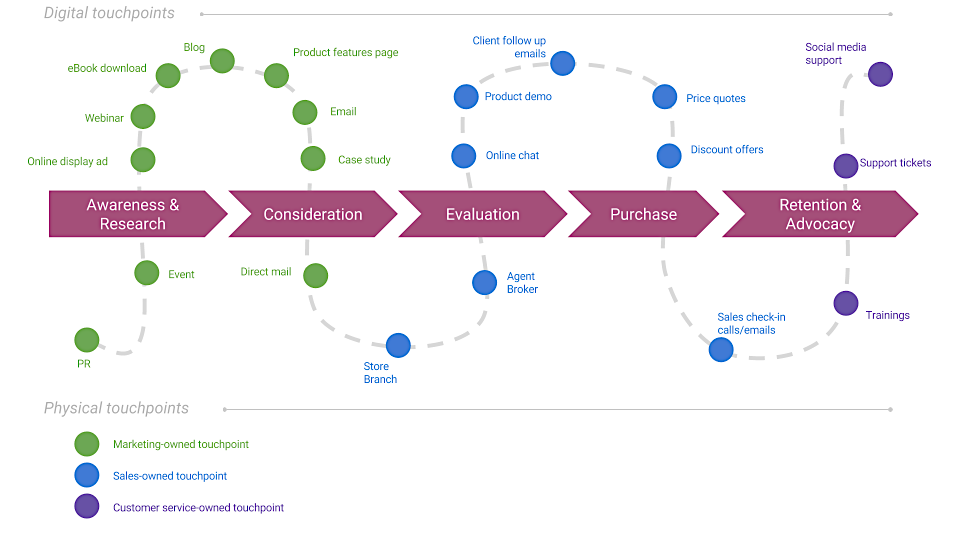
It focuses on marketing, sales, and customer service touchpoints based on the stage of the customer in the buying journey. This is a good way to implement omnichannel experience in your digital-first small business.
Tweak and Evolve
When you run your business online using apps and tools, it’s imperative to have an adaptive and flexible business strategy.
Why?
Because technology changes quickly and you have to be ready to upgrade your tech stack accordingly. If you don’t keep pace with technological changes, your business will suffer significantly.
You need to monitor your business regularly and be ready to evolve.
For instance, we have seen a global increase in the popularity of AI and AI tools in the last couple of years. There are now tons of AI apps for businesses that were nowhere in the market a few years back.
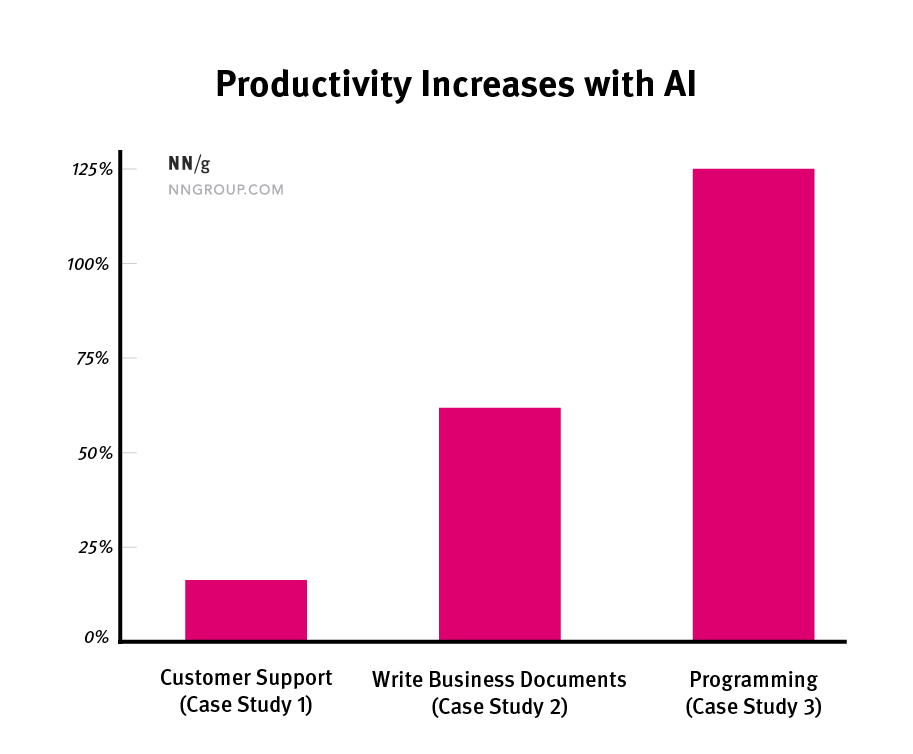
Businesses that switched to AI tools and added to their tech stack before their competitors have increased productivity and revenue significantly. Businesses have increased productivity with AI tools by 125% for programming-related tasks:
Imagine businesses that didn’t adapt in time.
For a digital-first business to be successful, it needs to constantly monitor both internal and external environments. This is the only way to scale and grow your digital-first business.
Follow these best practices to stay ahead of your competitors:
- Regularly monitor your digital-first strategy, performance, and tech stack
- Create and nurture a culture of high business flexibility. Create supporting governance laws and SOPs
- Track the performance of all the apps and touchpoints. Anything that’s not working should be replaced
- Look out for new business apps and tools. If they fit in your existing tech stack, add them
- Keep an eye on technology news and both micro and macro tech changes.
Final Words
Digital-first is a mindset.
It is a long-term, scalable strategic mindset that should be implemented across your business with a supporting cultural change. You need to choose the right tools for your business to get started.
And it then gets easier because tools are extremely cost-effective.
When you run your business digitally, you will notice how easy and fun it is to do business.
The same goes for growing and scaling your digital-first business.
Get started today and change the way you do business in the digital era.
Featured Image: Pexels