If you are investing in traffic generation without a conversion marketing strategy in place, you are leaving money on the table.
Traffic doesn’t convert itself.
A large chunk of people who visit your website or a landing page leave without taking any action. It’s suicidal and a waste of resources.
How to ensure you convert the maximum number of visitors on any given webpage, let’s find out in this actionable guide.
What is Conversion Marketing?
Conversion marketing refers to the systematic process of converting visitors into customers by persuading them to take a specific action (e.g., filling out a registration form or adding a product to cart). It focuses on optimizing UX and ensuring visitors enter your sales funnel and convert to leads.
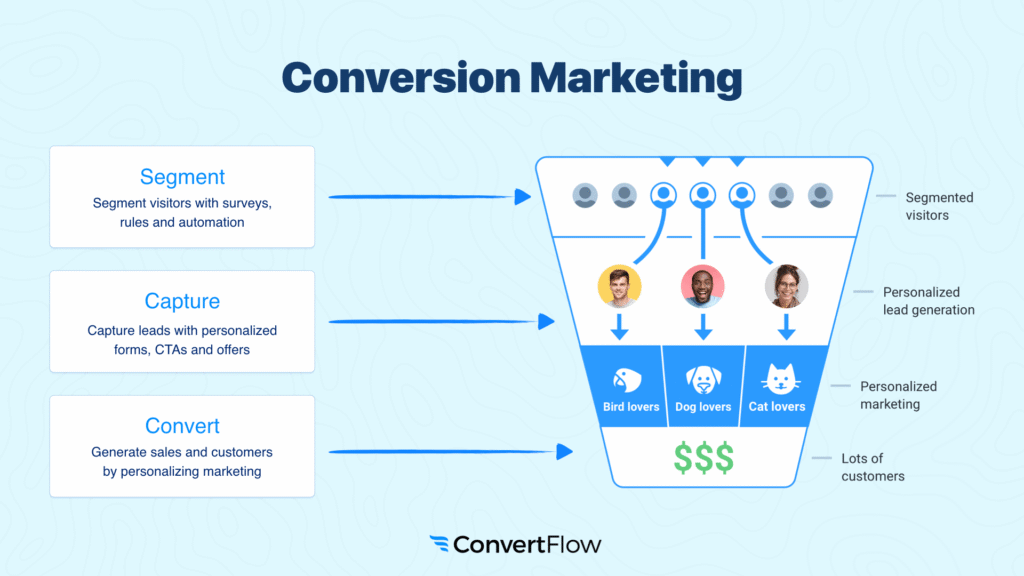
Conventionally, marketing practices focus heavily on increasing traffic and bringing in more visitors. Conversion marketing relies on making the most of your existing traffic by converting it into leads and customers.
It’s a totally different and highly effective approach to marketing.
Conversion Marketing Benefits
Conversion marketing offers a wide range of benefits that you don’t get with traditional marketing that focuses on driving traffic and visitors. The major benefits are covered below:
- Lower customer acquisition cost (CAC): Conversion marketing doesn’t focus on generating traffic, but rather it relies on increasing the conversion rate of your existing traffic and visitors. This isn’t just affordable, but it reduces CAC significantly. It doesn’t matter whether you have 100 or 100K visitors, conversion marketing works the same and it reduces customer acquisition cost.
- High customer lifetime value (CLV): It helps boost CLV in two ways. First, a reduction in CAC leads to a high CLV even if nothing else is changed. Read more about the formula and how both are associated in this article. Second, conversion marketing focuses on improving UX across all touchpoints which makes your customers happier. Consequently, they stick with your business for a longer period, become loyal customers, and significantly increase order value and frequency. This leads to a high CLV.
- High revenue: An increase in conversions directly impacts leads, sales, and revenue. This is the biggest reason why you should switch to conversion marketing as its impact can be measured in the form of revenue. This makes it easier to prove conversion marketing ROI.
- Better UX: Improving conversions requires changing variables with the intention of making the user experience better. This covers your website and all other touchpoints. Improvement in UX has an overall positive impact on customer loyalty and satisfaction.
- More data: Conversion marketing is a data-driven approach that uses research, data, and experimentation. It provides you with valuable insights into user behavior and preferences. This data helps you make informed, data-driven decisions for your business that aren’t just limited to marketing.
Conversion Marketing Vs. General Marketing
Before we dive into more details of conversion marketing, it’s important to differentiate it from general marketing. If you want to use it for your business, you must know what it is, what it does, what it isn’t, and how it differs from traditional marketing:
- Goal: Conversion marketing has highly specific, conversion-related goals such as generating sign-ups for the newsletter. General marketing has broad, long-term goals that revolve around traffic generation, brand awareness, reach, etc.
- Approach: Conversion marketing uses a highly focused approach that revolves around optimizing the marketing funnel and improving the UX and user journey. Marketing has a broader approach, which focuses on brand awareness, brand image, and reach across multiple channels.
- Timeline: With conversion marketing, you focus on short-term, quick gains that are derived from optimizing one variable at a time. General marketing is always a long-term strategy that your business follows for years with or without tweaks.
- Metrics: The metrics used to measure conversion marketing are quantifiable as it’s quite straightforward to track performance. Common metrics include conversion rate, cost per conversion, CTR, etc. In the case of general marketing, metrics are derived from the goal and include both quantitative and qualitative metrics.
Types of Conversions
Conversion marketing is all about conversion actions. Let’s dig deep and understand the two common types of conversions that you have to deal with when running conversion marketing campaigns:
1. Macro Conversions
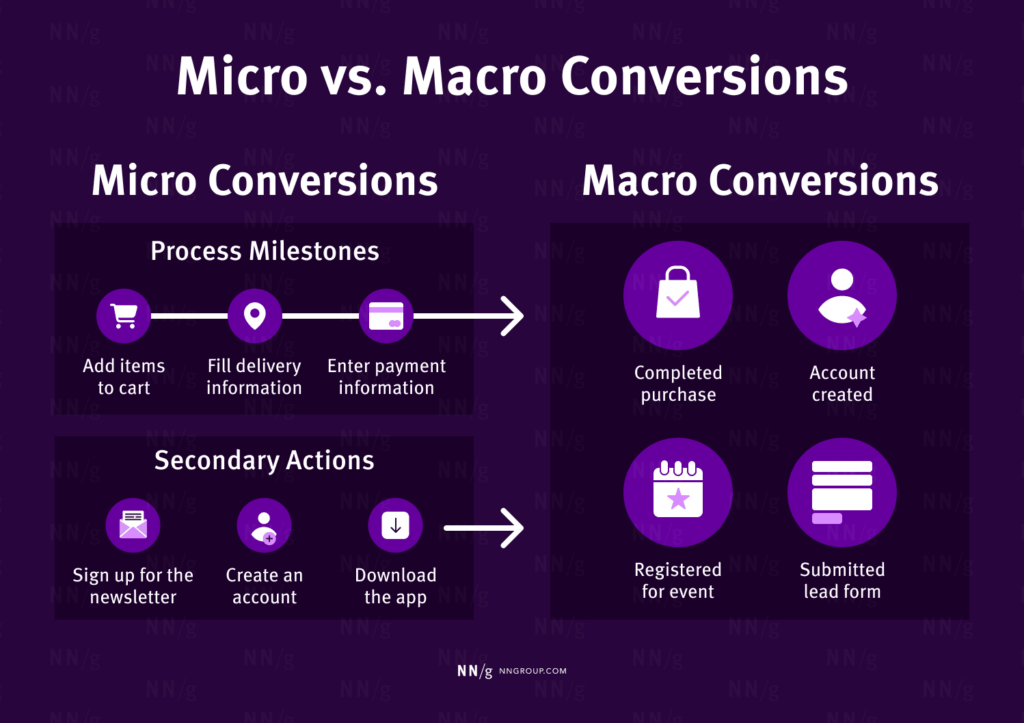
A macro conversion is the primary action that a user has to take to complete a conversion. This action has a direct impact on your business.
Macro conversions include a purchase, account registration, or form submission.
You have to identify macro conversions for your business depending on marketing goals and long-term objectives. Ideally, for B2C businesses, macro conversions include product purchase, while for B2B businesses, lead generation in any form is a macro conversion.
2. Micro Conversions
A macro conversion consists of several micro conversions, where each micro conversion represents a small action (or step) taken by a user. These small actions collectively take the user towards macro conversion (a sale or lead).
Here’s an example of multiple small steps (each representing a micro conversion) a user takes to move towards purchase:
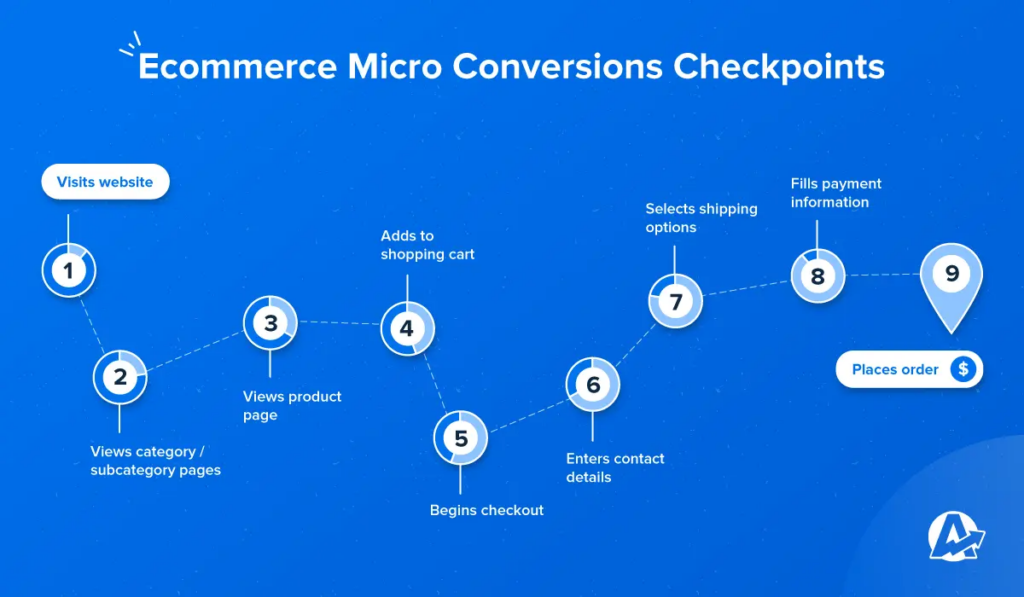
Micro conversions tap the complete buyer journey and include all the tiny interactions. A potential customer interacts with your business multiple times in different ways before (macro) conversion.
These micro conversions are often called soft conversions because they don’t have an immediate monetary impact on your business. Rather, these are more inclined towards engagement and interaction. And these are equally important.
In conversion marketing, you have to focus on both types of conversions as these two are closely tied together. You can’t have a decent macro conversion rate with a poor micro conversion rate. And a funnel optimized for micro conversions with a poorly optimized macro action won’t work either.
Technically and from a business point of view, you need to work on both micro and macro conversions to fully cover and optimize the buyer journey end-to-end.
How Conversion Marketing Works
The steps below outline the working process of a conversion marketing strategy:
Step #1: Define Goal
It starts by setting a conversion marketing goal which mostly involves improving the conversion rate of a specific page or product.
Marketing pages (such as landing and squeeze pages) are among the most crucial pages where conversion optimization is needed.
You need to identify the page, conversion action, and its potential value for your business at this stage.
This is the stage where you’ll identify macro and micro conversions. The idea isn’t to create a one-off CRO experiment, but a system that constantly tracks and improves conversions.
Step #2: Understand Customer Journey
You need to identify and map the customer journey.
This is a must for conversion marketing as it shows all the interactions a customer has with your brand. Here’s how customer journey looks like:
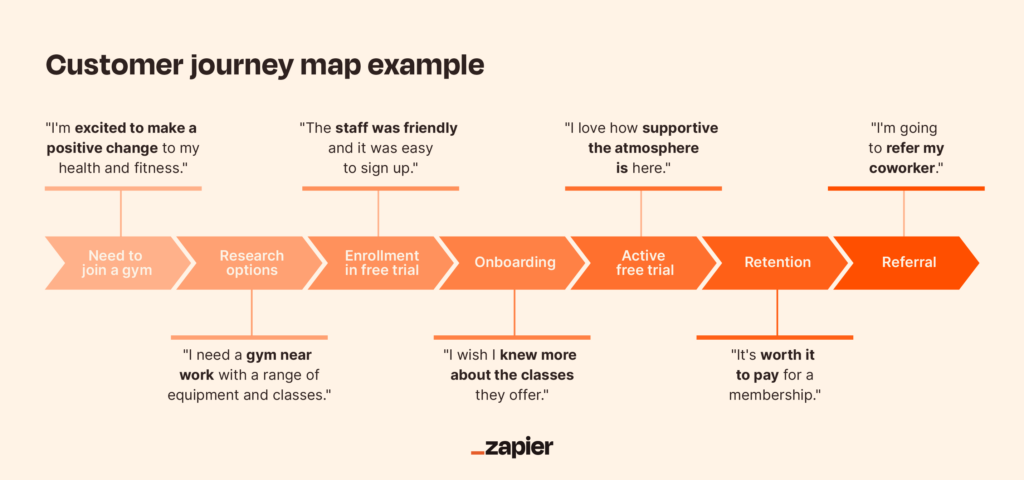
It covers all the stages and actions that your customers take from first interaction with your brand to becoming a customer. This journey isn’t linear. It is not standard. And it keeps changing.
For instance, one customer might interact with your brand 10x before becoming a customer, while another customer might visit your website for the first time and end up being a customer.
You need to know the key interactions that all or the majority of customers have in common.
Step #3: Improve UX and Reduce Friction
This is where you optimize and improve the customer journey, website, and all touchpoints to reduce friction and leakages.
The idea is to help potential customers in becoming a customer. This is done by reducing friction throughout their journey.
Friction is anything that stops a visitor from moving towards the next micro conversion in the customer journey. You need to find and eliminate elements that create friction and lead to leakages in the form of customer losses.
User experience improvement ensures potential customers complete their journey swiftly without any issues. And this is what’s done in conversion marketing.
Step #4: Track and Optimize
Finally, you need to track changes and measure impact.
Conversion marketing is a continuous process where you continue optimizing different touchpoints over and over again to improve conversions.
Since you generate a lot of data with conversion marketing, there’s a lot of space for improvement. And that’s the whole point. You don’t have to stop optimizing your website and other channels once you achieve a specific conversion rate.
Keep tweaking elements and see if you can do better.
This is how you get a competitive edge over your competitors by reducing CAC and increasing revenue significantly.
Conversion Marketing Techniques & Best Practices
Let’s overview conversion marketing tactics and techniques along with industry best practices:
Use Landing Pages
Landing pages play a crucial role in conversion marketing. They are at the center.
A landing page is a dedicated, purpose-driven marketing page that presells or sells one offer to a single buyer persona with highly specific details and personalization.
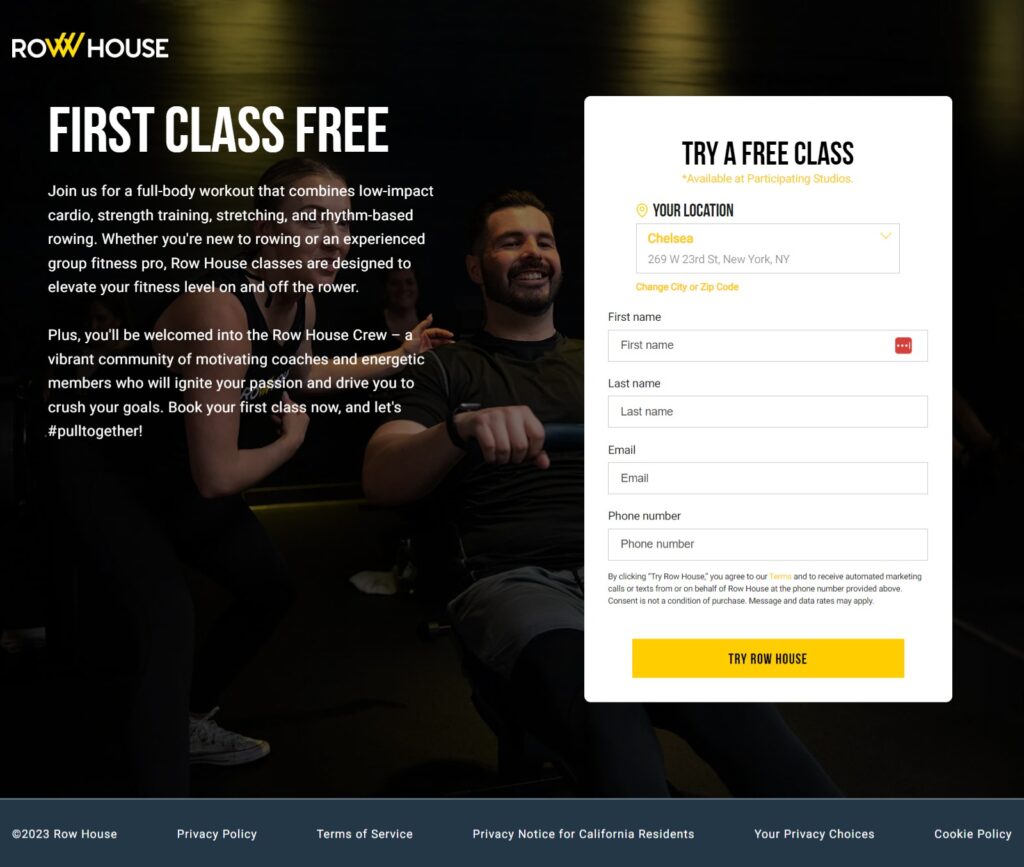
If you send traffic to your home page, product pages, or any other webpage on your website, you are losing both customers and money.
You need to send traffic to a specialized page that doesn’t try to sell everything you have. It must be relevant to the ad (or traffic source) and must be focused on conversions.
And this is best done with landing pages.
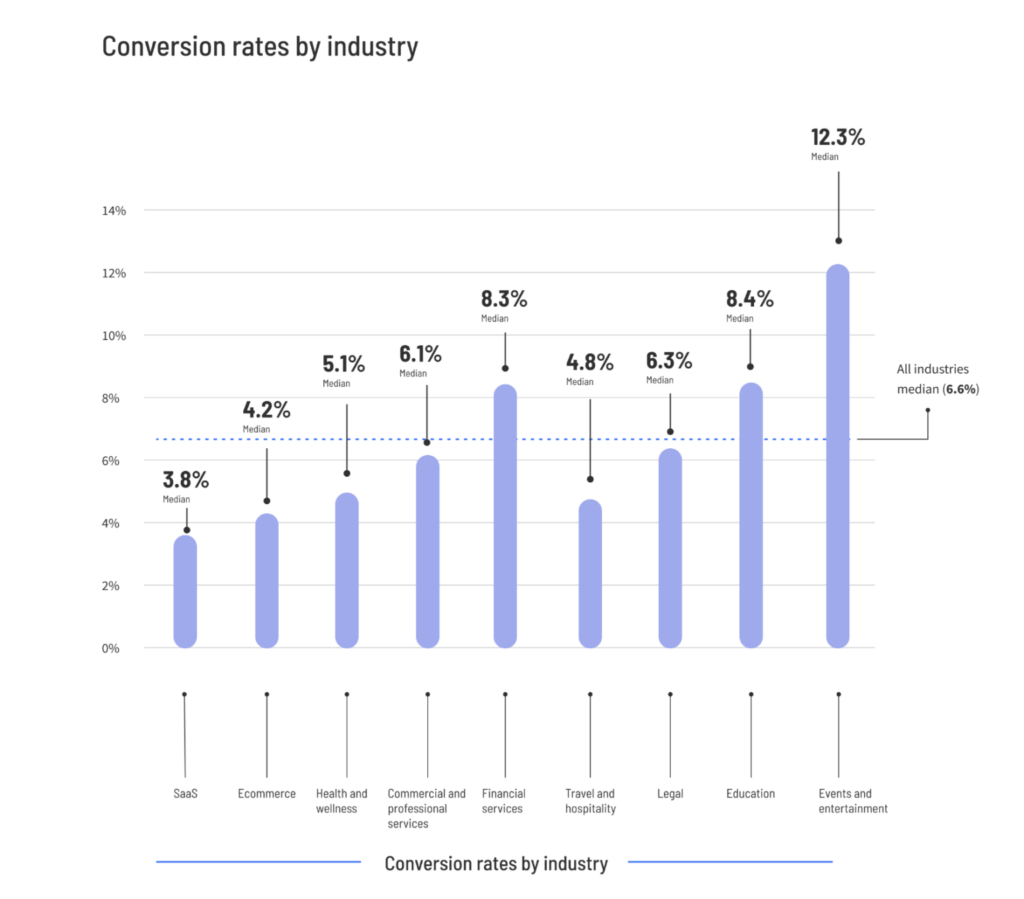
The average conversion rate of a landing page, across all industries, is 6.6% based on the analysis of 41K landing pages, 464 million visitors, and 57 million conversions. Conversion rate for landing pages varies by industry and several other factors:
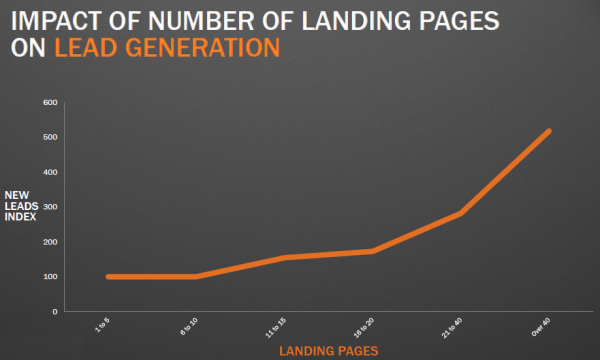
Ideally, you have to create several landing pages per offer and then pick the one that converts best so you can optimize it. Businesses that have more than 40 landing pages can increase their conversion rates by 500% compared to businesses with fewer landing pages:
Landing pages inherently don’t increase conversion rate. They need to be optimized for conversions.
So, you need to do two things for an effective conversion marketing strategy:
- Create at least one landing page per offer.
- Optimize landing pages for conversions and continue doing it.
Landing Page Optimization Tips
Follow these best practices, tips, and tricks to optimize landing pages for higher conversion rates:
- Create purpose-driven landing pages
- Each landing page should have a single purpose, offer, and CTA
- The landing page should be relevant to the traffic source
- Move CTA and main heading above the fold
- Make it mobile-friendly
- Use clear and simple language
- Add visuals to the landing page for higher engagement
- Use visual hierarchy and cues to guide visitors towards the CTA
- Add lots of white space
- The offer, headline, content, and CTA must be aligned
- Stick with one offer per landing page rule
- Minimize distractions and friction
- Remove navigation and make sure there are no outgoing links on any landing page except CTA
- Add social proof to boost conversions
- Make CTA actionable and prominent
- Write the benefits instead of the features of the product/offer.
Work on CTAs
A call to action (CTA) is where conversion happens. If things aren’t working as expected, the first element to inspect is your CTA.
Here’s an example of a CTA:
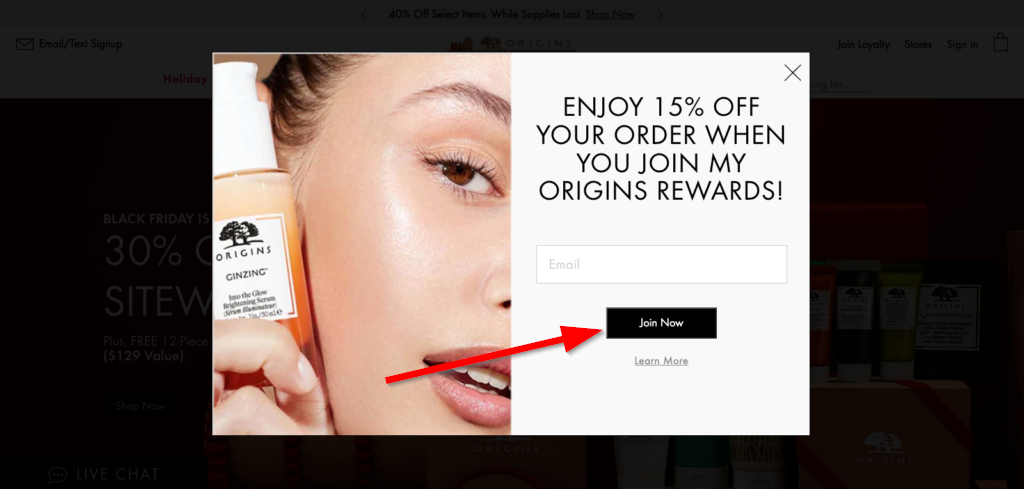
CTAs aren’t limited to landing pages. They are used everywhere on your website, emails, ads, social posts, images, videos, etc. You need to spend most of your time optimizing CTAs across all touchpoints.
A call to action serves two primary purposes:
- Delivers the promised offer, such as a coupon code or newsletter
- Helps users advance to the next stage in their buyer journey.
So, it’s not just important for your business, but CTAs are critical for users as they can easily find their way towards the next goal with your brand.
Follow these guidelines to improve CTAs to get better output from conversion marketing:
- Use different types of CTAs such as button and text
- CTA should be prominent and attention-grabbing. It must be the first element on the page that attracts attention
- Use contrasting colors for CTA
- Keep text short and action-oriented
- Use a power word in CTA text to make it appealing
- Add ample white space around CTAs
- Move CTA above the fold so that it’s instantly visible to visitors
- Add more than one CTA and in different variations on a single page, but they all must lead to the same URL
- The call to action must be consistent with the content and offer. Avoid adding irrelevant CTAs that send visitors to unexpected destinations.
Personalize Religiously
Personalization is the backbone of conversion marketing as it helps improve UX.
Up to 90% of users expect to receive personalized offers from their favorite brands. If they can’t connect with the content, offer, or your brand, you’ll lose customers. Consequently, conversions will sink.
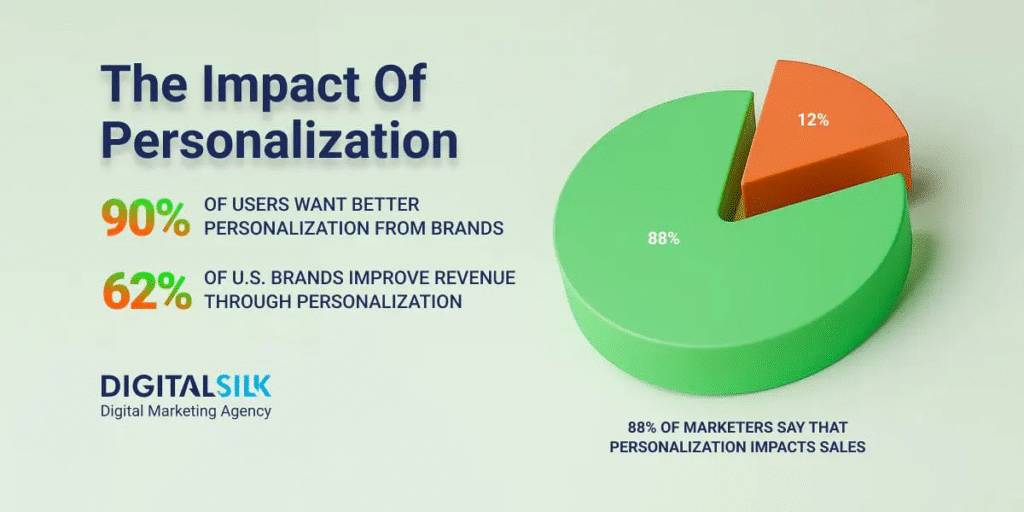
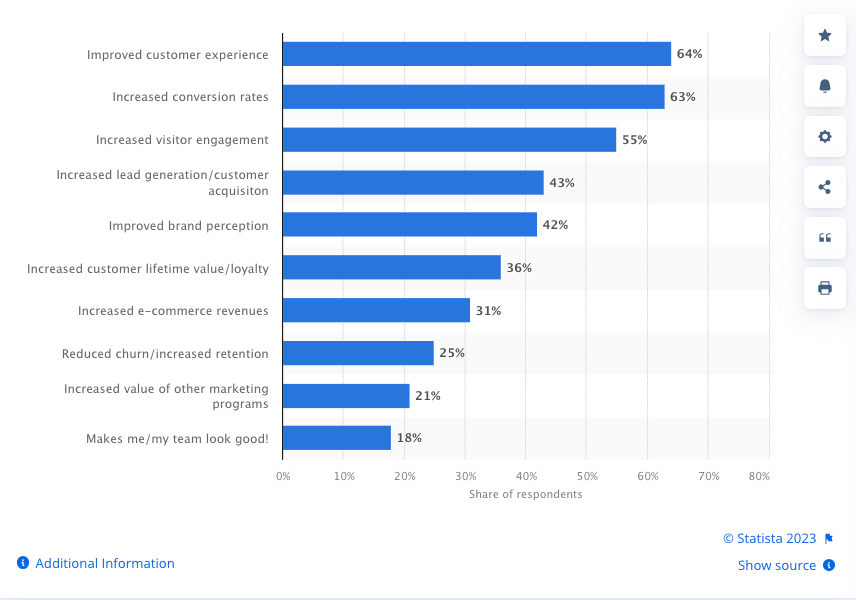
As much as 63% of marketers reported that they increased conversion rate due to personalization, 64% said that it increased customer experience, and 43% said it increased lead generation efforts:
This is because personalization across marketing channels helps visitors connect with your brand as they see offers and content they can relate to. They don’t see irrelevant, pushy offers. Instead, their interaction with your brand runs in continuity and they can start where they left off last time.
Implementing personalization and using it to improve conversion rate requires segmentation, buyer personas, dynamic content, programmatic content, and other techniques.
And it requires tons of data along with the right tools including CRM and CDM.
Here’s a list of the personalization techniques that you should explore for the conversion marketing strategy:
- Use data-driven buyer personas to improve targeting and personalization
- Dynamic content in headlines, CTAs, and landing page copy is the best way to implement personalization
- Invest in programmatic SEO if you are in a suitable niche. It works extremely well in terms of customization and the content and pages change in real-time
- Improve product recommendation via the recommendation engine. Use behavioral variables to segment users and offer them customized products that align with their previous interactions with your brand
- Use interactive content as it works best for personalization. Common examples include quizzes, contests, calculators, interactive infographics, surveys, and interactive videos.
Optimize Checkout Process
Most B2C businesses use sales as a macro conversion and they don’t track micro conversions. Ecommerce stores are a common example where purchase is the only conversion they track.
When you want visitors to complete a purchase, it’s essential that the checkout process is fully optimized for conversions.
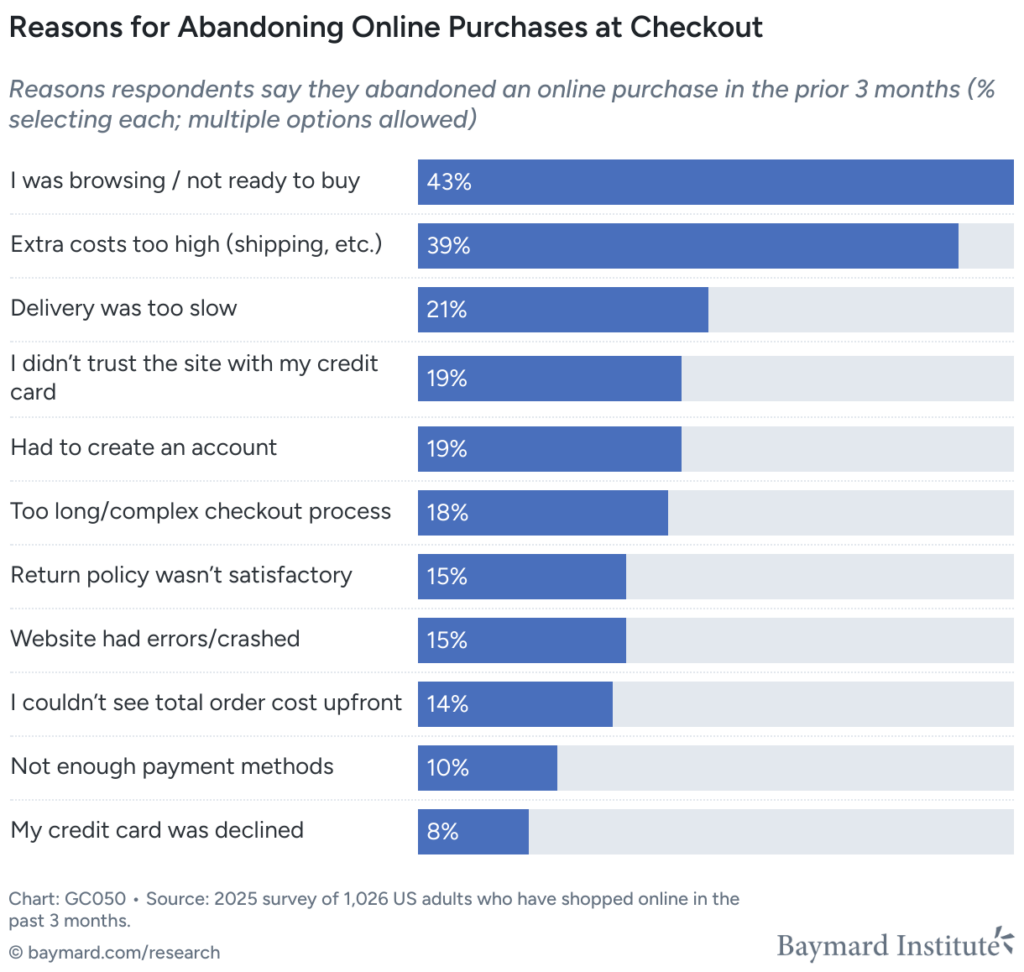
Optimizing the checkout process isn’t a straightforward process as it involves a lot of variables that collectively impact checkout page exit rate. Common reasons include unexpected costs, complicated, lengthy forms, and the requirement to create an account for checkout:
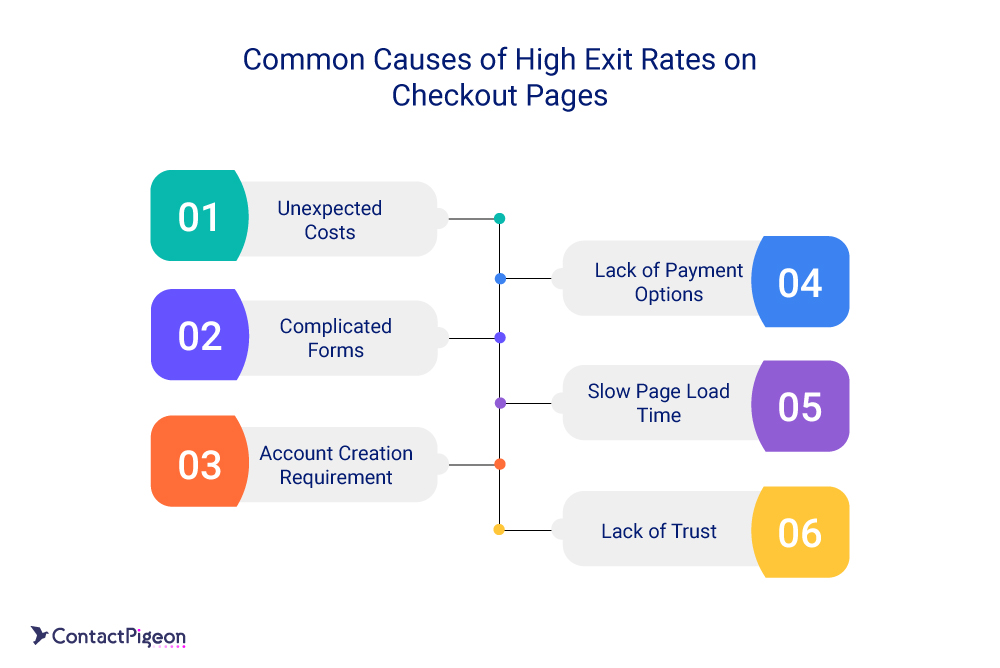
The global cart abandonment rate is 70.22% which is quite high. Most of the reasons for cart abandonment are either directly or indirectly related to the checkout process:
This is a reason why you should switch to conversion marketing because it can help you reduce the cart abandonment rate significantly.
How exactly to do it?
Let’s find out:
- Keep the checkout process simple and short. Up to 66% of users expect the checkout process to finish in 4 minutes
- Offer guest checkout option to avoid friction as it is preferred by 43% of users
- When using an account registration for checkout, offer a social profile login option as it’s preferred by 29% of users
- Minimize forms. Don’t collect information that you don’t intend to use
- Improve the speed of the checkout page and make it responsive
- Don’t add extra, unexpected costs such as taxes. All costs must be shared upfront as preferred by 14% of users
- Add trust badges as 19% of consumers leave a checkout page due to a lack of trust
- Offer multiple payment methods
- Clearly mention your return and refund policy
- Avoid the multi-page checkout process. Rather, use a progress bar to help users understand where they are in the checkout process.
Form Optimization
Businesses in the B2B sector rely on forms for lead generation. They use leads as macro conversion. And there are tons of micro conversions they have to track.
Since the sales cycle is quite lengthy, it’s critical for B2B businesses to map the buyer journey and track micro conversions.
Forms play a crucial role as they are used to collect leads.
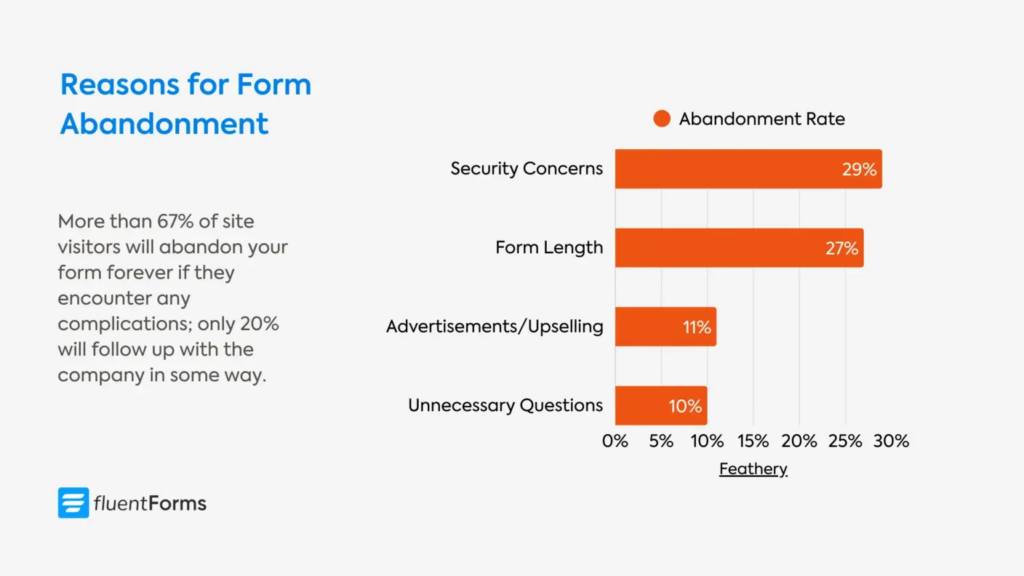
You want visitors to complete the form and submit it. Research shows that not all visitors complete forms. Up to 29% abandon forms due to security reasons and 27% abandon due to form length:
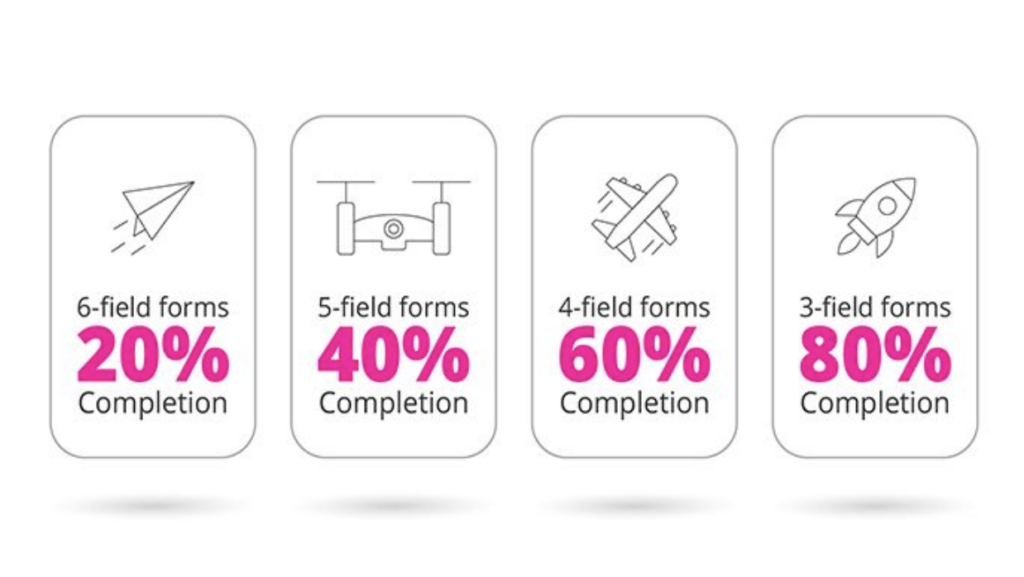
The first thing you need to do is keep form fields to a minimum. Shorter forms have a high conversion rate as they are user-friendly and quick to fill out. Every extra field you add to a form adds friction. This is backed by research.
Forms with 3 fields have the highest conversion rate, while forms with 6 fields have the lowest:
Only collect data that you need to use. At the lead generation stage, you only need an email address and name. Everything else is optional. As the leads are warmed, you can collect additional details. But it isn’t a good idea to get all the details in the first interaction.
It impacts your business negatively in two ways:
- It has a high cost as the data collected needs to be stored, analyzed, and interpreted. These are all resource-intensive tasks
- You might lose potential genuine customers due to lengthy forms (and they’ll move to competitors).
Your best bet is to have short forms. Even if you collect email addresses in the first interaction, it’s enough.
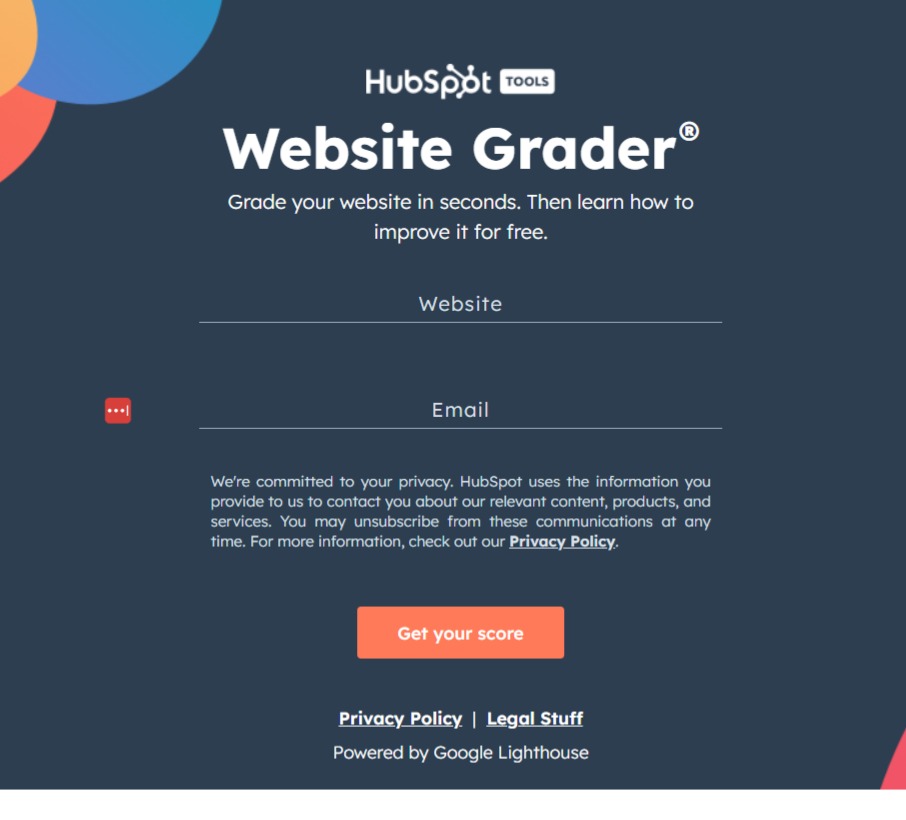
See how HubSpot asks for email address only (and website) and nothing else.
Form Optimization Tips
Once you have a clean and short form, you are all set to implement additional optimization techniques:
- Add the form above the fold if possible so that it’s clearly visible to the visitors
- Make form CTA prominent, catchy, and actionable
- Optimize your form for mobile devices and ensure it works across all devices seamlessly
- Use single-column forms as they support better UX
- Add descriptive labels
- Leverage autofill and autocomplete for form fields
- Add security badges and trust signals along with a disclaimer on how you intend to use personal information
- Implement white space around the form for better comprehension.
Bonus Techniques
Here are additional conversion marketing best practices you should consider implementing:
- Use FOMO: Fear of missing out is a science-backed psychological technique that targets people’s fear of missing something important and valuable. It uses scarcity and urgency to increase conversion rates by a whopping 332%.
- Leverage social proof: It is another psychological phenomenon that uses people’s tendency to copy the behavior of others by assuming it to be correct. It is used in conversion marketing in the form of customer reviews, testimonials, user-generated content, and sales notifications. Social proof is known to significantly increase conversion rate when used properly.
- Free shipping: If you have an ecommerce store, it’s a must to offer free shipping. As much as 80% of buyers expect free shipping and 82% of customers consider free shipping more important than fast shipping.
- Use chatbots: Add an AI chatbot to your website to boost conversion. AI chatbots increase conversion rate by 23% and there’s a massive difference between the conversion rate of websites that have an AI chatbot and those that don’t have one.
- Exit intent offers: These pop-ups are essential for conversion marketing as they help you trigger a pop-up when a user is about to leave your website. It gives you one last chance to bring potential buyers back by collecting their email address or offering a discount. Exit intent technology is quite helpful in boosting conversion rate.
- Run experiments non-stop: Conversion marketing is all about testing and tweaking. Run A/B tests to check what’s working, what isn’t, and find and fix issues.
Final Words
You need to develop a conversion marketing strategy that runs simultaneously with your marketing strategy.
The marketing strategy will focus on generating traffic and acquiring new customers while conversion marketing should work on converting visitors into customers.
If you are short of budget, start with conversion marketing with whatever traffic you currently have. You don’t need heaps of traffic to implement it.
Even if you get 100 or fewer visits a day and you end up increasing the conversion rate by 1%, it will have a massive impact on sales and revenue.
Give it a try and you won’t do marketing without it – again.
Featured Image: Unsplash