Loop marketing is the new way to connect with your ideal customers in 2026 and beyond. It helps you grow your brand in the age of AI using AI.
Marketing, customer interactions, and touchpoints have changed a lot in 2026. Search engines like Google aren’t the first choice of most customers anymore. People now use newer channels to find answers to their questions and to find brands.
Videos, ChatGPT, and recommendations from friends are among the top channels consumers use to get information about pretty much everything.
Loop marketing is the solution.
This guide explores everything you need to know about loop marketing so that you can use it for your business starting today.
What is Loop Marketing?
Loop marketing is a term coined by HubSpot. It is a growth framework that has 4 distinct stages. Loop marketing is a replacement of traditional linear funnel.
It focuses on continuous customer interaction across touchpoints, where each stage swiftly transforms into the next and the loop continues.
Loop marketing uses both AI and human-enforced personalization to engage with your audience for exponential growth. Since customers now use a wide range of channels including AI, your funnel needs to adapt to this changing behavior.
Linear funnels don’t work effectively anymore.
A continuous, self-learning, evolving, and AI-driven modern buyer journey is what’s needed to be at the top of your marketing game.
The four stages of the loop marketing are:
- Express: Define your brand message and express it to connect with your ideal customers
- Tailor: Leverage AI to make interactions with the audience highly personalized
- Amplify: Boost your reach by tapping into a wide range of channels and touchpoints
- Evolve: Use data to optimize and improve marketing.
How Loop Marketing Works?
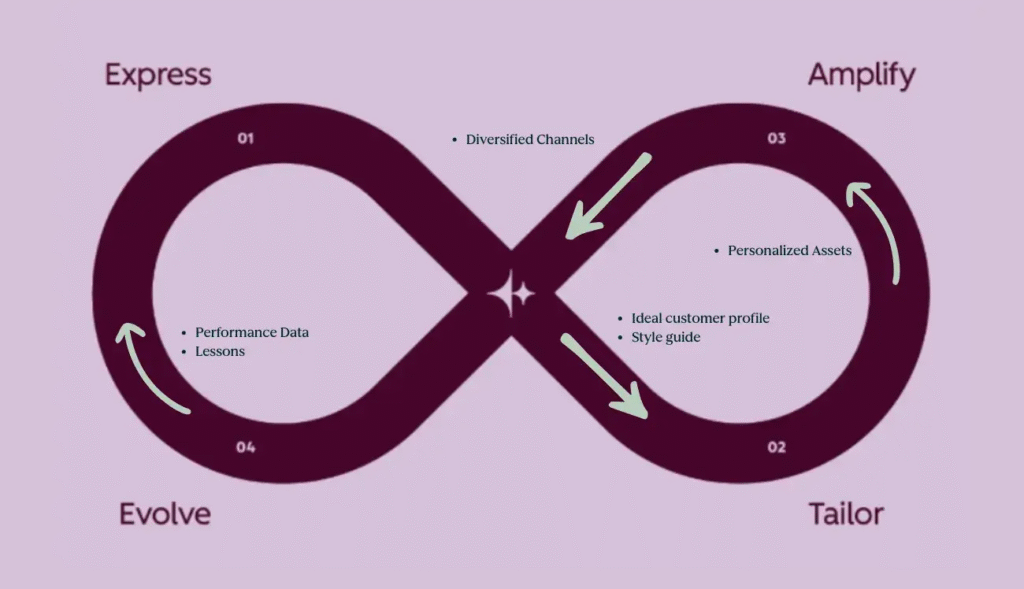
Loop marketing has four stages that work continuously in a loop. The output of one stage acts as the input of the next stage, and so on.
Unlike a traditional marketing funnel, which ends after a sale, loop marketing doesn’t have an ending.
The final stage acts as the input for the first stage. This acts as a self-learning and evolving marketing engine that acts as a continuous funnel.
Let’s take a real-life example to better understand it:
Dropbox referral program leverages loop marketing. The steps involved are:
- A new user signs up for Dropbox
- The user invites friends to get a free storage upgrade
- Referral joins Dropbox as a new user
- New user invites more people to get a free storage upgrade
- The loop continues as a growth engine.
Here’s another example of loop marketing in action:
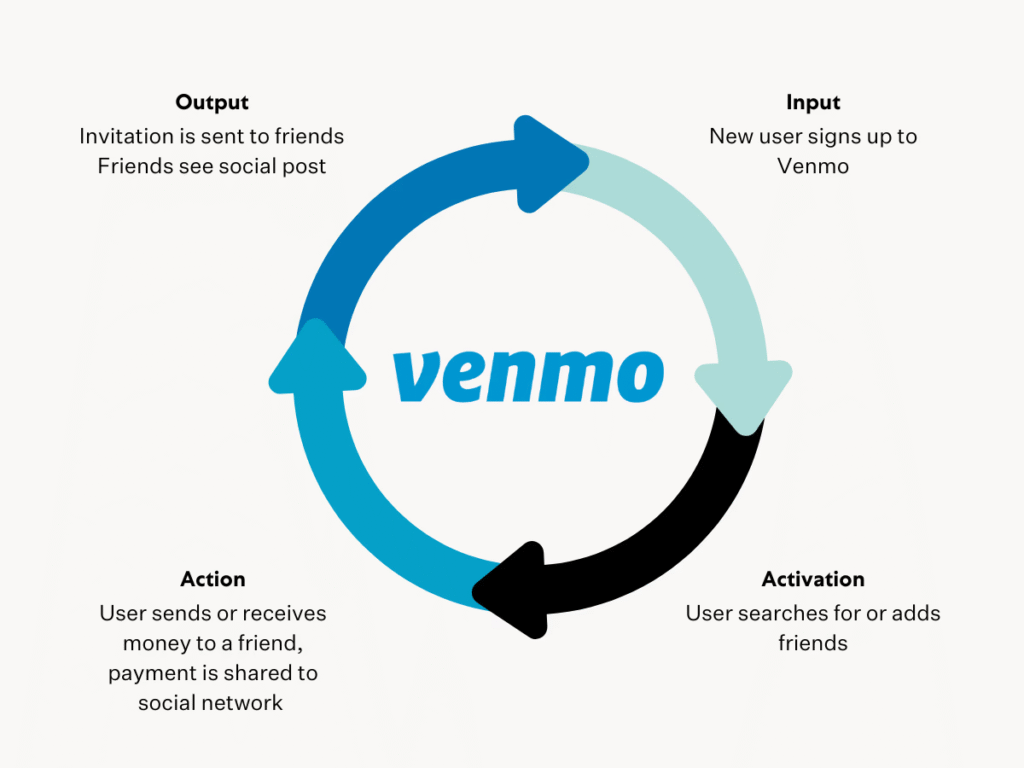
These examples, however, are limited in their scope and are more of growth loop examples.
Loop marketing is a broad phenomenon that covers the entire marketing strategy. It’s not limited to just one marketing (or non-marketing) function.
It is an end-to-end marketing strategy that’s different from conventional marketing strategies. Let’s dive deep into the 4 stages of loop marketing as defined by HubSpot, to better understand how it works as a whole at a strategic level:
Express
It is the first stage of the loop marketing strategy that focuses on developing your distinct brand. You need to define a clear voice, brand style, tone, and other settings for your brand that differentiate you from your competitors.
Your brand style guide works for both AI and humans. The focus is on creating assets across channels that strictly follow your brand’s voice and tone.
Tailor
Your marketing messages need to be personalized at an advanced level.
This requires data collection and analysis. Your CRM platform must be fully integrated with all the platforms you use. It helps you create personalized content for different platforms.
A centralized and fully integrated data management system is what’s needed to tailor your message and meet customer expectations.
Amplify
Your content needs to be on a wide range of platforms, not just on your blog or social platforms.
Users now use a wide range of touchpoints including AI assistants, online communities, closed groups, Reddit, and extremely niche platforms like Twitch.
Your content strategy must cover all the touchpoints your ideal customers use. This is how you can amplify your reach and be where your ideal customers are.
Evolve
Finally, you need to be highly adaptive and flexible as a business. You need to analyze performance in real-time, use predictive analytics, and leverage AI for advanced tracking.
The data from current campaigns must be fed into new campaigns to make them better.
Loop Marketing vs Traditional Marketing
Loop marketing is a continuous marketing strategy that works with AI across all stages. Traditional marketing has a linear customer journey and sales funnel.
Here’s how both compare head-to-head:
- Structure: Loop marketing has a continuous cycle where data from the final stage is fed back into the loop. Traditional marketing uses a linear funnel with a one-way approach that focuses on attracting, converting, and retaining customers.
- Focus: Loop marketing focuses on personalization and optimization that’s driven by both AI and human supervision with real-time monitoring and control. Conventional marketing relies on content creation and distribution with a primary focus on customer acquisition.
- Data: Loop marketing is based on advanced data analysis with a focus on real-time analytics to continuously improve and optimize marketing campaigns. Linear marketing uses static data and marketing KPIs for analyzing performance at regular intervals.
- Personalization: Loop marketing uses AI to create one-on-one personalized campaigns with CRM data at the heart of it. Traditional marketing uses basic personalization techniques that aren’t as robust and advanced and mostly not integrated with CRM data.
- AI: Loop marketing considers AI a friend and relies heavily on it across all marketing stages. Conventional marketing doesn’t like AI too much and, in most cases, it discourages the use of AI for content creation and publication.
Loop marketing isn’t a replacement for traditional marketing or sales funnels, it’s an upgrade. It doesn’t replace existing campaigns and data, rather, it works with your existing marketing strategy simultaneously.
Benefits of Loop Marketing
Is it better than your existing marketing strategy?
Loop marketing offers quite a few benefits that you don’t get with conventional marketing. These include:
- Exponential growth: The best thing about loop marketing is its potential to compound growth. This is achieved by using data and continuous improvement that’s fed back into the system. The tweaks become a permanent part of the loop, unlike conventional marketing, where optimization is limited to a specific element, which reduces its impact.
- Real-time optimization: You don’t wait for the campaign to end so you can pull data and check performance. Loop marketing monitors performance in real-time. This helps you save marketing costs and improve marketing efficiency.
- High reliability: It is highly reliable as it uses data and AI instead of guesswork. Since everything becomes part of the loop, the self-learning cycle becomes extremely robust over time. The probability of making mistakes reduces significantly with time.
- Better performance: Loop marketing performs better than traditional marketing for the fact that it relies on data which becomes part of the strategy.
- Leverages AI: It uses artificial intelligence at all stages which makes it semi-automatic. Human supervision is still needed, but AI tools make your campaigns effective and efficient. On top of that, AI reduces marketing costs significantly.
- Cost-effective: Loop marketing might cost you a bit more during setup as it has a certain fixed cost that mostly goes into acquiring tools and apps. But once it gets into flow, it gets much cheaper than conventional marketing as it can generate and manage marketing campaigns itself.
- Multi-channel: It supports multiple touchpoints, not just the traditional ones. It goes beyond social media platforms, blog, video, etc. Any channel that your audience has access to becomes part of your strategy. It boosts your reach significantly.
How to Build a Loop Marketing Strategy
Developing and executing a loop marketing strategy requires a focused approach to all four stages. Here’s how you can practically build a loop marketing strategy for your business:
Set Objective
Start by setting a long-term, strategic objective for your loop marketing strategy.
As discussed, it shouldn’t replace your existing marketing strategy outright. It must work in parallel. You need to gradually shift marketing campaigns to loop marketing over an extended period of time.
Use the SMART goal framework to create a specific, measurable, achievable, relevant, and time-based goal for the loop marketing strategy:
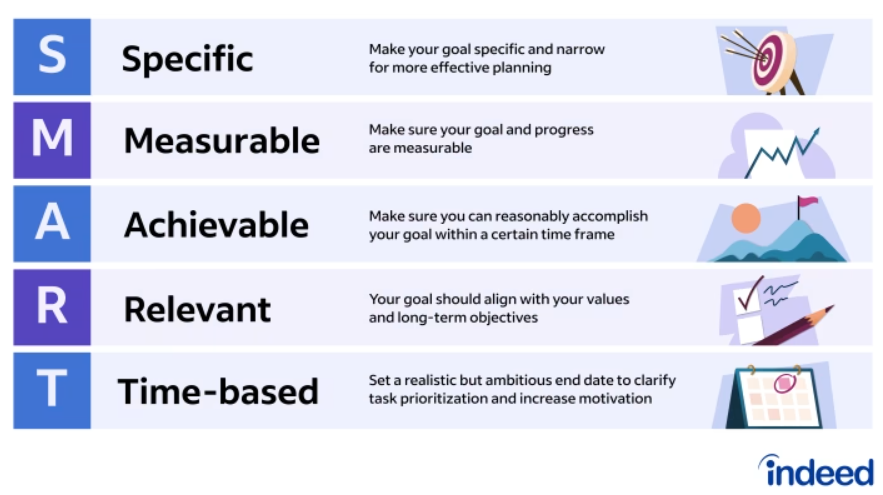
Here’s an example of a SMART goal for loop marketing:
Grow organic traffic by 80% within 6 months by scaling high-intent content production, improving internal linking loops, and optimizing top-performing pages for conversion and recirculation.
You can use a loop marketing strategy to improve a wide range of metrics and KPIs such as:
- Increase organic traffic
- Accelerate content production
- Boost brand awareness
- Improve conversion rate
- Reduce CAC cost.
If you look closely, the goal itself doesn’t tell you anything about loop marketing. It is a conventional goal.
It comes down to your action plan, which is based on loop marketing to achieve your goal.
So, it’s not the goal, rather how you get to it is important.
Define Buyer Personas
A key component of the loop marketing strategy is well-defined, data-driven buyer personas.
Since you need to create a detailed style guide, rely on AI for content generation, and improve personalization significantly, buyer personas become a must.
A buyer persona or a customer persona is a semi-fictional representation of who your ideal customer is. It is helpful in improving targeting, personalization, and understanding your target audience.
Here’s what a buyer persona looks like:
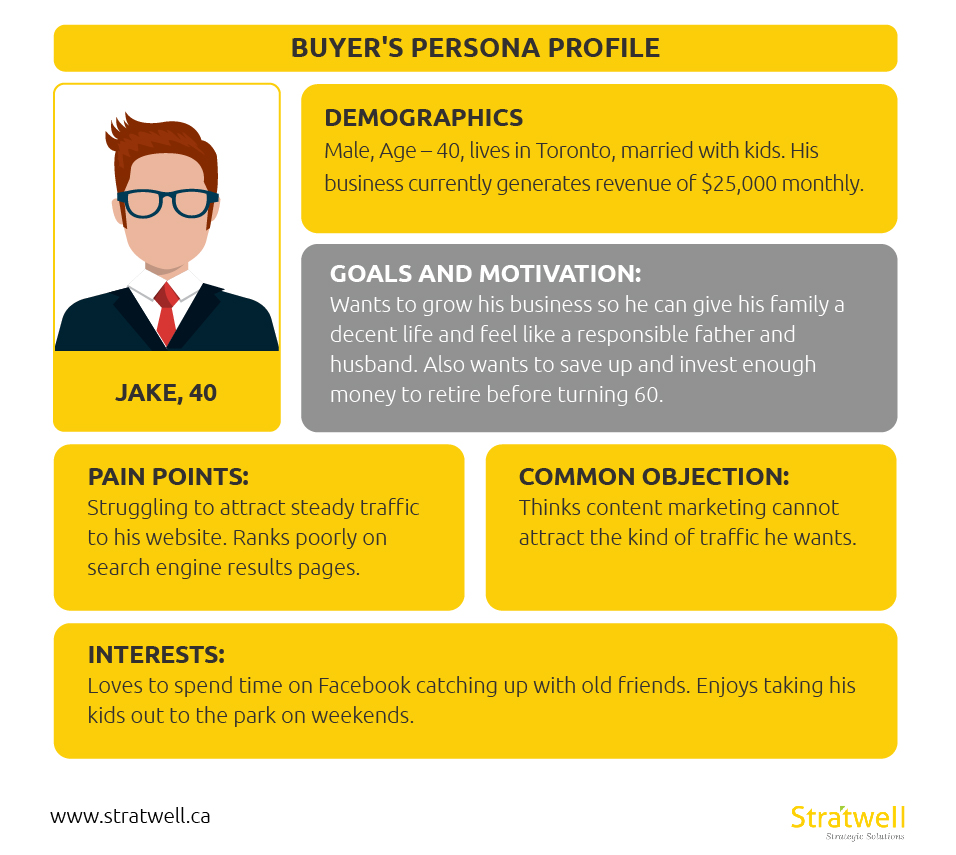
You need multiple buyer personas for your business. There should be one persona per target group. For instance, if you target male CEOs, startup founders, and female yoga coaches, you need to create a persona for each of these groups.
There are two ways to create a buyer persona:
- Use guesswork, judgment, and information from random sources to add details in a persona template and get it up in a few days.
- Collect primary and secondary data from your target audience, analyze competitors, and use other types of market research to generate highly specific data for buyer personas.
Unfortunately, most businesses choose option 1 because it is convenient, cheap, and instant. But it won’t help you achieve your loop marketing strategy goal.
It doesn’t work. Not even in the short run.
The second option requires a lot of time and resources, but it’s the proper way to generate buyer personas that will exceed your expectations.
This initial investment shouldn’t be bypassed as it has a huge impact on the performance of your strategy.
Use this detailed guide to create data-driven customer personas for loop marketing. Avoid shortcuts.
Develop a Brand Guide
Loop marketing leverages AI for all sorts of tasks. And this is where you need to have a brand guide to ensure branding and consistency.
A brand guide or brand style guide is a formal document that covers all the guidelines for your brand about content, design, logo, color scheme, vision, philosophy, tone, and everything else. It defines the basics of the visual and verbal identity of your brand. It ensures branding, consistency, and coherence across all touchpoints for all types of content you generate:
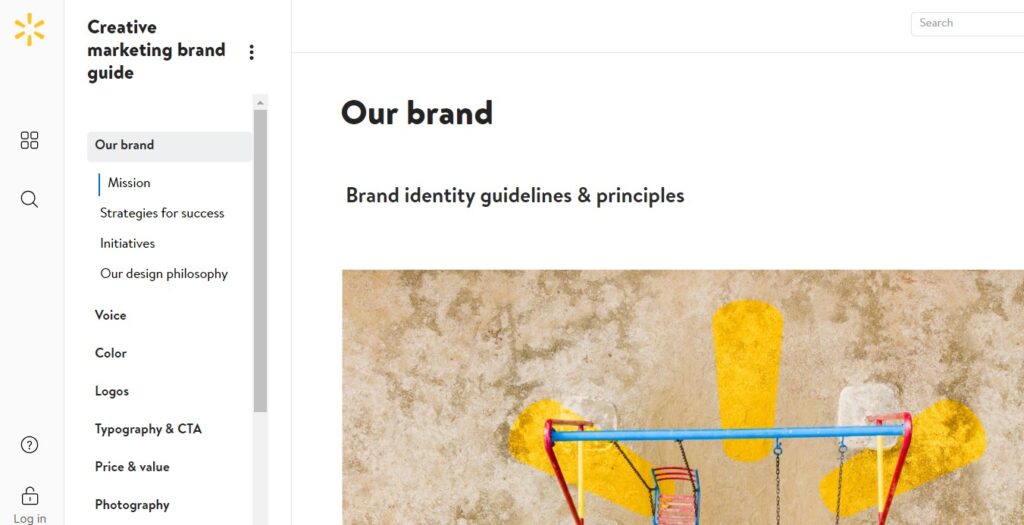
It’s a must-have when you have to use AI in your marketing strategy. The brand guide will help AI create consistent content in the right tone every time.
Your brand guide should have clear details on what’s allowed and what’s not. And you can make it as detailed as possible to ensure brand identity across all channels.
Here’s what to include in your brand guide:
- Business philosophy, values, and story
- Writing, formatting, and editing standards
- Visual identity that includes colors, typography, logo, photography, etc.
- Brand voice and tone
- Any other details you think are needed.
You have to produce content at scale for a wide range of platforms for loop marketing campaigns. The only way you can maintain consistency and branding for all these assets is by using a detailed, actionable brand style guide for both AI and humans.
Choose a template for a brand style guide, add details, and share it with your team.
Create Campaigns
Once you have set the stage, it’s time to create loop marketing campaigns.
There are a few things you need to note before proceeding:
- Loop marketing campaigns use AI for both content creation and automation
- Campaigns need to be data-driven which means you need to have a centralized data processing and analysis system that’s linked to your CRM tool and CDM
- All campaigns need regular tweaks (based on data and AI) and it’s a continuous process.
Both humans and AI should work together to create and manage campaigns. It calls for collaboration. Here’s how the collaboration should look like:
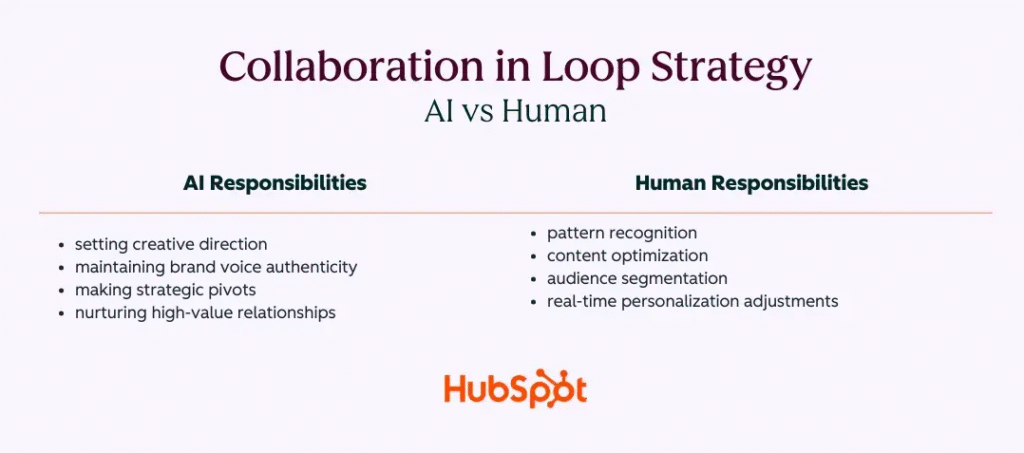
The campaigns are similar to any other marketing campaign you create. There are two stages:
- Identify and finalize platforms/touchpoints
- Create and publish content for campaigns.
Platform Identification
Loop marketing doesn’t rely on traditional touchpoints rather, it explores all the possible channels where your audience hangs out.
This includes unorthodox platforms like niche forums, new social platforms, Reddit, etc.
You need to identify these channels based on buyer persona and available data. Add all the channels that your audience uses. It doesn’t matter how small or big a platform is. You need to be where your ideal customers are.
You’ll continue to add and remove touchpoints based on their performance, so don’t spend a lot of time here. Use existing data to generate a list of platforms where you want to be.
Campaign Creation
Campaigns are handled by AI. You need to generate prompts to get the job done.
You need to feed the brand guide, buyer persona, purpose, and data into the AI agent for content creation for selected platforms. The output content needs to be edited and improved by a human editor.
The content can range from blog posts to social posts to landing pages to email series to videos to audios and more. There’s no limit.
It all comes down to the preferences of your buyers – what type of content and in what format they like.
The campaigns, outlines, content formats, and everything need to be automated. Human intervention should be minimized at this stage, as the content has to be produced at scale which can be best done automatically.
You need access to a reliable AI agent, preferably ChatGPT.
Campaign Example
Suppose you identified that a particular buyer persona spends time on Quora and X. The preferred content format is text with data-driven, actionable images.
Ask AI to generate campaign ideas for this particular buyer persona based on available data.
Filter campaign ideas and ask AI to create content for these two platforms for the buyer persona. Also, ask it to generate relevant images.
You can create a week of content in a single go and schedule it on the channel after editing.
Implement Personalization
Marketing doesn’t work without personalization in 2026.
Loop marketing is no different. In fact, loop marketing takes personalization to the next level with one-to-one interaction which is a highly individualistic approach.
It’s needed because 71% of people want brands to understand them and offer personalized content.
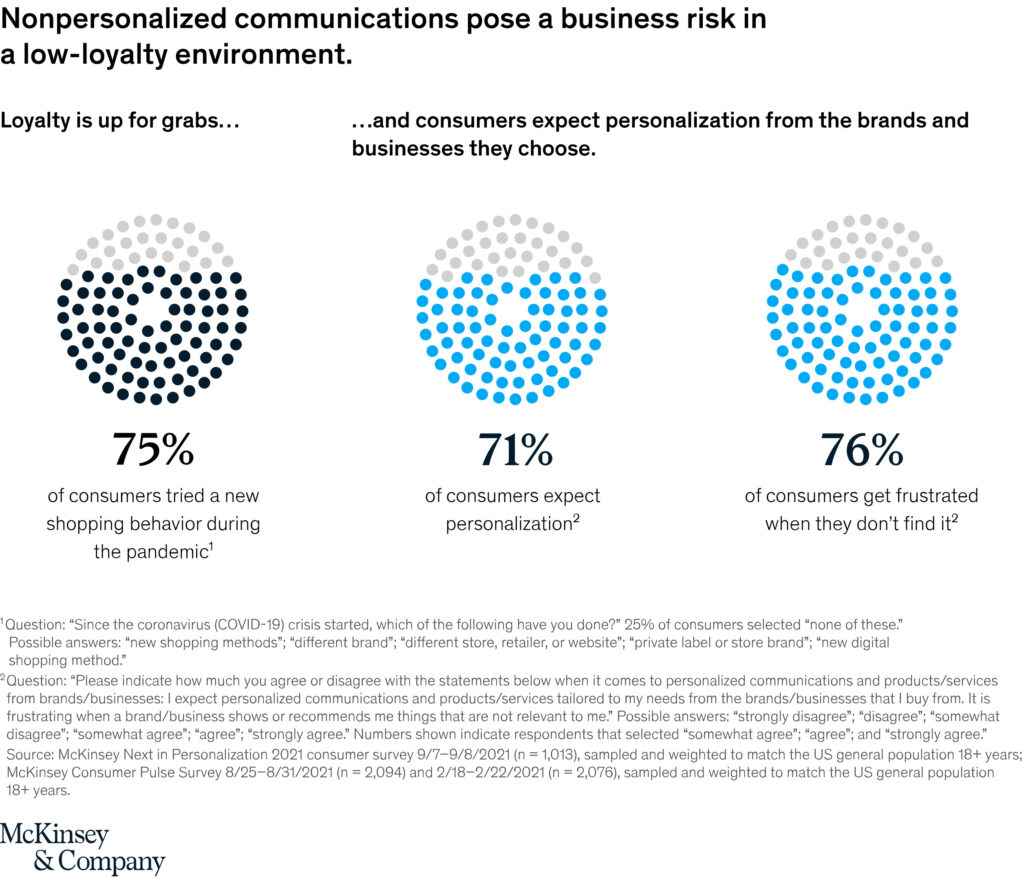
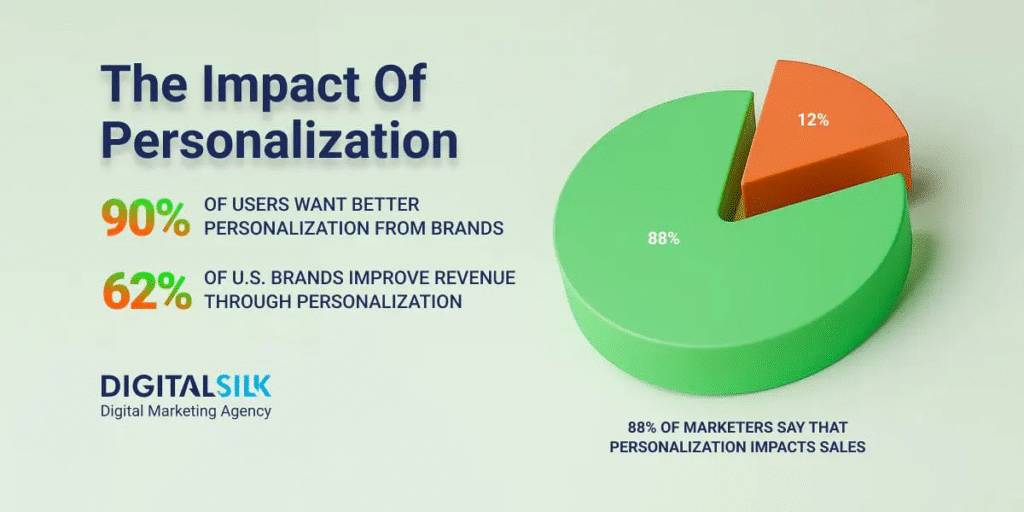
Research shows that 62% of businesses improve revenue via personalization and 88% of marketers say that it has a positive impact on sales:
You can use dynamic audience segments, personalization rules, regular shifting of audience from one segment to the next based on their behavior, and other smart personalization techniques for loop marketing campaigns.
The idea is to segment your audience based on a wide range of variables. This will make personalization easier. The best way to do this is via buyer personas (as discussed above).
Here’s how you can implement personalization across loop marketing campaigns for better performance:
- Smart content and CTAs
- Dynamic landing pages
- Behavior-based segmentation and recommendations to customers and the audience
- Zero-party data collection
- Predictive modeling using AI and machine learning
- Interactive content e.g., calculators
- AI chatbots
- Exit intent popups on your website.
Optimize Campaigns
Campaign optimization is a core stage of loop marketing. It focuses on advanced, AI-powered optimization and diversification of content and campaigns.
You can’t create campaigns and sit back with loop marketing. This technique might work for other marketing approaches, but not with loop marketing.
This is because loop marketing has a dedicated stage called Amplify which focuses on diversifying content across all possible channels. It requires continuous optimization and tweaking.
You need to answer two key questions to ensure your content and campaigns are moving in the right direction:
- Is your content available on all the channels where your audience hangs out?
- Is the content performing as expected, or is it just sitting idle driving no engagement, clicks, or interactions?
The content generated in previous steps should be optimized for the relevant channel where it’s expected to be published.
For instance, if you are targeting AI engines and LLMs, your content must be written in a way that makes it easy for AI engines to scan and understand it.
Then, you need a data-driven approach to track performance in real-time and make appropriate changes to prompts, content, targeting, and other variables.
Follow these guidelines for effective optimization:
- Use data as much as you can
- Run A/B tests
- Repurpose content for different channels
- Optimize content based on the specific requirements of the publication platform
- Use AI for optimization.
Analyze Performance
Analysis of the campaign in real-time using AI is the last stage of the loop marketing strategy.
And it’s not just limited to campaign performance analysis, but it covers strategy analysis.
What’s important is how you analyze performance and what action you take.
Analysis should be powered by AI and it must be done in real-time. This analysis should be used in the next prompts to come up with better content and campaigns.
Here’s a list of the analysis techniques you should use at this stage:
- Check campaign performance using AI
- Look for underperforming campaigns and content
- Monitor engagement, visibility, CTR, and other metrics
- Update and revise content for freshness
- Remove campaigns that consistently underperform
- Look for patterns in campaigns that perform better
- Create templates and prompts based on high-performing campaigns for quick replication
- Keep monitoring and tweaking all the campaigns including top performing ones.
Final Thoughts
Loop marketing is still new and, therefore, evolving.
It can be a bit complicated for small businesses and brands that have low authority. And it obviously has its potential drawbacks (e.g., thin content).
It all comes down to how you use loop marketing in your marketing strategy.
Initially, it’s best to start small and see how it works for your business.
You might not see results immediately. Don’t panic and continue improving and optimizing your loop marketing strategy.
It takes time.
Once you successfully develop a self-sustaining and evolving loop, that’s the moment when you can fully switch to loop marketing.
Don’t wait. Get started today. You need to be the first-mover in your niche to have a competitive advantage.
Featured Image: Unsplash