FOMO marketing is a real thing, not just a buzzword.
It is deeply rooted in human psychology.
Businesses that use it the right way perform way better than their competitors.
What’s the right approach?
Let’s find out in this guide…
What is FOMO?
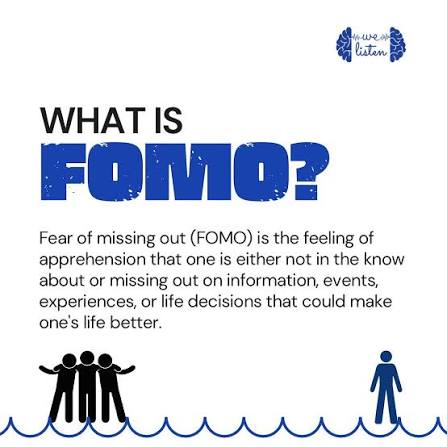
FOMO stands for Fear of Missing Out. It’s the feeling that other people are enjoying something valuable, exciting, or rewarding, and you’re not part of it. The feeling that you are missing something which is followed by a fear of losing fun and excitement (or something valuable) is what FOMO is all about.
We all have felt it.
- A friend posts photos from a concert you skipped.
- A colleague mentions the tool everyone’s suddenly using.
- A deal is ticking down and you’re wondering if you should have bought it already.
The term was coined by Patrick McGinnis in 2004. Social media then turned it into an everyday emotion. Now everyone can see what everyone else is doing, all the time.
But it’s not just a random term. FOMO is deeply embedded in psychology. It is driven by very common human characteristics and phenomena:
- Social belonging: We’re wired to want to be part of the group. Whenever we feel left out, it leads to anxiety.
- Loss aversion: Losing a chance feels worse than never having had it. This is a common cognitive bias where people tend to feel the psychological pain of not having something as twice the pleasure of getting something (in equal proportion). Humans consider loss a bigger challenge than a gain.
- Social comparison: We measure our choices against what others are doing. It’s something we have built in, where we constantly keep comparing ourselves with others. It is a psychological process that’s coded within us.
FOMO is a real phenomenon, and not just a random term.
Here’s the good part: FOMO is one of the most powerful psychological triggers in marketing.
Think about the last time you bought something because stock was “almost gone,” joined a webinar because “only 50 seats” were left, or signed up for something because everyone else was raving about it.
That was FOMO at work.
Smart brands don’t create panic. They make people feel that waiting has a cost.
FOMO isn’t a trick.
It’s a human emotion, and the brands that use it in marketing outperform their competitors.
How FOMO is Used in Marketing
This is where it gets interesting.
You can use FOMO to persuade your audience to act now.
FOMO marketing is built on one simple idea: Make people feel that waiting has a cost.
You’re not inventing desire. Your audience already wants what you offer.
FOMO just adds a reason to act now instead of “sometime later” (which, let’s be honest, usually means never).
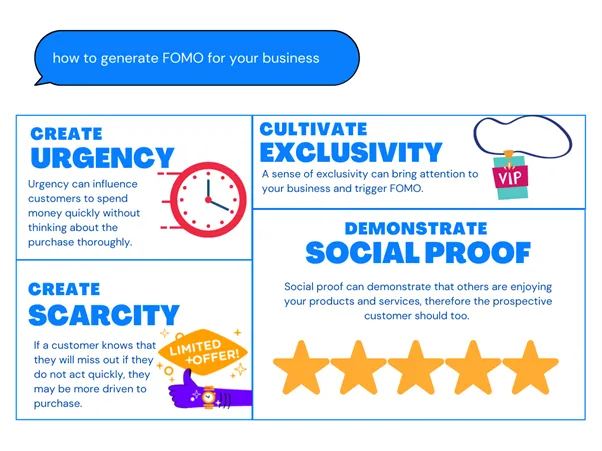
Here are the most common ways FOMO is used in marketing:
Scarcity
Scarcity is the best use case of FOMO.
When something is limited, people value it more.
Think of a hotel booking site showing “Only 2 rooms left at this price,” or an online store flagging low stock on a bestseller. You don’t want to miss it.
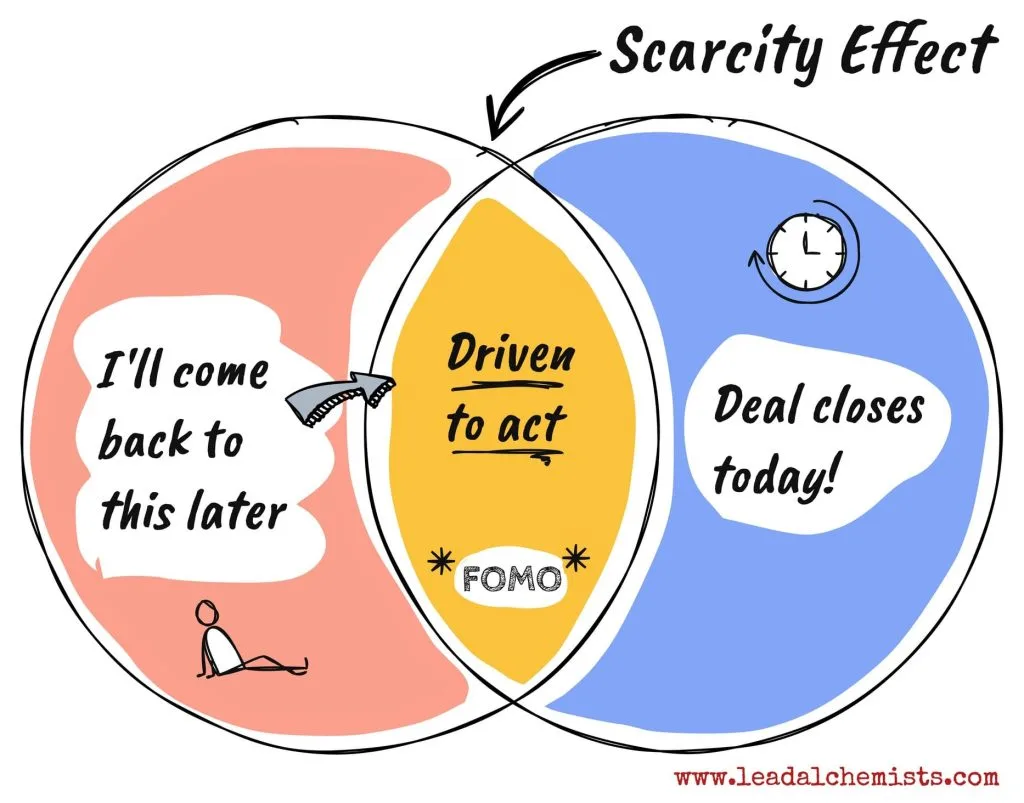
When a product on an ecommerce store has a countdown timer or low stock button, it triggers fear in people that they might miss it.
Here’s how scarcity is used practically to create FOMO:
- Low-stock alerts on product pages
- Limited editions or small-batch releases
- Capped enrollment for courses, workshops, or services
- Limited client slots if you run an agency or consultancy business.
Urgency
Scarcity is about quantity. Urgency is about time.
A deadline gives your audience a reason to stop scrolling and start deciding. This is a reason why flash sales and Black Friday campaigns work exceptionally well in terms of conversion rates and sales.
The idea is that urgency persuades people to make a quick decision before time runs out. And the reason they take action is all due to fear of missing out.
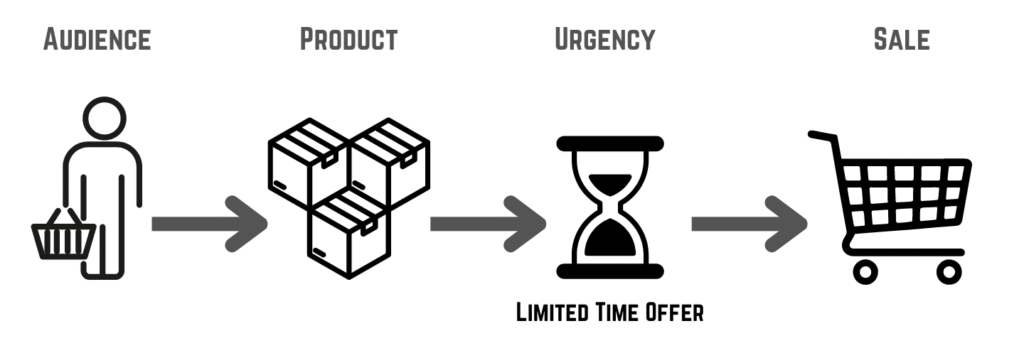
Flash sales, early-bird pricing, countdown timers, and limited-time offers drive urgency. Importantly, urgency works if it is real.
If, for some reason, your “ends tonight” sale returns tomorrow, your audience will learn to ignore such offers. And that’s where it backfires big time.
Exclusivity
Have you ever been part of a VIP membership group or an exclusive program?
Well, that’s another form of FOMO.
Exclusivity taps into the sense of belonging. It makes them feel privileged. It targets basic human psychological needs like belongingness and privilege. And it taps into the identity side rather than basic-level urgency.
People feel special when they realize this offer isn’t for everyone.
Exclusivity is used in the form of waitlists, early access, VIP access, private communities, member-only deals, and exclusive offers.
Social Proof
Social proof is the best implication of FOMO. When people see others taking action, they want in.
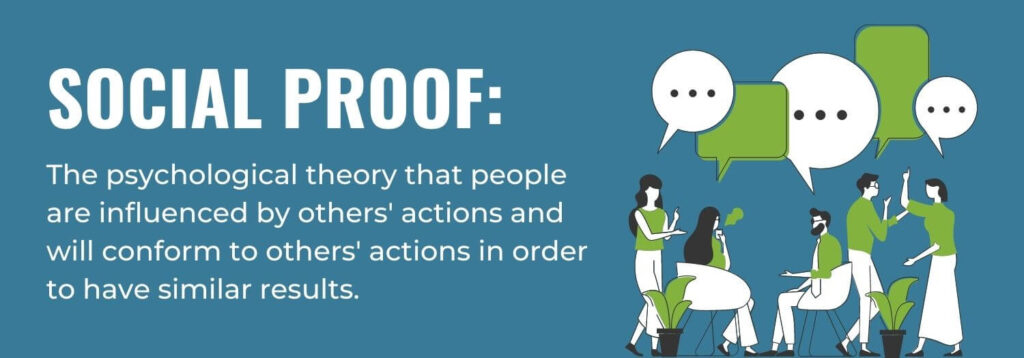
It’s the 1,200 people bought this week notification, the testimonials, the user counts, and a trending now label.
You’re showing your audience that the party is already happening, and you are missing it.
User-generated content and customer reviews are the top types of social proof that work quite well for sales, leads, and conversions.
FOMO Marketing Statistics
Let’s check out the recent FOMO marketing stats that’ll help you better understand why this is the right time to use FOMO:
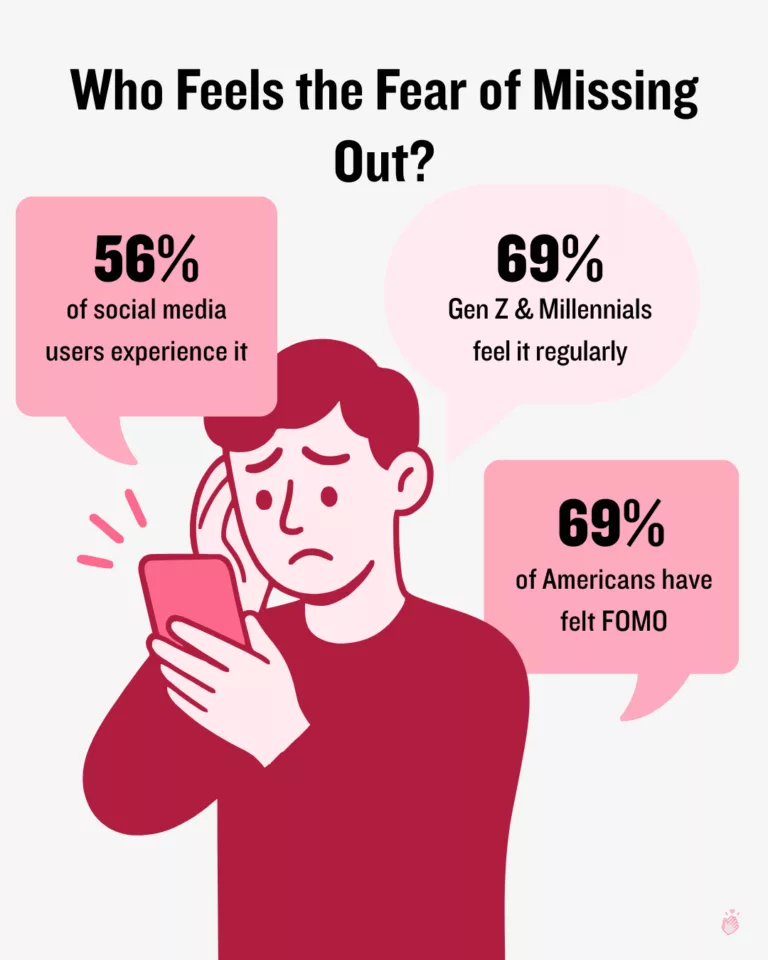
- About 69% of millennials say they deal with FOMO, the highest rate of any generation (OptinMonster).
- One in three millennials admits to stirring up FOMO in others on purpose, versus only 12% of people in other age groups (OptinMonster).
- FOMO has become roughly 20% more common since the pandemic (ReadyCloud).
- Around 6 in 10 millennial shoppers make an impulse purchase after feeling left out, usually within a day (OptinMonster).
- 57% of shoppers have bought something just because they saw other people buying it online (WiserReview).
- 51% of people have made a purchase or money decision because of FOMO (WiserReview).
- Two-thirds of travelers have booked a trip out of fear of missing out, according to an Expedia survey (Unitel Voice).
- Four in ten millennials have overspent or taken on debt to keep pace with their friends’ lifestyles (OptinMonster).
- Losing something feels about twice as painful as gaining the same thing feels good, a finding from Kahneman and Tversky that explains why urgency works (WiserNotify).
- Social proof notifications typically lift conversions by 10-15% (ShoutJar).
- 92% of online shoppers read a review before buying (OptinMonster).
- Just 1 to 4 reviews are enough to tempt 41% of shoppers into buying (OptinMonster).
- Around 45% of online shoppers leave items in their cart, then come back and check out after a low-stock or limited-time reminder (Poper).
- About half of people (52%) say they’ve made an impulse buy because an ad played on urgency or the fear of missing out (Shapo).
- 37% of social media users report buying something because of FOMO (Sci-Tech-Today).
- Gen Z is roughly twice as likely as millennials to feel FOMO from social media (ZipDo).
FOMO Marketing Techniques and Ideas
The big question: How do you use FOMO in marketing for your business?
The following techniques, best practices, and ideas are a perfect starting point. Pick and choose the approach that best suits your business and marketing strategy and implement it.
Here we go…
Use Social Proof
Let’s start with the most underrated FOMO tactic of them all: social proof.
When your target audience sees that real people have already bought from your brand, loved it, and shared their views publicly, it has a psychological impact.
Your offer stops being a risk and starts being the thing everyone else already figured out. That’s FOMO in action: Everyone else is getting results. Why am I still deciding?
Social proof comes in a few flavors:
- Star ratings and written reviews on your site, Google, or platforms like Trustpilot and G2
- Testimonials with a name, photo, and a specific result
- Case studies that show a before and after comparison (this works well for certain industries)
- Trust signals like customer counts, client logos, and press mentions.
A study reported that a product with just five reviews is 270% more likely to be purchased than one with none. The effect is even bigger for pricier items. Displaying reviews lifted conversions by 190% for lower-priced products and by 380% for higher-priced ones.
The same study found that purchase likelihood peaks at ratings between 4.0 and 4.7, then drops as ratings approach a perfect 5.0. Shoppers apparently think flawless scores are too good to be true.
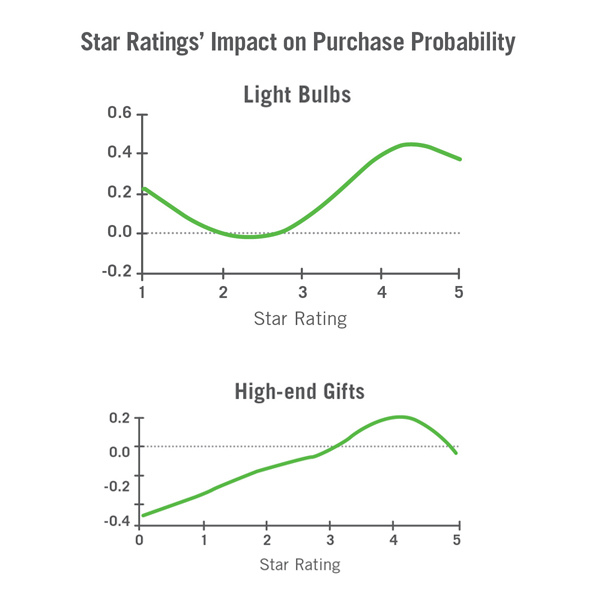
Reviews and testimonials have a massive impact on user perception and conversion rate. It’s not something you should ignore.
How to Leverage Social Proof in FOMO Marketing
Start with the proof you already have in any form. The problem with most businesses is that they have a lot of customer reviews and testimonials, but they don’t use them for FOMO.
Here’s how you can do it:
- Show live activity on your website: Small notifications like “Sarah from Austin just signed up” or “23 people are viewing this page” make the crowd visible in real time. You can use a plugin or any platform to trigger such notifications.
- Add numbers to deadlines: Instead of saying “Sign up for my newsletter”, use “Join 4,000+ marketers before enrollment closes Friday”. This creates FOMO because now they see it as: 4,000 people are already using it and I’m missing it.
- Add details and callouts: Add labels like bestseller, trending now, and most sold in the last 7 days. These types of messages tell people where everyone else is heading. This provides new visitors a clear direction and boosts conversions since it triggers FOMO.
- Focus on getting reviews, ratings, and testimonials: If you don’t ask, they won’t share. Remember this tiny rule.
- Pair scarcity with popularity: For instance, 80% of spots already claimed shows demand and limited supply together.
- Add logos near your call-to-action: Place relevant logos, signs, symbols, and other key details close to CTAs. This is the best approach to use social proof.
- Use social data: Show follower counts, shares, event attendance, community size, and other key numbers related to social media to signal that something worth joining is happening.
Limited Time Offers
A limited-time offer (LTO) is a deal that’s only available for a specific time duration. For instance, a discount, bonus, free shipping, early-bird price, or special package that disappears when the time runs out.
These limited-time offers work due to loss aversion.
Once there’s a deadline, your potential customers view it like this: Do I want to lose this deal?
In the absence of a timed offer, your audience doesn’t feel it is losing something.
Limited time offers, therefore, are FOMO marketing with a timestamp on it.
The good thing about using limited time offers is that they have a direct impact on conversions and sales.
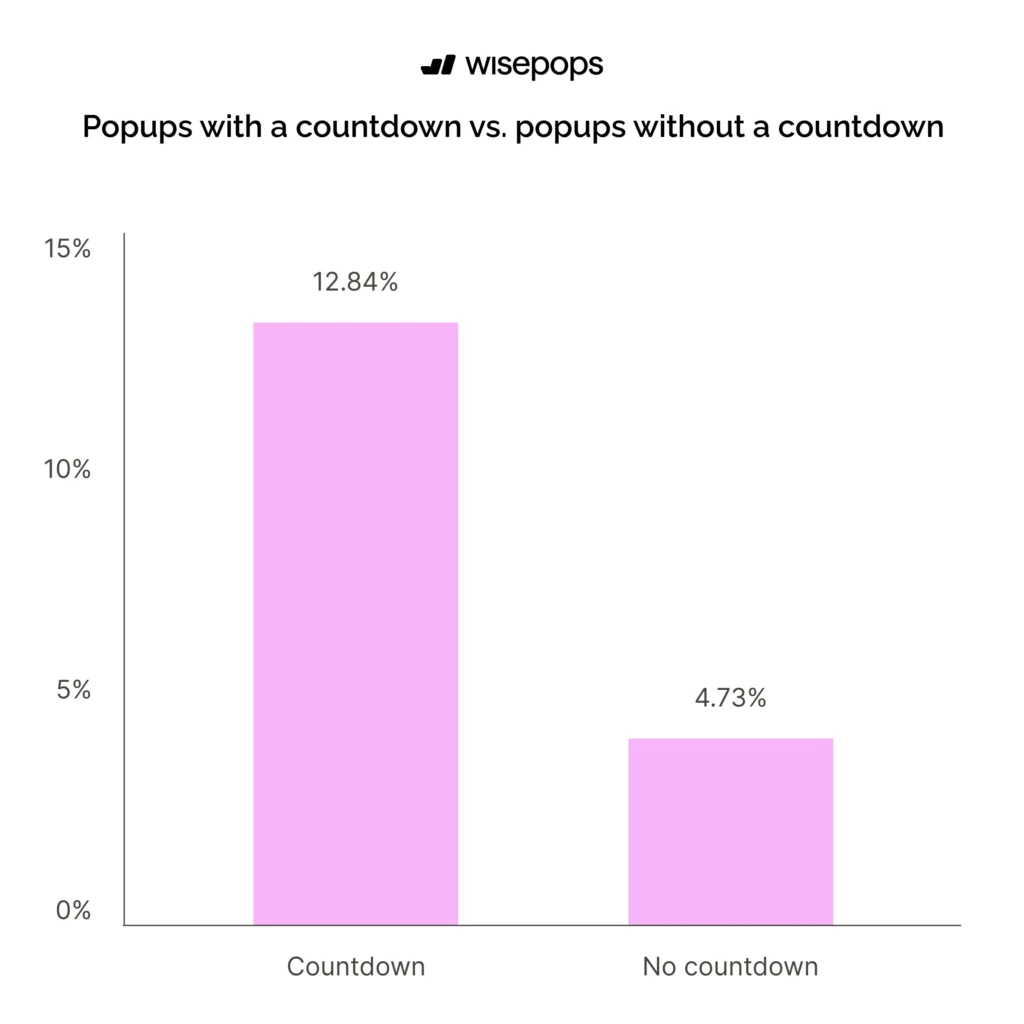
A study by Wisepops found that adding a countdown timer to a pop-up lifted its conversion rate by 41%, from 3.99% to 5.61%.
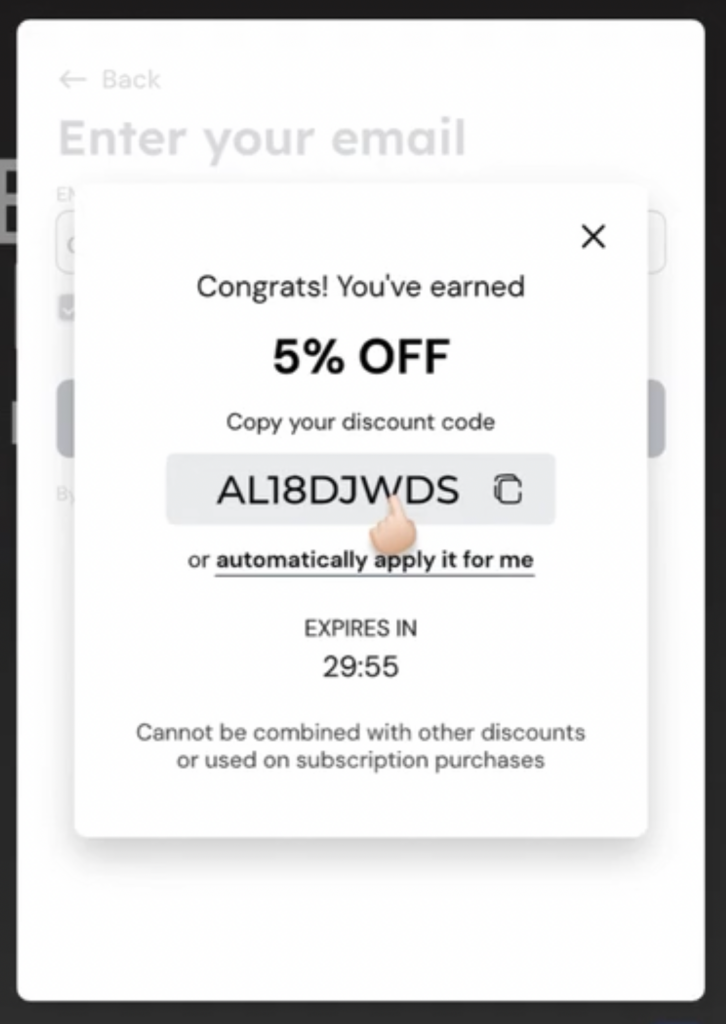
Urban Smokehouse offers a good example of a personalized twist. It added a button that started a 30-minute discount timer for each visitor. The result was a 20% same-session purchase rate and more than $100K in additional monthly sales.
There’s an important counterpoint, though.
A 2021 study of 3,800 US adults found that generic countdown timers didn’t significantly increase purchases. This means that timers alone don’t do the work. A real deadline on a real offer does.
How to Implement Limited Time Offers
So, how to use limited time offers to implement FOMO correctly and to your benefit, let’s find out…
- Pick the right offer: A deadline on a weak offer won’t work as well as a countdown timer on your best offer. Most businesses implement FOMO marketing on underperforming offers and that’s where it hurts.
- Set a real end date and time: “Ends Friday at 11:59 PM” beats “Ends soon” because it gives people something concrete to plan around. And such offers are perceived as real.
- Honor the deadline: This is the most important rule. When it ends, it ends. That’s what makes the next one believable. Your audience is smart. People check back to see if the offer has really expired or it’s still live. And if they find out it’s live after expiration, you’ll have a really hard time gaining their trust back.
- Choose a sensible window: Do not make your timed offers last for several months. Ideally, flash sales work well over hours, seasonal campaigns over days, and launches over a week or so. Too long and the urgency fades.
- Promote it where your audience already is: Yes, you have to promote your offers. Just setting a timer on your website and expecting high conversions might not work in your favor. Reach out to your target audience across platforms and tell them about the offer so they can participate.
- Add a visible reminder: Countdown timers, banners, and last day emails keep the clock in front of your audience.
Leverage User-Generated Content
UGC is the perfect form of FOMO marketing.
Why?
Because your audience sees real people using and talking about the product or service. This creates anxiety. They feel they are missing something that others have access to and are enjoying.
It is the most natural form of FOMO marketing.
And it plays a key role in conversions as well.
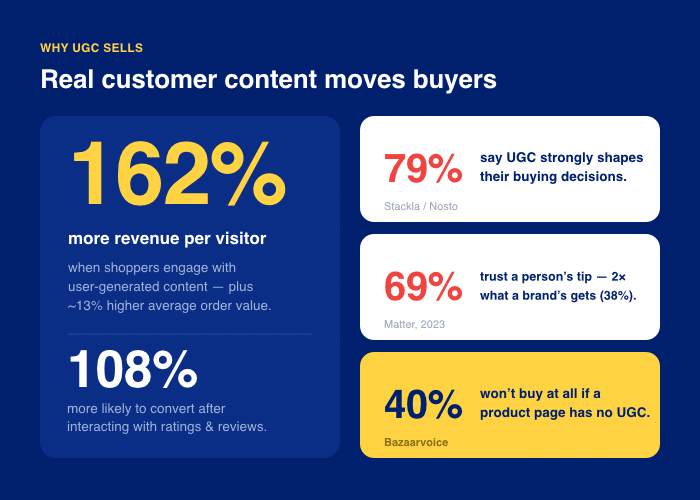
As much as four in ten consumers will leave a product page that has no user-generated content on it. When potential buyers engage with UGC, it increases revenue per visitor by 162% and average order value by 13%:
It really moves the needle.
The hard part is getting customers to generate content. You can’t force them. You can’t bribe them.
The best way is to exceed their expectations on all fronts and build a community. Eventually, people start sharing their views in their preferred ways.
But it doesn’t mean you should ask for reviews and testimonials. You definitely have to.
Because that’s the only way you’ll get UGC.
Once you have UGC, here’s how to use it for FOMO marketing:
- Place UGC where buying decisions happen: A customer review video on the homepage doesn’t make much sense. It has to be where conversions happen such as product pages, landing pages, emails, ads, and social feeds. The right place is crucial for FOMO.
- Prefer videos: Short clips from real customers tend to work better for Gen Z than text-based UGC. Videos, in general, work way better than any other content format.
- Make UGC shoppable: Add a link directly to the offer so interested people can buy the relevant product easily. This reduces friction and improves conversion rate.
Run Pre-Launch Campaigns
Pre-launch campaigns are best for FOMO marketing. But they might not work for all niches.
If you are in a business where a pre-launch campaign could work, you should give it a try.
For instance, technology companies, ecommerce businesses, entertainment, gaming, and fashion.
A pre-launch campaign builds demand before your product, service, or offer is available. You let your ideal customers use the product before the public launch. This makes them feel special.
It’s FOMO by design.
A waitlist tells your audience that it is something that’s limited and/or special, and that others are already in line. Signing up now feels better than watching from the sidelines on launch day.
A highly engaged, high-intent waitlist can reach up to 30% conversion to paid, and the conversion rate of early supporters reaches 50%.
It clearly shows pre-launch campaigns work exceptionally well when executed right.
Here’s how to use it for FOMO marketing:
- Build a single, focused landing page. One promise, one signup form, one clear reason to join early. This is the key to success with pre launch campaigns.
- Offer an early-access perk. Such as priority access, founding-member pricing, or a launch-day bonus. This is how your audience feels losing something and it creates FOMO.
- Boost sign-ups with social proof. A live sign-up counter or Join 8,000+ others is a great way to add social proof.
- The countdown must be prominent and visible. A launch date, even a rough one, gives the campaign a clock.
- Make sure the underlying offer is highly lucrative and valuable for your audience. You can’t bring in sign ups with a failed product. It has to be the best.
- The copy plays a key role. It’s not what you pre-sell, it’s how you pitch it. Make it exciting and something worth trying. But don’t overdo it. Don’t create unnecessary hype.
Low-Stock Indication
This one is obvious. But how you implement it, makes it do wonders.
A low-stock indicator tells shoppers that supply is running out. It creates two different psychological phenomena:
- Loss aversion, which is the fear of losing the chance
- Social proof which makes your audience think that if stock is dropping, others must be buying. And it is popular.
Unlike a made-up deadline, it’s tied to something verifiable, which is why it often feels more credible than other urgency tactics.
A 2025 study with 312 participants in simulated online stores found that moderate scarcity cues lifted conversion by 35% compared to no cue. Stronger, more aggressive tactics increased it by 40%, but also led to 25% more post-purchase regret.
Another study reports that quantity-based alerts, such as low-stock counts, tend to beat time-based cues like countdowns in head-to-head testing. It also found that back-in-stock emails have up to a 15% conversion rate.
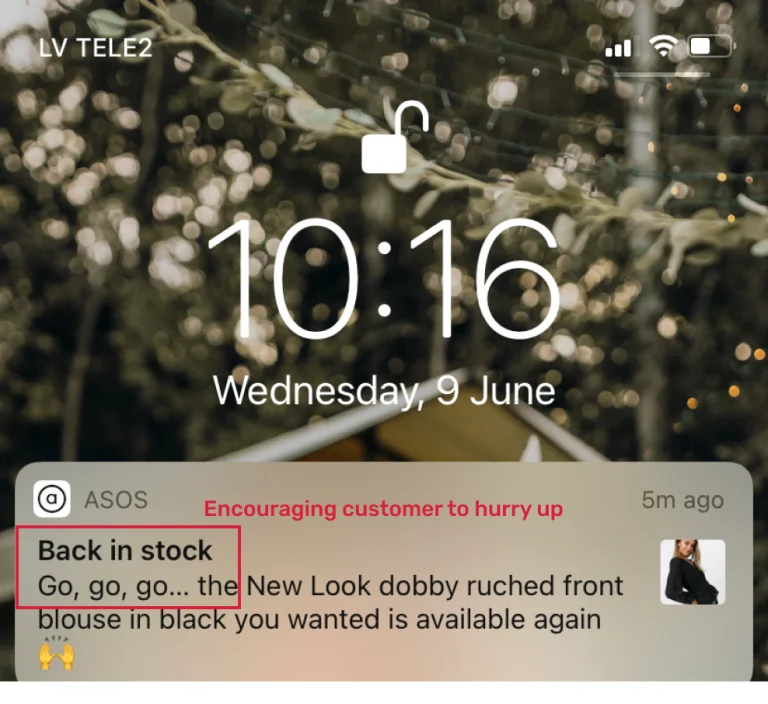
Follow these guidelines to use low stock indication for FOMO marketing:
- Connect it to real inventory. Display logic should pull from your live stock count, not a manual number. This keeps it transparent and accurate.
- Set a threshold for low inventory. Show the message only when stock dips under a level you choose, such as 5 to 10 units.
- Place it where decisions happen. Put it near the Add to Cart button, and consider a badge on collection pages so shoppers notice it before they click.
- Send a follow-up email or text to people when something in their cart or wishlist is running low.
Final Words
FOMO marketing isn’t a trick. It’s a human instinct. The brands that win with it are the ones that respect it.
Reviews, social proof, limited-time offers, UGC, pre-launch hype, and low-stock alerts all work for the same reason: They give people a real reason to act now instead of later.
But it has to be honest and real.
A genuine deadline, an honest stock count, and real customer stories will outperform any manufactured and fake signal.
Let’s start with one. Pick the technique that fits your audience, test it, tweak it, and implement it fully if it works.
Start small. Stay honest.
Featured Image: Unsplash